The gospel passage this week is Jesus raising Lazarus from the dead. It is the only one of the seven miracles of Jesus recorded that coincides one of his seven “I am” statements he makes in John’s gospel in the same chapter.\
This passage shows the full range of Jesus’s human and divine natures, especially the human emotions that Jesus expressed. It’s important to emphasize Jesus’s humanity as evidence that he was a high priest able “to empathize with our human weaknesses—yet he did not sin.” (Hebrews 4:15),
Martha is the one trying to hold it all together. It seems as if she’s not even started the grieving process yet. She and Mary are both upset that Jesus didn’t get there in time. But Martha is sure of the resurrection, something many of the disciples, I think, were still trying to wrap their heads around.
Jesus’s response just before he himself weeps is worth noting here. When John says Jesus was “deeply moved…and troubled” (NIV), some commentators have suggested Jesus may have groaned in agony or even anger at death itself. He was doing all he could to control his emotions when he asked, “Where have you laid him?” I’m not so sure he asked that politely. More like, “Let’s get this over with.”
Jesus seems to be in take-charge mode at this point. In vs. 38 we see he is “deeply moved” again, to the “Take away the stone!” command may have sounded like a very frustrated outburst.
We must be careful not to generalize from Jesus’s actions and attitudes in this event any sort of pattern for how you and I respond to the death of a loved one. Each one of us handles grief in our own unique way, but the one generalization we can make is that Jesus was fully relying on God in this moment of earthly existence. The one who came to bring us life had to confront the very thing he came to defeat.
I do hope this will give you some good ideas on how to make this story “come to life” (so to speak) for your congregation. I’ve included a couple links below, one with an audio file of my sermon, and the other that highlights the connections between Jesus’s miracles and his “I am” statements in John.
What will the resurrection be like? A similar question that some may have is, “What will Heaven be like?”
Our passage this morning opens the gates of pearl for us just a bit to give us a glimpse into life in our eternal home. We will also look at the epistle reading today a little later from 2 Thessalonians and other relevant passages to get a wider perspective of what the Bible says about life beyond the grave.
Before we get there, however, let’s take a look at our reading from Luke.
The first verse of our passage sets the context for us. The Sadducees are questioning Jesus about the resurrection, trying to trick him into some logical trap. But of course, Jesus knows what they’re up to. The Sadducees were different from the Pharisees in several ways, but the biggest difference is that the Sadducees strictly adhered to the Pentateuch, the first five books of the OT, so ALL of their theological beliefs derived from the Pentateuch. Anything that happened in the OT after that was judged in the light of the Pentateuch.
The Pentateuch, however, never explicitly mentions resurrection or anyone rising from the dead, so the Sadducees rejected the concept of the resurrection outright. Not only that, they by default rejected any concept of eternal punishment or eternal reward. If there’s no resurrection, who would be around to get punished or rewarded? They also rejected the concept of angels or any kind of spiritual realm other than that which God inhabited. This made for a very legalistic and moralistic interpretation of Scripture, because only in this life could you be rewarded for believing in God and following Torah. So, as the line we often teach to children, this is why they were sad, you see.
One interesting historical note here: the Sadducees were not a very large group. Josephus tells us that the Sadducees disappeared after the destruction of Jerusalem in AD 70. It seems like some sort of divine providence had a hand in the Sadducees rising up at the precise time in history when Jesus appeared so we’d have a record of the antiresurrection group and some examples of how to defend resurrection theology from the Old Testament.
The Sadducees try to trip Jesus up with a question about Levirate marriage, that is, the concept of the responsibility of a younger brother to provide an heir if their oldest brother failed to do so through the elder brother’s wife. That seems like a strange concept to us in the 21st Century, but in those days, it was necessary to preserve family history and property. The Sadducees go through the progression of all the brothers and the wife dying and ask Jesus whose wife she will be.
Jesus’s response is not what they expected. He basically says that marriage is strictly an earthly institution and will not be a factor in heaven. I imagine it is hard for us to grasp that concept. Jesus does seem to imply that we will recognize people we knew on earth by making the point about Abraham, Isaac, and Jacob, but he also says we will be like the angels as well. So it seems reasonable we would be reunited with loved ones.
At the end of Jesus’s explanation, some of the teachers of the law (not the Sadducees) praised Jesus for his answer. Very likely that was because the burning bush reference was from the Pentateuch, the only part of the Bible the Sadducees used for doctrine. In other words, Jesus essentially embarrassed the Sadducees by showing them they don’t understand a basic principle from the Pentateuch they revere so much.
Now when Jesus says those in Heaven will be “like the angels” needs some special consideration here. Paul uses a single word, an adjective, here that means “angel-like” (ἰσάγγελος isangelos). It’s the only time this word is used in the Bible. The implication here is not necessarily that they are of the same make-up of the angels, otherwise he would have used the regular word for angel. They are “angel-like” because they will never die. I still think we retain basic human form, but our bodies will be transformed into immortal material. Here’s how Paul words it in 1 Corinthians 15:
38 But God gives it a body as he has determined, and to each kind of seed he gives its own body. 39 Not all flesh is the same: People have one kind of flesh, animals have another, birds another and fish another. 40 There are also heavenly bodies and there are earthly bodies; but the splendor of the heavenly bodies is one kind, and the splendor of the earthly bodies is another.[1]
…
42 So will it be with the resurrection of the dead. The body that is sown is perishable, it is raised imperishable; 43 it is sown in dishonor, it is raised in glory; it is sown in weakness, it is raised in power; 44 it is sown a natural body, it is raised a spiritual body.
If there is a natural body, there is also a spiritual body.[2]
So we humans will have our own unique spiritual bodies in eternity distinct from the type of bodies angels have. I can’t prove what I’m about to say, but I’ve given considerable thought to what Paul means by comparing our bodies to a “seed.” Did you know that human DNA can survive long after the body is gone through the natural decomposition process? I have to wonder if that scientific fact about DNA has any relationship to our resurrection bodies. In other words, does our DNA contain a “divine code” that is activated at the final resurrection to reconstitute our bodies into their eternal, spiritual form? We often wonder if we will recognize others in Heaven. Wouldn’t DNA accomplish that? Now again, I’m just speculating here; I have no proof of this. God could just as easily use some other method to distinguish our appearance. But I think it is an interesting proposition worth dwelling on. My “Bones” article on my blog addresses this subject, and it’s been the second-most popular post this year, so there seems to be quite a bit of interest in the topic.
Paul addresses how we arrive at that day of resurrection. In 1 Thessalonians 4 and 5, we have these words from Paul:
13 Brothers and sisters, we do not want you to be uninformed about those who sleep in death, so that you do not grieve like the rest of mankind, who have no hope. 14 For we believe that Jesus died and rose again, and so we believe that God will bring with Jesus those who have fallen asleep in him. 15 According to the Lord’s word, we tell you that we who are still alive, who are left until the coming of the Lord, will certainly not precede those who have fallen asleep.[3]
…
4 But you, brothers and sisters, are not in darkness so that this day should surprise you like a thief. 5 You are all children of the light and children of the day. We do not belong to the night or to the darkness. 6 So then, let us not be like others, who are asleep, but let us be awake and sober.[4]
In 2 Thessalonians, the epistle reading from today’s Lectionary, Paul assures his readers that certain things must happen before the Lord returns for us:
2 Concerning the coming of our Lord Jesus Christ and our being gathered to him, we ask you, brothers and sisters, 2 not to become easily unsettled or alarmed by the teaching allegedly from us—whether by a prophecy or by word of mouth or by letter—asserting that the day of the Lord has already come. 3 Don’t let anyone deceive you in any way, for that day will not come until the rebellion occurs and the man of lawlessness is revealed, the man doomed to destruction. 4 He will oppose and will exalt himself over everything that is called God or is worshiped, so that he sets himself up in God’s temple, proclaiming himself to be God.[5]
This “man of lawlessness,” also known as the Antichrist, must be revealed at some point before the end comes. People have postulated that many historical and current figures have been the Antichrist. You can do a Google search and find out who those folks are; I won’t get into that here. But the call is not for us to be able to identify who this Antichrist is. The call is for us to be ready for that day.
Matthew 24:42–44 puts it this way:
42 “Therefore keep watch, because you do not know on what day your Lord will come. 43 But understand this: If the owner of the house had known at what time of night the thief was coming, he would have kept watch and would not have let his house be broken into. 44 So you also must be ready, because the Son of Man will come at an hour when you do not expect him.[6]
In the very next chapter we have the parable of the sheep and the goats at the judgment seat. Most of us are familiar with that story. Hebrews 9:27–28 says we all must face judgment, but if we are living our lives in and for Christ we have an absolute guarantee of salvation:
27 Just as people are destined to die once, and after that to face judgment, 28 so Christ was sacrificed once to take away the sins of many; and he will appear a second time, not to bear sin, but to bring salvation to those who are waiting for him.[7]
The judgment scene from Matthew 25 confirms this: those who are ministering to the poor and needy and who are sharing the good news of Christ not just in word but in deed as well will enter into that resurrection reward. I’m confident that you here at Mount View are all running a good race and will cross over into glory on that final day. I pray that you will have the strength to continue to do so and reap a great harvest for the kingdom of God.
God is good. God is faithful. And whether he returns before or after our final day on earth, we can know that our final destination is the place he’s prepared for us in eternity. May the peace of God go with you all today. Amen!
I preached this message at Mount View Presbyterian Church on August 17, 2025. I decided to break from preaching the Lectionary’s Gospel passage for today and went with the Epistles passage from Hebrews 11 & 12. The first question I asked myself when I started thinking about how to preach it was, “Who is in my great cloud of witnesses?” We all stand on the shoulders of those who have gone before us. No sooner had I asked that question then the Holy Spirit replied, “Testimony Time!” I didn’t need anything but a list. These are the people who have influenced my faith (I got on a roll and inadvertently left out my immediate family; sorry guys). Mount View’s 70th anniversary is coming up in October, so I encouraged the congregation to do this exercise for themselves as well.
No sermon text. I delivered the message extemporaneously. I may have mentioned some people from StoneBridge and Christian Campus Ministry (Agape House) at UNL in the 1980s.
I preached this message May 18, 2025, at Mount View Presbyterian Church, Omaha, NE. Fifth Sunday after Easter, Year C.
I find it interesting that in the weeks after Easter, the gospel passages in the Lectionary are revisiting Jesus’s Holy Week events. That probably shouldn’t surprise us with John’s gospel, though, as the last half of his gospel deals with the events of Holy Week. One explanation for this, I think, is that Jesus taught his disciples so much in that last week, and much of it occurred, apparently, immediately after the “Last Supper.” Given what happened in the 24 hours that followed that last supper, I think it’s safe to say that the apostles probably didn’t remember too much of that teaching. It’s a good thing John wrote it down, then! This gives them the opportunity to revisit those precious final moments with Jesus and to review his teachings to see what they missed about his death and resurrection.
Since we’re going back to Holy Week, and especially since today’s passage comes after John’s unique account of the Last Supper, I think it’s worth it to take a look at his account, especially, and add in the details that Matthew, Mark, and Luke provide. At the beginning of John 13, we see that the meal is already in progress, but we don’t get the “ritual” language we’ve become accustomed to from the other three gospels.
There’s no “This is my body” or “This cup is the new covenant in my blood poured out for the forgiveness of sins” in John’s gospel. That’s not to say there’s a contradiction here in the storyline: John focuses on a more radical form of demonstrating the forgiveness that would come from the shed blood of the Messiah. He tells us that the Messiah himself washes the feet of ALL the disciples. When Jesus gets to Peter, we find out a little more about Jesus’s motivation for doing this: “Unless I wash you, you have not part with me.” Jesus turns this act of service into a living, “practical” memorial that his disciples would not soon forget. Not only has he said his blood would bring forgiveness; he touches each one of the disciples, even Judas, who he knows will sell him and out, and Peter the denier, to give them “muscle memory” of forgiveness.
Matthew, Mark, and Luke all say something about the bread and the cup. Matthew and Mark both say simply: “This is my body,” while Luke adds two extra phrases: “This is my body given for you; do this in remembrance of me” (Luke 22:19). Notice that none of the gospel writers ever say, “This is my body broken for you,” although the piece of unleavened bread in this part of the ceremony was the only one formally broken. The church through history almost naturally added in that bit about “broken for you” to parallel what happens to the bread. Note also the references to the cup in the three synoptic Gospel accounts have Jesus saying that the wine is “the new covenant in my blood” or “the blood of my covenant.” Matthew is the only one who connects the blood with the forgiveness of sins.
One thing that Jesus says in all three gospel accounts may get overlooked: “I will not drink from this fruit of the vine from now on until that day when I drink it new with you in my Father’s kingdom.”[1] Jesus here is looking far beyond his own time with this statement: he’s looking ahead to his second coming where we will share in the glorious feast of the Lamb with him in heaven. It’s also worth noting here that Jesus still considers what he’s drinking is “the fruit of the vine” and NOT blood at all.
But this also begs the question: what does Jesus mean when he says, “This IS my body” and “This IS the new covenant in my blood”? I think as Presbyterians we can agree there is not some mystical transubstantiation of the wine into Jesus’s blood. Nor is there a mystical transubstantiation of the bread into the flesh of Christ. But I also don’t think the cup and the bread are merely “symbols” either. I prefer to use the word “signify” to describe the elements because they do have significance for my faith.
In this way, communion is akin to baptism. What does Paul say about baptism in Romans 6:3? “Don’t you know that all of us who were baptized into Christ Jesus were baptized into his death?”[2] Baptism signifies (there’s that word again) that we have come in contact with blood of Christ, which Matthew affirms is for the forgiveness of sins. That is our “initiation” rite, a marker or monument, if you will, that God has done something special in our lives and that we are set apart for something special. The water doesn’t become the blood of Christ when we’re baptized. But in a way that only God knows, the waters of baptism are infused with the power of spiritual cleansing and renewal.
Communion, then, is our regular connection with our baptism, because in communion, as we’ve said, we also encounter the blood of Christ, or what it signifies, in the cup at the communion table. The bread reminds us of the physical suffering Christ endured on the cross. But it also reminds us that we are all part of the body of Christ as well—that’s why we take it together, whether it’s monthly, weekly, or whenever we gather in his name. Out of all the different denominations out there, communion reminds us what we have in common: faith in Christ.
I’ve been studying what the Bible says about communion for quite a long time. It was the topic of one of my early blog posts. In my home church, we take it every Sunday, because that seems to be the practice of the early church in Acts. But my church also typically qualifies it when giving the communion meditation: “If you’re a believer in Christ, we invite you to participate.” There’s no official check for membership or a communicant’s card. Just a simple question to be answered on your honor. Some denominations or branches of mainline denominations require you to be a member of the church. Others may even suggest you’re committing heresy or blasphemy if you take communion in a church where you’re not a member.
The variety in how communion or the eucharist is handled in the modern church concerns me. Communion should be about what Jesus accomplished on the cross, not about your personal affiliation with a particular church. In that early blog article, A Truly Open Communion?, I asked the question this way:
If Jesus calls sinners to himself and eats with them; if Jesus broke bread at the Last Supper with a table full of betrayers and deserters; if Jesus can feed 5,000 men in addition to the women and children with just a few loaves of bread and some fish; why do many churches officially prohibit the Lord’s Table (communion, Eucharist) from those who are not professed Christ-followers, or worse, from those professed Christ-followers who are struggling with sin or divorce or other problems?
Should we really be denying or discouraging those who come to church looking for forgiveness and a connection to the body of Christ the very elements that Jesus uses to signify those things—the bread and the cup? Author John Mark Hicks says this in talking about communion as a “missional table”:
The table is a place where Jesus receives sinners and confronts the righteous; a place where Jesus extends grace to seekers but condemns the self-righteous. Jesus is willing to eat with sinners in order to invite them into the kingdom, but he points out the discontinuity between humanity’s tables…and the table in the kingdom of God.[3]
The implication here is that Jesus is in our midst in a special way, I think, not just because “two or three are gathered in his name,” but because we are doing this “in remembrance” of Jesus. The Old Testament concept of “remembering” is what is key here. In the Old Testament, when the writer says something like, “Then God remembered his promise to Abraham” or “Then God remembered his covenant with Israel,” this not God just calling a set of facts to mind. When God remembers like this, he also acts, and usually in a mighty way.
So when we remember, I believe it is also a call to action on our part, to be empowered by the presence of the Holy Spirit in that moment to make a commitment to action for the days that follow. It’s similar to what Jesus says in the Sermon on the Mount (Matthew 5:23–24): “Therefore, if you are offering your gift at the altar and there remember that your brother or sister has something against you, leave your gift there in front of the altar. First go and be reconciled to them; then come and offer your gift.”[4] By his blood we are forgiven and cleansed to start afresh. By remembering Christ, we are empowered to go out and serve.
As we come to today’s gospel passage again, we find ourselves at the end of the dining part of the Last Supper gathering. Jesus wants this time to be memorable for his disciples, because he tells them this is the last time they’re going to have any meaningful contact with him, at least in his earthly form. John makes a point of saying “When [Judas] was gone,” Jesus began delivering his final instructions, his “action plan” if you will, to give them assurance that they will have the guidance of the Holy Spirit after his death, burial, resurrection, and ascension. All of the elements leading up to his crucifixion have been set in motion, and there’s no turning back now.
That is why Jesus can say, “Now the Son of Man is glorified and God is glorified in him.” He knows what is about to happen. Although Jesus will experience many strong emotions, including betrayal, abandonment, and those associated with excruciating pain, he knows the end result will benefit all mankind for eternity. It’s the day he prepared for but perhaps had hoped would never come, or at least had hoped he would not have to endure alone. He knows the days ahead will be difficult, so he gives them a new command.
“Love one another. As I have loved you, so you must love one another” (John 13:34).
That word “as” carries a huge load with it. It’s not the regular word for “as” in Greek, which is also a two-letter word. The word John uses is a compound word that has the sense of its root words: “love one another according to the way I loved you.” The theme of this new command is found in a few other verses in this part of John, as well as in Luke 6:31: “Treat others according to the way you want to be treated.” “Love” is less about a feeling and more about action. Earlier in John 13, Jesus says, “I have set you an example that you should act toward others according to the way I have acted toward you.” In 15:9, he says, “I have loved you according to the way the Father has loved me,” and then repeats the command from John 13 a few verses later.
Showing this radical, sacrificial, agape kind of love that expects nothing in return is how we show the world we are Jesus followers. It calls us in some cases to reach out beyond our comfort zones and to be hospitable and welcoming to strangers. The author of Hebrews exhorts us in this way in 13:1: “Keep on loving one another as brothers and sisters. 2 Do not forget to show hospitality to strangers, for by so doing some people have shown hospitality to angels without knowing it.”[5] We could all use an angel in our lives from time to time, right? The first chapter of Hebrews (1:14) mentions the function of angels: “Are not all angels ministering spirits sent to serve those who will inherit salvation?”[6] God uses angels, in conjunction with the Holy Spirit, to empower and enable us to show love to others. But I digress just a bit.
God demonstrated his great love for us in Jesus through his life among us, his crucifixion, and his resurrection. I want to bring in the last couple verses of our reading from Psalm 148 this morning, because it is one of the foundational prophecies that show us what the Israelites expected of the Messiah, and Jesus proved faithful to that promise:
Jesus is our horn, the strength that we need to endure each day. Let us continue to hold fast to our Savior so that the world will know him, his salvation, and the power and love of God Almighty. Amen!
[3] Hicks, John Mark. “The Lord’s Supper as Eschatological Table” in Evangelicalism and the Stone-Campbell Movement, Volume 2: Engaging Basic Christian Doctrine. William R. Baker, ed. Abilene: ACU Press, 2006.
With apologies to VP JD Vance for mimicking his title.
I do not do much personal reflection in this blog. I’m mostly about exegesis (studying the text of the Bible in its original languages), hermeneutics (applying the results of exegesis to the understanding and meaning of the Bible), and lately homiletics (declaring the understanding and meaning of the Bible, especially as a sermon or homily, or in this case, a blog post). This ties in with the taglines for my blog that I put on my “business” card: “Dig deeper. Read Smarter. Draw Closer.” This past weekend, I took the opportunity to go to Fort Robinson State Park in northwest Nebraska to share in a fly fishing expedition with several guys (and the wife of one of them) from our church, including our pastor. The Fort Robinson area has several excellent fishing areas, including several streams and creeks; the first ten miles or so of the White River, which ultimately runs through the Badlands in South Dakota and empties into the Missouri River; and several ponds. Many of these locations are stocked by the State fisheries with trout and other popular species of freshwater fish.
I had never done fly fishing before, but the chance to get away and spend some time with friends old and new outweighed any anxiety I may have had about that. I only spent a few hours fishing at a couple ponds and in the White River, but it was long enough for me to observe others doing it, and I got pretty good at the casting part. I had a few curious little fish check out my fly, but never did land anything, which was okay by me. I was just grateful to be there.
Putting the Pieces Together
Part 1: Reflecting on Exegesis
The timing of the trip was divinely appointed for me as it coincided with some serious reflection I’ve been doing about the relationship between the depth of Bible study I typically do (“Dig Deeper”) and what I expect from the small groups I attend or help lead. That reflection was prompted by a recent post from one of the other pastor-bloggers on WordPress, Veritas Domain, and his short article about his “simplified” exegetical method. His method is similar to mine in that there is a heavy focus on the text itself, which is not unusual. I’m trained in Greek and Hebrew, so I start with those texts first, or at least have them open in parallel with the English translation so I can take note of key words (“Read Smarter”). If I’ve done those first two steps, the “Draw Closer” principle usually follows quite nicely.
In my comment back to “SlimJim,” I mentioned that my method was similar, but along with that, I’m finding that my experience with the two small groups I’m connected with at my church and even with my preaching is that having the knowledge that comes from that kind of in-depth study may not always go over well with those who don’t have that specialized training. In our men’s group, I can typically get away with sharing that when I feel it adds something to the discussion, but even then, one of my friends in the group (who happens to be a preacher’s kid) will sometimes say “All that is nice to know, but I want to know what makes me a better Christian, a better man of God.” That is, he wants to get to the “Draw Closer” part.
This brought to mind an article I read a number of years ago (a 1997 issue of Leadership magazine) by Haddon Robinson, in which he’s quoted as saying, “More heresy is preached in application than in exegesis.” In other words, some of us preachers may be pretty good at exegeting and interpreting God’s word, but how are we doing about translating that into action for our respective audiences? Does it really matter if a divine command is in the aorist tense versus the perfect tense if we don’t follow the command ourselves or encourage our audiences to follow the command, or worse, manipulate the command with malicious intent?
Part 2: The Fort Robinson Retreat
I had decided I would drive to Fort Robinson from Omaha, where I live, by way of Nebraska State Highways 92 (first half) and 2 (second half). Together, those two routes take you through the heart of the State, east to west. In addition, Highway 2 runs through the heart of the Sandhills. If you look at a satellite view of Earth along Highway 2, you’ll see that these Sandhills look like a bunch of sand dunes, but they all have grass growing on them, and several small ponds or lakes are scattered throughout. As I was driving through the Sandhills and listening to Rich Mullins and the Passion CDs (yeah, those date me), I began to understand what the Holy Spirit was trying to teach me. But he was only getting started.
I arrived at Fort Robinson State Park after dark, but not so late that I didn’t get to connect with my church friends who had already been there for a full day. We had breakfast the next morning at a small café in nearby Crawford, then struck out to fish. I went with a friend who had been in my small group when I moved back to Nebraska in 2010 and two of his (now grown) sons whom I hadn’t seen in quite some time. It was my first time fly fishing, so my goal was to get the hang of casting and extending my line. We tried the Ice House pond and then walked about a mile to couple bends in the White River (only about 10 miles from its headwater at that point, so no more than about eight feet wide if that. I had a few nibbles at the pond, but nothing in the river. From there we went back to the Grabel ponds, where I finished out the morning having developed a pretty good technique to cast and extend my line, even landing it on top of a 12-inch fish and spooking it away for a moment.
While I was at the section of the White River, I couldn’t help but think and marvel about how God created a means for distributing life-giving water throughout a continent (I knew the term “hydrology,” but I had to look up “limnology” as I was writing this paragraph), especially since, at the end of this month, my brother and I will be at the other end of the White River in South Dakota where it flows through the Badlands (and earns the name “White” from its sediment) and into the Missouri River south of Chamberlain for another fishing trip. God’s creation is an amazing and wonderful thing. That was what the Holy Spirit was continuing to show me, but not for the reason you might think.
Part 3: Sowbelly Canyon Road
One of the sights I had heard about from the guys who had gone up the previous year was Sowbelly Canyon, just north of Harrison, Nebraska. I had no idea what to expect from a “canyon” in Nebraska; certainly nothing like Poudre River Canyon in Colorado where my wife’s family has a cabin. Poudre Canyon is about 50 miles long, and the Poudre River is relatively wide in the canyon. Sow Belly is unique in its own way and was surprisingly beautiful and “cool” in more ways than one. I wish my wife would have been able to come along on this trip.
As you’re driving west on US 20 toward Harrison, you see nothing but a bunch of gently rolling hills on either side of the highway. One would never expect a place of such beauty was just beyond those rolling hills. Even as you crest the top of the canyon, you see an amazing sight below: a single lane dirt road running under a canopy of trees, with unusual rock formations atop the buttes, some of which have formed at right angles. The descent is moderately steep, and at times you have a wall of the canyon on your right (descending) and your left (ascending). At the bottom of the canyon is a small, babbling brook that must have taken a few centuries to form the canyon.
Just before you get to the end of Sowbelly Road on the east end (where it joins Pants Butte Road; no, I’m not making that name up), there’s a spot where you can see at least 80 miles to the north to the Black Hills in South Dakota (the dark mound in the far horizon). Something special happened between God and me via the Holy Spirit on that road, and especially with this particular view. I gained a whole new appreciation for the beauty, majesty, and grandeur of God’s creation. I’d expect something like that in Colorado; I never expected that in seemingly plain old northwestern Nebraska. Boy, was I wrong. What God had started teaching me in the Sandhills came to full fruition at the top of Sowbelly Road.
Part 4: Worldview, Wonder, and Wisdom
So let me bring this all together now. You might remember I started out talking about exegetical methods, methods that were heavily focused on the textual features like grammar, syntax, verb mood and tense, etc. Then it hit me: nothing in my exegetical method intentionally accounts for the majesty and glory of God and his creation. I knew I had to work that in somehow. But God still had one more piece to show me, and it hit me last night at our last small group of the season. Our senior pastor had been with us on this trip, but Sunday morning, one of the teaching pastors was preaching on the trauma Job experienced. I had tried to listen to it Sunday morning while driving through the remotest part of western Nebraska, but just couldn’t get a steady signal.
Fortunately, our Tuesday night group covered it in the study last night, and it was when we were talking about the ending of the book of Job that everything God had been teaching me finally made sense. Job had been arguing with God and his friends about how righteous he was and how he had always given God glory and so on, but God put him in his place. God recounts for Job all that He did by questioning Job: Did you lay the foundations of the earth? Did you create Leviathan and Behemoth? Who are you to tell me how I should act toward you?
That’s when I realized that I’m like Job in that moment. I think I have such a great exegetical method that will keep my doctrine sound and shred every stronghold that tries to set itself against God Almighty, but God’s word is more than the text and the grammar and verb moods and tenses and the participles and the conditional clauses. Those things are static, unchanging. But what does Hebrews 4:12 say? “For the word of God is alive and active. Sharper than any double-edged sword, it penetrates even to dividing soul and spirit, joints and marrow; it judges the thoughts and attitudes of the heart.”[1] Can grammar and syntax do that? I think not.
The other thing that occurred to me is the backstory of how the Jews would understand God’s word versus us gentile Christians. I’ll use just one example here: Communion, or as some call it, the Lord’s Supper or the Eucharist. When we look at the elements (“substantiational” leanings aside), we are meant to experience Christ in some way by “remembering” him. We see one man crucified and risen. But what do Jews remember at Passover? Not one man dying, but ALL the firstborn dying who weren’t protected by the blood of the lamb that they themselves applied to their doorways. They remember God parting the Red Sea so the Israelites could escape the oncoming Egyptians. The disciples didn’t understand immediately that Christ’s death had won them forgiveness and freedom. The Jews DID understand that immediately, with hearts pounding witnessing the very miracles of God at work to rescue them, even as they would tell the stories year after year to their descendants.
Conclusion
In other words, when I exegete and interpret Scripture, I need to look beyond the text and the grammar and all the other “in-the-weeds” details to comprehend a grand vision of a great God and all that he has done and made. That’s where the “draw closer” takes place, as it did for me this past weekend, when I understood who I am in God’s kingdom and that, in spite of his greatness and grandeur, he looks with love at the least of us, at the humblest of us, at our faithfulness. He looks with compassion at those who are lost and searching and even at those who may be angry with him or agnostic toward him, prompting us to share God’s “living and active” word with those who have not yet comprehended that greater vision.
From this point forward, then, I’m adding a couple permanent elements of my “principlizing bridge” (to use Grasping God’s Word’s language) will be to ask first, “How does this passage reveal the glory and majesty and mystery of God to the world?” and second, “How is this passage ‘alive and active’ not only to me but to those I encounter as well?” I feel like I drew a little closer to God this weekend. I pray that my testimony here will do the same for you.
Pastor Scott Stocking, M.Div.
All contents herein are the creative and intellectual property of this author unless otherwise attributed.
I delivered this message Easter (Resurrection Sunday), April 20, 2025, at Mount View Presbyterian Church in Omaha, Nebraska. I focused on the theme of “running,” picking up on the account of Peter and John “racing” to the tomb.
Good morning! Hallelujah, Jesus is Risen!
The Bible has a running theme. No, seriously, the Bible talks a lot about “running” in the context of our faith. Consider these two verses from 2 Samuel 22:29–30 (par. Psalm 18:28–29) NKJV:
The running theme carries over into the New Testament as well, especially in Paul’s letters:
There’s 1 Corinthians 9:24 (NIV): “Do you not know that in a race all the runners run, but only one gets the prize?”[4]
And Galatians 2:2b (NIV): “I wanted to be sure I was not running and had not been running my race in vain.”[5]
Even the author of Hebrews gets in on the theme in 12:1–2a (NIV): “Therefore, since we are surrounded by such a great cloud of witnesses, let us throw off everything that hinders and the sin that so easily entangles. And let us run with perseverance the race marked out for us, 2 fixing our eyes on Jesus, the pioneer and perfecter of faith.”[6]
We see the running theme in the parable of the prodigal or “lost” son in Luke 15:20 (NIV), although in a slightly different way when it comes to the father in the parable:
“But while he was still a long way off, his father saw him and was filled with compassion for him; he ran to his son, threw his arms around him and kissed him.”[7]
A few verses later, we learn why the father ran to greet his son: “‘This son of mine was dead and is alive again; he was lost and is found.’ So they began to celebrate.”[8]
I think you see where I’m going with this now, right? In our gospel passage this morning, however, Mary and the disciples aren’t looking for a “lost” or prodigal son, but, as they will realize shortly, the once dead and now risen Lord and Savior, Jesus Christ. Mary runs to tell the disciples the news, and Peter and John run, no race back to the tomb to see if what she’s telling them is true. The news was that incredible that they couldn’t just take a casual morning stroll back to the tomb.
Now before I dive into this morning’s passage from John, I want to do a quick sidebar on one of the most common questions people ask about the crucifixion and resurrection. Jesus was crucified on a Friday and rose from the dead on Sunday. That sounds like about 48 hours, right? Two days? But Jesus had predicted all along that he would rise on the third day. He “borrowed” that timeline from the prophet Jonah, who had spent three days and nights in the belly of the great fish. By Jewish reckoning, the first day of anything is “day one.” We see that in Genesis: “There was evening and morning, the first day.” Jesus was arrested (i.e., “swallowed up”) on Thursday evening after sundown and subjected to a rigged trial that was illegal by Jewish laws in several ways had sealed his fate before it even started, so the period from sundown Thursday through sundown Friday was “the first day.” The Sabbath, of course was on Saturday, having begun at sundown Friday night, the second day. This of course makes Sunday the third day. Jesus could have risen any time after sundown Saturday night and would have fulfilled the prophecy of rising on the third day.
In fact, John’s account tells us it was still dark when Mary Magdalene got to the tomb Sunday morning. John says nothing about whether the guards were there. I’m guessing not, though, as they probably ran off terrified that the stone rolled away seemingly all by itself. Matthew says the guards had to make up a story about it, but they most likely would have been disciplined if not executed for their inability to keep a dead man in a tomb. The details differ among the gospel writers, but I’ll stick with John’s narrative here the rest of the way. Mary didn’t wait around to find out what happened. She had apparently looked in the tomb before running back to Peter and John (“the other disciple”) because she told them Jesus wasn’t there anymore.
Peter and John went racing back to the tomb. John made sure he reported that he won the race, but Peter went in first. Isn’t that the reverse of the Prodigal parable? The prodigal Peter, who had denied knowing Jesus three times during the illegal trial, came running back to his savior. It seems odd that they just looked into the tomb and apparently shrugged their shoulders at each other. John tells us that he and Peter found strips of linen there and a separate head cloth when they went into the tomb. Not sure what that means for the Shroud of Turin. But it does suggest that someone had to unwrap Jesus, unless his arms weren’t secured to the body.
Because they still hadn’t put two and two together yet, they decided to head home. No further investigation; no searching for clues or footprints in the dust; no trying to find eyewitnesses that may have seen what happened. What’s especially surprising to me is this: why did they leave Mary Magdalene at the tomb all alone, still crying in grief and shock that someone might have stolen Jesus’s body? Not very gentlemanly of them. And they missed the best part.
Mary, however, did not miss the best part. When she looked into the tomb again, she saw the angels, probably the same ones who unwrapped Jesus’s body that morning. Why weren’t they there when Peter and John went in? Difficult to say, except perhaps that they should have been able to recall Jesus’s teaching about him rising from the dead after three days. Or maybe it’s because Mary was the first one to arrive at the tomb, so she got to be the first one to see him when he made his appearance. Jesus was apparently just freshly resurrected, because Mary couldn’t touch him for whatever reason.
The fact that Mary has a validated claim of being the first to see Jesus risen (besides perhaps the Roman guards) might add some credibility to the resurrection story. If Peter and John had been the first ones to see him alive, it’s possible they could have been accused of a conspiracy to hide the body and say he rose from the dead. It would be more incredible to believe that a couple older Jewish women could have carried his body off than it would be to believe Jesus had risen from the dead.
Jesus told her to go find Peter and the rest of the disciples and let them know he was indeed alive. The disciples don’t have to wait too long to see the risen Savior for themselves. That very night, Jesus would appear to them behind locked doors and reveal himself. Jesus was revealing himself to more and more people and would continue to do so for the next 40 days or so to establish an irrefutable claim that he had indeed risen from the dead. He had won the victory over death and the grave so that we also could live in that hope of the same victory.
What is the message we can take from this passage today, that the disciples ran to see if the hope of Jesus survived his crucifixion? Well, lately I’ve been seeing news reports that people, especially young people, are coming back to church after the COVID shutdowns had decimated many congregations. The White House has established an Office of Faith that is, ostensibly, looking out for the rights of those who live out their faith but have been hounded or cancelled by antireligious forces. We’re even seeing some politicians be more sincerely bold about speaking about faith matters. If we’re in the start of a revival in our country, let’s jump on the bandwagon!
I want to read to you part of an opinion piece that came out Saturday morning from columnist David Marcus. In it, he speaks of the connection between the suffering the church experienced through COVID and the beautiful end result that the church experienced in history after other periods of suffering:
Perhaps we should not be surprised that the bitter cup of COVID led to greater religious observance by Christians. After all the Holy Spirit, speaking through the prophets, has told for thousands of years of periods of loss and suffering that end in the fullness of God’s light.
From the banishment from Eden, to the Flood, to the Exodus, and finally Christ’s 40 days of starvation and temptation in the desert, again and again, it is suffering that brings God’s people closest to Him.
During COVID, our desert was isolation, and especially for young people, it only exacerbated what was already a trend of smartphones replacing playgrounds, of virtual life online slowly supplanting reality.
At church, everything is very real, much as it has been for more than a thousand years. At church, we are never alone. At church, things can be beautiful and true and celebrated, unlike the snark-filled world of our screens that thrives on cruel jokes.
Human beings need a purpose and meaning beyond being a cog in the brave new world of tech. We need connection to our God and to each other.[9]
I hope that Mount View can be a place where you continue to find connection to God. If you’re visiting today, I hope and pray that you’d want to stick around and discover more of that connection to God. And if I may speak from my own heart for a moment, I want to say this: I’ve been filling the pulpit off and on for over 3½ years at this point, and much more frequently since last October. You have grown on me, and I hope that you’ve grown with me. And I pray that the testimony of your fellowship will attract more and more people who desire to connect with God. I pray that the messages here as people download them from the Internet will bear much fruit wherever it is heard and repeated.
The church is winning the race to win the hearts and souls of those who seek a deeper connection with God and with their own faith. I mean, who would have ever thought that the American Idol reality show would have a three-hour special featuring “Songs of Faith” like they’re doing tonight! I’d say the Spirit is on the move! You and I may never be on American Idol, but we can be bright and shining lights so that the world may know the hope we have.
On this day when we celebrate the resurrection of Jesus, I want to close with an encouragement to you from Paul’s letter to the Ephesians, 1:18–20 (NIV):
I pray that the eyes of your heart may be enlightened in order that you may know the hope to which he has called you, the riches of his glorious inheritance in his holy people, 19 and his incomparably great power for us who believe. That power is the same as the mighty strength 20 he exerted when he raised Christ from the dead and seated him at his right hand in the heavenly realms.[10]
Amen, and have a blessed Resurrection Sunday with friends and family.
I presented this message on March 16, 2025, at Mount View Presbyterian Church in Omaha, Nebraska. In studying the two passages, I discovered several thematic connections between Psalm 27 and the central part of Luke’s gospel, especially from 9:51 through Christ’s triumphal entry into Jerusalem in Luke 19.
I had attended StoneBridge (my home church) for the worship part of their service before going to preach, and they did a version of St. Patrick’s Breastplate. I started my message with that this morning (the 15 lines toward the end of the longer prayer).
May the Lord be with you.
Have you ever thought about how you read certain types of literature? If you’re reading a fictional novel, or perhaps a true historical account of real event or someone’s life, it’s probably best to start at the beginning and read through to the end. It’s important to have all the details of the story because some of those details will be important throughout or later in the book. If you’re reading a history book or a historical biography, you may want to focus on a certain topic or certain era covered in the book to get the specific information you’re looking for, but you might miss some important background information that gives more context to events of that period. When you read a newspaper, you look for the headlines that interest you. If you’re looking for a specific answer on something like “How do I change a tire,” “Where do the Sandhill Cranes migrate to,” or “How do I calculate the area of a circle,” you typically wouldn’t have to read an entire reference book relevant to the subject. You’d go to the index or table of contents and look up where to find the information you’re looking for.
The Bible is sort of all these types of literature wrapped up in one collection that contains all these things, from the fictional, but true-to-life parables to the priestly “Chronicles” of the kings to the history of the patriarchs and the gospels, right up to the fantastical imagery of Revelation. Because of this, it’s important that we don’t lock ourselves into one way of reading the Bible. While it’s good to sit down and read large sections of the Bible in one sitting from time to time, we can still miss “the big picture” if we don’t understand or know the historical setting in which it was written.
Even when you read the gospels, if you have a Bible with footnotes, you’ll see that there are all sorts of references to passages in both the Old and New Testament where the gospel writer is either quoting the Old Testament or the editor perceives a connection to another New Testament author’s writings. That’s something you don’t typically get in a fictional novel, but would be helpful, I think.
Our two passages today, Psalm 27[1] and Luke 13, have a thematic connection, but it’s important to recognize that this connection compels us to look at the larger context of Luke’s gospel. Luke 13 is a little more than halfway through Luke’s 24-chapter gospel, but more importantly for our purposes, it’s about halfway between Luke 9:51 and Luke 19:28, which is the beginning of the story of Jesus’s triumphal entry into Jerusalem. Why is 9:51 an important marker? Luke says this: “As the time approached for him to be taken up to heaven, Jesus resolutely set out for Jerusalem.”[2] Luke isn’t even halfway through his gospel and he’s already talking about Jesus getting ready for the cross!
Luke frames the rest of his gospel from 9:51 on in the context of Jesus approaching the cross and preparing himself and his disciples for the implications of that seminal event. In fact, the footnote on this verse in my NIV Bible lists the references to this in the story line along the way: Luke 13:22, 17:11, 18:31, and 19:28.
So let’s take a look at the thematic comparisons between Luke and Psalm 27. Psalm 27:1 is the initial confidence builder for David as he pens this psalm: The Lord is his light, his salvation, and his stronghold, so David has nothing to fear as he leads his people. This confidence is paralleled in Luke 9:51 with his statement that Jesus “resolutely” set out for Jerusalem. The phrase here literally means to “set your face” (or by extension, “set your eyes”) upon Jerusalem. This ties in with Psalm 27:4 as well, when David speaks of dwelling in the house of the Lord and gazing on his beauty in the temple. The temple, of course, was in Jerusalem. In today’s gospel passage, Jesus seems to hint that he’s only three days away from Jerusalem and needs to press on.
In Psalm 27:2–3, David says that in spite of his enemies advancing against him, he will remain confident of the Lord’s help. As Jesus journeys toward Jerusalem in Luke, he encounters his own opposition along the way. In 9:53, the Samaritan village he was near wanted nothing to do with him because he was headed for Jerusalem. In chapter 11, we see opposition from the pharisees and experts in the law as he’s working miracles and teaching about the kingdom. By the end of chapter 11, Luke says this after delivering a list of “woes” to his critics: “53 When Jesus went outside, the Pharisees and the teachers of the law began to oppose him fiercely and to besiege him with questions, 54 waiting to catch him in something he might say.”[3] No love lost there between Jesus and that group of elitists.
Just like David, though, Jesus’s confidence doesn’t wane. He continues on his journey gathering an ever-larger following warning them about the opposition they themselves would face for being his followers and encouraging them to be ready when his time does come. In chapter 13, he faces opposition from a synagogue leader who is upset because Jesus healed someone on the Sabbath! Imagine that! In our passage this morning, the Pharisees seem to think they’re doing Jesus a favor by telling him to leave the region because Herod wants to kill him. But Jesus presses on, even with a bit of sarcasm, or so it seems, when he says in so many words that Jerusalem is the only place for a prophet to die.
The rest of Luke up to the point where he reaches Jerusalem gives us several more examples of this opposition, but we can save that for another time. I mentioned earlier about Psalm 27:4–5 hinting at the importance of temple. For Jesus, the temple was the true home of his family: after all, it was his father’s house. If he knows he’s going to die, he wants to be as close to his family home as possible. His statement in Luke 13:35 about “Blessed is he who comes in the name of the Lord” looks forward to his triumphal entry into Jerusalem. I believe Jesus takes a sense of pride and ownership in the temple, even though it is a structure made by human hands.
We saw after Christmas how Jesus as a boy stayed at the temple and impressed the religious leaders with his knowledge of and wisdom about God’s law. His first order of business after arriving in Jerusalem at the end of Luke 19 is to clear out the corruption in his father’s house. Even as he knew this would be one of his last weeks to experience the earthly temple, he wanted to leave it in better condition than he found it by restoring it to a place of prayer and genuine worship. He knew he would be the sacrificial lamb, and there would be no more need to sell lambs and birds in the temple for the sacrifices. It would be restored to a purer state. In the book of Acts, we see that his followers have been meeting regularly at the temple since his crucifixion, and it is there that the church is born on the day of Pentecost. That was the “Garden of Eden” for Christ followers.
The last half of Psalm 27 is one of David’s most heartfelt prayers for protection against his enemies and for the security of God’s presence with and acceptance of David as his chosen ruler for God’s people. Jesus taught his disciples to pray in Luke 11, the shorter version of the Lord’s prayer. In that prayer, we hear some of the same themes of praise, provision, and forgiveness. He understands the goodness of God’s provision.
But we also hear in that Psalm the foreshadowing of the cross. In verse 12, David asks not to be turned over to his enemies, which sounds very much like Jesus’s plea in the Garden of Gethsemane to have the cup of suffering removed from him. David’s pleas in verse 9 sound very much like Jesus’s words on the cross, “Why have you forsaken me?” Those words come from Psalm 22, where many of the aspects of Jesus’s crucifixion are foretold.
Just as David in the last two verses of Psalm 27 affirms his confidence in the goodness of the Lord and can encourage the worshipers to “be strong and take heart,” so Jesus has confidence in his dying moments to selflessly tell the thief on the cross that he too will join him in paradise when they die. I don’t believe that David intended Psalm 27 to be a messianic psalm, nor do I think Luke intended the central part of his gospel to mirror the themes of Psalm 27, but the parallels are striking and certainly worth noting.
But these parallels are academic. What does all this mean for you and me as we walk with our savior?
First, when we run up against roadblocks or challenges to our faith or we find that doubts are creeping in, we can remain confident that our light, our stronghold, surrounds us with his protection. We need not fear or doubt, but if we wait on the Lord and strengthen our hearts by abiding in God’s word, we can be confident we will see the goodness of the Lord, just as David was. We can walk in the victory of the cross in the overcoming resurrection of our savior.
Second, we can heed the exhortation of Hebrews 10:19–25, which sums up these three themes concisely:
19 Therefore, brothers and sisters, since we have confidence to enter the Most Holy Place by the blood of Jesus, 20 by a new and living way opened for us through the curtain, that is, his body, 21 and since we have a great priest over the house of God, 22 let us draw near to God with a sincere heart and with the full assurance that faith brings, having our hearts sprinkled to cleanse us from a guilty conscience and having our bodies washed with pure water. 23 Let us hold unswervingly to the hope we profess, for he who promised is faithful. 24 And let us consider how we may spur one another on toward love and good deeds, 25 not giving up meeting together, as some are in the habit of doing, but encouraging one another—and all the more as you see the Day approaching.[4]
Worshiping together as a church family, whether we’re a family of 20 or 200 or 2,000, provides a powerful sense of belonging to each of us. We know we have a place to call our spiritual home, just as Jesus considered the temple his spiritual home. We can feel safe here with one another.
Finally, the power of praying together as a church family cannot be overstated. Our prayers, whether in our own closets at home or corporately in our liturgy here, keep us connected to and in constant communication with our heavenly father. We can be assured that he hears us and works to respond to our prayers according to his will and his love for us.
As we go through this Lenten season, let us not forget the forgiveness we have from God and not forget to offer forgiveness and grace to those who need to hear that message. Peace to all of you. Amen.
Pastor Scott Stocking, M.Div.
[1] Psalm 27 parallels Psalm 31 with similar themes. Psalm 31 will figure prominently in the Lectionary beginning the Sunday before Palm Sunday next month.
If they’re motivated to stay off electronic devices for a while, a young girl might say, “I hope I get an American Girl doll for Christmas,” or a tweenage boy might say “I hope I get a remote-control race car.” The parents might say, “I hope we can pay off our credit cards after Christmas.” In the case of the kids, the “hope” that they might get what they asked for is at its core just a wish, but depending on their relationship with the potential gift givers (or promises made by those potential gift givers), their hope may have a firmer foundation than just a wish.
In the case of the parents, that “hope” becomes more of a pledge or commitment to do the hard work to pay off the cards and not so much winning the lottery, and “hoping” that no other major expenses arise that put a roadblock up against that goal.
For those who face more serious problems than what to get or how to pay for Christmas, their hope may take on a whole new dimension. This is very real in my own family situation right now. When the situation is bigger than you can handle on your own and you have little to no control how such help will come to you, “hope” begins to take on aspects of faith. This is similar to the kind of hope Paul ascribes to Abraham in Romans 4:18 when discussing the promise that Abraham would be the father of many nations even though he was old: “Against all hope, Abraham in hope believed and so became the father of many nations, just as it had been said to him, ‘So shall your offspring be.’”
That hope sustained Abraham and the rest of his descendants not only in the long term, but it sustained him when God had asked him to sacrifice his son at Mount Moriah. He did not hesitate, because he knew, as we find out Hebrews 11 later, God could raise Isaac from the dead if that’s what it took to fulfill the promise.
Now you may find it interesting that the noun for “hope” (ἐλπίς elpis) never appears in the gospels. The verb (ἐλπίζω elpizō) only appears three times: once in an Old Testament quotation (Matthew 12:21) and twice in Luke (23:8; 24:21), once in reference to Herod’s hope that Jesus would perform a miracle in front of him, and the other in the disappointment of the disciples on the road to Emmaus about their hope that the recently crucified Jesus (who was walking with them at the time!) would redeem Israel. In fact the concept of “hope” does not really come to the fore until Paul is converted and begins his evangelistic mission to the Gentiles and writing his own letters to the young churches. Equally surprising is that neither the noun nor the verb is found in the book of Revelation, the book that documents our ultimate victory and fulfillment of our eternal hope.
One way to interpret this, I think, is that because the gospels record the life and events of Jesus the Messiah, the Old Testament hope of his coming was realized. They didn’t have to hope any more because he was there! But Jesus’s death and resurrection put new spin on what Jesus’s ministry on earth was really all about. It wasn’t about overthrowing Rome; it was about showing the Jews how God wants to relate to them. The Jews up to that point thought that his first coming was his only coming, and that would be the establishment of the eternal kingdom. But Jesus’s resurrection was not only for the Jews but for all mankind, and so the new hope, the hope of a resurrection into eternity, was what Christ-followers now had to communicate to the Gentiles AND the Jews. Everyone needed to know the message. The book of Revelation emphasizes the role of the Savior, the Lamb of God, in the last days, so again, that is the story of hope realized.
That is one reason why our NT passage today speaks about the end times. But since we just covered that from Mark’s gospel a couple weeks ago, we’ll simply use that as a jumping-off point to talk about the theme of this first Sunday of Advent: Hope.
Hebrews 11:1 says, “Faith is confidence in what we hope for and assurance about what we do not see.” In context, that was referring to Old Testament patriarchs’ trust in the promise that the Messiah would come. Paul says in 1 Corinthians 13:13 that there are three things that will never pass away: “faith, hope, and love.” The question is, then, what is the eternal nature of this “hope” Paul and the other NT writers speak of? I would suggest that there are three main aspects of this hope:
A more immediate hope for Christ-followers that gives them encouragement and strength to face the day-to-day battles.
A hope for the ministry of the church that the gospel message would spread around the world and especially to the Gentiles.
The hope of our final salvation and transformation into our eternal home in heaven.
Let’s take a look at each of these.
We’ve already hinted at the more immediate hope for believers as Paul described Abraham’s hope and faith in Romans 4 above. We see in Romans 12:12 that Paul wants the believers to “be joyful in hope, patient in affliction, faithful in prayer,” activities in the here and now. We also see this toward the end of Romans in 15:13 in a sort of “mini benediction”: “13 May the God of hope fill you with all joy and peace as you trust in him, so that you may overflow with hope by the power of the Holy Spirit.”[1] Paul wants them to know the joy and peace of following Jesus in this life so that hope springs eternal in them.
We see in Ephesians 1:18 that Paul is praying they (and you) might know “the hope to which he has called you,” and he goes on to describe that hope in chapters 4 through 6 of that epistle: “just as you were called to one hope when you were called” (4:4b). In the verses immediately following that passage Paul describes the ways in which can live for Christ and live the Christian life to the fullest. Jesus equips us to minister in our own unique ways. He promises that when we do this, we will move on to maturity, learning what it means to put off the old self and to allow Christ to give us a new heart and a new attitude.
Paul even praises the Thessalonians for their exemplary faith and actions: “19 For what is our hope, our joy, or the crown in which we will glory in the presence of our Lord Jesus when he comes? Is it not you?”[2] The Thessalonians had willingly received and committed themselves to the word of God in spite of the suffering that ensued from their own people. Paul suggests that the Corinthians are in the same boat as the Thessalonians when he says, “7 And our hope for you is firm, because we know that just as you share in our sufferings, so also you share in our comfort.”[3]
On the second aspect, the ministry of the church, Paul recounts his own experience as he speaks of the hope he and the people of Israel had been waiting for: “This is the promise our twelve tribes are hoping to see fulfilled as they earnestly serve God day and night. King Agrippa, it is because of this hope that these Jews are accusing me.”[4] Paul would go on in that testimony to affirm that Jesus had called him to be a minister to the Gentiles so they would know the hope of the gospel. In Peter’s first letter, he says: “15 But in your hearts revere Christ as Lord. Always be prepared to give an answer to everyone who asks you to give the reason for the hope that you have.”[5] He’s giving instruction there to those who are facing persecution, so that those who hold firm to their faith and do this “with gentleness and respect” might win over their haters and bring them into the fold for Christ.
Paul speaks of this in 1 Corinthians 9:10b as well: “Whoever plows and threshes should be able to do so in the hope of sharing in the harvest.”[6] Paul is talking here about his work as an apostle in taking the gospel to the Corinthians so that they might know the eternal hope of the gospel. Let’s take a look at this third and final aspect of hope, the hope of eternity in our heavenly reward.
In Acts 23:6, we have what is likely the earliest reference of Paul introducing the word “hope” into our Christian vocabulary in the sense of eternal hope. This happens after his arrest for allegedly disrupting Temple protocol. He’s standing there in front of the Sanhedrin as well as Roman soldiers, and Paul distracts the proceedings by bringing up a subject that causes infighting among the members of the Sanhedrin: “6 Then Paul, knowing that some of them were Sadducees and the others Pharisees, called out in the Sanhedrin, ‘My brothers, I am a Pharisee, descended from Pharisees. I stand on trial because of the hope of the resurrection of the dead.’”[7] Paul indicates here that the reason for his hope is based on the truth of Jesus’s own resurrection from the dead. Paul had perhaps already written his first letter to the Corinthians at this point, in which he says this about the resurrection: “16 For if the dead are not raised, then Christ has not been raised either. 17 And if Christ has not been raised, your faith is futile; you are still in your sins. 18 Then those also who have fallen asleep in Christ are lost. 19 If only for this life we have hope in Christ, we are of all people most to be pitied. 20 But Christ has indeed been raised from the dead, the firstfruits of those who have fallen asleep.”[8]
Paul understood that without the resurrection, there could be no hope of eternal life in heaven. Heaven is a real place, and our new, resurrected bodies will be “spiritual” in the sense that they will be incorruptible (1 Corinthians 15:42–44). This seems to suggest some unique makeup we can’t completely comprehend. Heaven has streets of gold, so we’ll be walking around. The tree of life will bear fruit each month (Revelation 22:2), so I’m guessing we’ll have something to eat.
Galatians 5:5 says, “5 For through the Spirit we eagerly await by faith the righteousness for which we hope.”[9] Paul emphasizes that in 1 Thessalonians 5:8–9: “But since we belong to the day, let us be sober, putting on faith and love as a breastplate, and the hope of salvation as a helmet. 9 For God did not appoint us to suffer wrath but to receive salvation through our Lord Jesus Christ.”[10] God “predestined” that those of us who believe would receive that eternal reward in heaven. Hold firmly to that promise until the end, as Colossians 1:22–23 says: “22 But now he has reconciled you by Christ’s physical body through death to present you holy in his sight, without blemish and free from accusation—23 if you continue in your faith, established and firm, and do not move from the hope held out in the gospel.”[11]
Paul says in Romans 15:4 that the Old Testament also points us in this same direction, toward eternity with God in heaven: “4 For everything that was written in the past was written to teach us, so that through the endurance taught in the Scriptures and the encouragement they provide we might have hope.”[12]
Titus 2:11–14 has a powerful summary of the three aspects of hope I’ve presented to you today:
11 For the grace of God has appeared that offers salvation to all people. 12 It teaches us to say “No” to ungodliness and worldly passions, and to live self-controlled, upright and godly lives in this present age, 13 while we wait for the blessed hope—the appearing of the glory of our great God and Savior, Jesus Christ, 14 who gave himself for us to redeem us from all wickedness and to purify for himself a people that are his very own, eager to do what is good.[13]
As we commence with the Advent season, let both remember and share the hope we have in Jesus, not only for our life in the here and now, but in our eternal life in the hereafter. May God bless you and your families and friends this Christmas season. Amen.
The original document will remain available, because it has been my most popular print file download in the past few years. This new document adds features from Logos Bible Software, for which I am now an Affiliate partner. Use the link below for a 10% discount on various Logos packages and five free digital books.
I preached this sermon at Mount View Presbyterian Church, Omaha, NE, on December 31, 2023, the First Sunday After Christmas on the liturgical calendar year B. I was on the back end of a cold, so I sound a little different.
Last Sunday, Christmas Eve, I had the privilege of baptizing my half-sister at my home church. Thirty-three years and day before that, December 23, 1990, I had been present at her dedication and baptism at the Lutheran church on N. 30th Street. My dad and her mom wanted me to be her “sponsor” or “Godfather.” It was a distinct honor to come full circle like that on a commitment I quite frankly had little influence on in her early life because I lived 500 miles away.
Lindee’s story parallels my own faith journey as I’ve shared with you in past, but our stories both parallel the life of Jesus in this regard as well, and we see the first part of that story in our passage today. Mary and Joseph take Jesus to the Temple to go through the Jewish purification rites. Mary had to wait 40 days to be purified from giving birth, which as we all know involves some blood. But because Jesus was also a firstborn son, he had to be dedicated to the service of the Lord as the Israelites were commanded in Exodus. That involved a sacrifice as well, as we see in the final “plague” of the Exodus. And of course we know that Jesus was baptized as an adult “to fulfill all righteousness,” as Matthew records. The Western church recognizes that event the day after Epiphany next week.[1]
Now when you and I dedicate ourselves to raising our children in the Lord, whatever that looks like from your perspective, I would venture to guess none of us has any idea what our kids are going to be like some thirty years later. But Mary and Joseph encountered two people in the Temple that day of Jesus’s consecration who seemed to know quite a bit about what Jesus would be doing thirty years later.
Simeon’s prophecy about Jesus is both encouraging and haunting. On the one hand, he is saying that Jesus is the light to the Gentiles Isaiah spoke of in Chapter 9 of his prophecy. But then it takes a darker turn, speaking of the rising and falling of many and that he would be a sign spoken against. The final part of his prophecy to Mary is the most haunting of all: “And a sword will pierce your own soul too.” That little word “too” at the end of the prophecy reveals that Jesus is destined for incredible suffering at some point in the future, which we now know was the cross. Mary witnessed that event as well, so you can imagine the pain she must have felt.
Anna also had what at least on the surface appears to be an encouraging prophecy as well, giving thanks to God, but she mentions the redemption of Jerusalem. Now I know we may tend to throw around these $20 religious words like “salvation” and “redemption” without thinking more deeply about what they imply, but the Jews would have understood from their sacrificial system that “salvation” and “redemption” both required blood sacrifices in the Old Testament. So even as Simeon and Anna spoke over the infant Jesus, their words prefigured in some way, subtle or not, that Jesus would suffer death at some point.
It’s hard to say what the son of God knew or understood as an infant when he heard these words. His human side would not have understood them, but his divine nature surely would have, and how those two natures worked together will perhaps forever be a beautiful mystery to us. But the text in Luke goes on to say that Jesus’s parents took Jesus to the Passover every year in Jerusalem, so Jesus, as he grew older, began to understand that the Temple wasn’t just a place of worship, but his own spiritual home, because the Temple was his Father’s house.
It’s a fair extrapolation, I think, to assume that Jesus and his family were regulars in the local synagogue as well when they weren’t in Jerusalem for the Passover. Luke gives us just a glimpse of Jesus as a preteen with the story of him staying behind to school the teachers of the law in the Temple courts. Now if he was doing that with the teachers in the Temple, can you imagine what he must have been like in the local synagogue? We don’t see Jesus begin his ministry until he was thirty years old, but what was he like as a young adult? Did he give the synagogue leader some pointers after each message? Surely he didn’t live in isolation as a young man. Were the women oohing and aahing about his theological prowess? I’m guessing not. He was probably a Nazarite like Samson, except he knew how to behave himself, which is why we never read about him getting married. He was off limits to women, because he was laser-focused on preparing for his ministry as the Messiah.
All of what I’ve said up to this point is more or less an intellectual exercise, examining the history and background around the birth and dedication of Jesus and the times he lived in. But what are some takeaways for us? What are some things we can do to help our kids and grandkids raise their own kids so they can take ownership of their faith and understand God’s purposes for them in this day and age?
The most obvious takeaway for us is the importance of gathering with God’s people in God’s house. For the Jews, that was primarily the local synagogue, with the Temple being a special destination, one to three times a year depending on how often people could make the journey. For us Christians, we really don’t have anything akin to the Temple, so it’s the local church that’s important.
I’ve often had people tell me, and perhaps you’ve experienced this as well, that you don’t need to go to church to be a Christian. I would beg to differ. As believers, we are part of the body of Christ; we may be set apart from the world in God’s eyes, but we are not set apart from our brothers and sisters in Christ. We are united essentially, intentionally, and constitutionally in God’s eyes through Christ. Wherever God has a child, we have a sibling in Christ. Hebrews 10:24 and 25 puts it this way:
24 And let us consider how we may spur one another on toward love and good deeds, 25 not giving up meeting together, as some are in the habit of doing, but encouraging one another—and all the more as you see the Day approaching.[2]
Most of us who have grown up in the church recognize this distinctly. We recognize the power of connection and the shared purpose and goals that develop from such a connection. The local church is not just a place where we come to be uplifted and encouraged, but where we can also uplift and encourage others. It is a community with bonds that are not easily broken.
Related to this is the idea of service. Some churches have signs above the doors that exit out of their sanctuaries that say, “You are now entering the mission field.” In Acts 6, we see the apostles were concerned about the Hellenistic Jewish widows who were being overlooked in the distribution of food. They gathered everyone together and quickly worked out a solution and appointed capable people to handle that specific ministry. That couldn’t have happened if everyone was doing their own thing.
Another takeaway for us comes from the responses of Simeon and Anna. Granted, they had some prophetic insight into who the baby Jesus was and how he fit into God’s plan for salvation and redemption, but we now have the hindsight to know exactly what that looked like. Just as Simeon and Anna praised God for who he is and what he was doing through Jesus, so to can we praise God for who he is, what he has done for us through the death and resurrection of Jesus, and what he is doing in us through the work of the gift of the Holy Spirit.
Our reading from Psalm 148 gives us some hints about how we can praise God:
11 kings of the earth and all nations,
you princes and all rulers on earth,
12 young men and women,
old men and children.
13 Let them praise the name of the Lord,
for his name alone is exalted;
his splendor is above the earth and the heavens. [3]
Like attending church, praise is not just an individual effort we make to show our gratitude to God. Praise also flows from our experience together as a community, especially as we see the fruit of our mutual and collective labors. It also flows from reading and hearing about God’s great works in the service. Psalm 148 also has several references to God’s wonderful creation that is available to all mankind, not just to those of us who believe.
One final thought about Luke’s passage here: Simeon especially indicates that following Jesus is going to cause people to take sides. We see more and more in our world today the antagonism toward the good news of Jesus. This is all the more reason for us to maintain community on the one hand, so there’s strength in numbers. But also we can take a unified stand for righteousness and truth and send a powerful message of unity and steadfastness to the world.
As we look forward to the new year, then, let us resolve and recommit ourselves to serving and praising God and meeting together as body of believers to carry out the various ministries he’s called us to. Together, we can be shining lights in a world of darkness, a beacon of hope amidst the signs of fear and despair. Amen.
[1] I removed the following because I didn’t want the sermon to get too long, and I didn’t want to dive into the topic of adult baptism with an older congregation.
But the parallel doesn’t stop there. I think most of us recognize that next week is Epiphany, where the Western church celebrates the visit of the Magi to the baby Jesus. But how many of you know that the day after Epiphany is the recognition of Jesus’s baptism by John? Even though John knew he needed to be baptized by Jesus, and even though Jesus knew he was the son of God and sinless and had no need to “repent and be baptized” as John was preaching, still Matthew records Jesus’s desire that he be baptized “to fulfill all righteousness.”



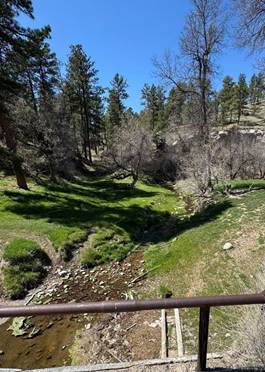
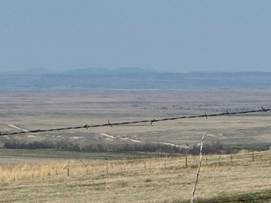

 Sunday Morning Greek Blog