Lectionary Help for Third Sunday in Lent, March 8, 2026, Year A.
Taking a look at the literary context and historical setting of the account of Jesus speaking to the woman at the well in Samaria can help answer a few questions people may have about this passage. For example, why was Jesus so insistent that he “had” to go through Samaria? Consider the following points.
John begins his gospel by saying Jesus is the light of the world and has been around “from the beginning.”
Jesus shows his earthly authority over the Temple at Jerusalem by overturning the tables of the money changers, yet that doesn’t seem to be enough for him to insist that Jerusalem is the proper (or only) place of worship.
The well where he meets the woman is Jacob’s well. Jacob, of course, is one of Jesus’s earthly ancestors, so Jesus is in the land of his ancestors when he first reveals (at least in John’s gospel) he is the Messiah. That fact shouldn’t be overlooked.
“He establishes Jesus is fully divine and that God is his Father. Since he’s God’s “only begotten” on Earth, Jesus then is the primary authority in the Temple, which the Jews believed was home of God’s presence. Finally, Jesus, having been established as the authority for the Jewish religion, essentially abolishes the long-standing prejudice against Samaria by going to the place where his ancestor Judah’s father, Jacob (renamed Israel) first established himself in the Promised Land after returning from Laban’s home. I think this aspect of the story lends to its credibility and to the principle of worship he puts forth.”
The epistles passage is Romans 5:1–11. This is where Paul makes the point that Christ died for us “while we were still sinners.” This ties in nicely with the woman at the well story, of course, as Jesus is offering the woman living water in spite of her current social and relationship status.
A few Old Testament passages can provide some background for the “living water” Jesus speaks of. Isaiah 49 (esp. vv. 6 & 10) speaks of springs of fresh water, while Jeremiah 2:13 and 17:13 both describe the Lord as the Jews’ “spring of living water.” Of course, we can’t forget Ezekiel’s prophecy in 14:8–9:
“On that day living water will flow out from Jerusalem, half of it east to the Dead Sea and half of it west to the Mediterranean Sea, in summer and in winter. 9 The Lord will be king over the whole earth. On that day there will be one Lord, and his name the only name.”
I pray this helps you prepare this week. I’m updating my previous message, which includes both NT passages, to reflect some of the things I’ve learned or rediscovered in my recent work in Romans.
Option A is John 3:1–17, which I’ll cover in this post.
On “born again” in John 3:3, 3:7:
A word study of ἄνωθεν (anōthen) along with the context of the discussion between vv. 3 & 7 suggests that the more likely meaning here would be as an adverb of place (“born from above”) as opposed to an adverb of time (“born again” or “born anew”). “Born of water” (vs. 5) most likely refers to natural birth, while “[born of] the Spirit” refers to being renewed by Spirit through his infilling, which of course can only come from above.
Regarding the Serpent on the pole:
God told Moses to fashion what in Hebrew is called a saraph (שָׂרָף śārāp̄), a bronze serpent that itself must have had a fiery appearance in the desert sun and put it on a pole so the Israelites who were bitten could look upon it and live. However, it did nothing for those who had already died. This bronze serpent was not an idol originally[1] but rather something akin to a sign of judgment on the Israelites. It couldn’t save them from the pain of being bitten by the snakes, but it would save them from the poison that had entered their bodies. Something else was absorbing the fatal penalty of their disbelief. It’s a bit of a mystery why the word for the winged angels, or seraphim, of Isaiah 6 is also translated snake or serpent elsewhere. Regardless of the specifics of what it looked like, it must have fostered some measure of fear among the Israelites. “You can look at the scary bronze snake, or you can die from the real ones.”[2]
The serpents were cursing the Israelites with death, but if they would look upon the image of the curse, they would live. Jesus took on the curse of sin for us by being lifted up on a cross. We need to look to Jesus to be saved.
May God bless your sermon and lesson preparation this week as we settle into the season of Lent.
I preached this message on February 22, 2026, the First Sunday in Lent, Year A.
When you think about it, Satanism, the worship of Satan, is an oxymoron. I know what you’re thinking, and you’re right. “That’s a weird way to start a sermon, preacher!” Yep, guilty as charged. But seriously, why would anyone want to put their “faith” in Satan when all the evidence points his core nature? He’s pure evil. He’s deceptive. He hates those who worship God. I would dare say he’s more interested in getting you to not worship and serve God than he is having people worship him. But he can ignore those people, because they’re already solidly in his camp.
John says this about the devil when he confronts the Pharisees in the Temple in John 8:
44 You belong to your father, the devil, and you want to carry out your father’s desires. He was a murderer from the beginning, not holding to the truth, for there is no truth in him. When he lies, he speaks his native language, for he is a liar and the father of lies. 45 Yet because I tell the truth, you do not believe me! 46 Can any of you prove me guilty of sin? If I am telling the truth, why don’t you believe me? [1]*
Adam and Eve had a first-hand encounter with Satan in the very beginning. He lied about what eating the fruit from the Tree of the Knowledge of Good and Evil could do for them. Yes, after eating the apple, they did experience the shame of their nakedness, so at least that much of what Satan said was true, but it was a half-truth at best. The lie that Satan told Eve was “You will be like God.” That was a lie in so many ways, and here’s why:
God is not just omniscient, knowing all that can be known, but he is omnipotent and omnipresent as well. Adam and Eve, relatively speaking, only got a fraction of the knowledge that God had about such things and NONE of the power or presence that God had. Their shame at disobeying caused them to fear the presence of God when God had designed Eden and the world for them to live in his presence. They lost power, because at that point, death became a necessity for survival. An animal would have to die to clothe them. Blood sacrifices became necessary for temporary atonement. And God’s son would have to die to redeem them forever from the curse.
Satan won that first round with God’s precious new creation, but out of that came the first prophecy of Satan’s defeat at the hands and feet of God’s son. It’s no wonder, then, that he thought he could try and pull that off when God’s one and only son came on the scene. If he could get Jesus to stumble, the world would be his, or so he thought.
In the garden, Eve had become convinced somehow that the forbidden fruit “was good for food and pleasing to the eye, and also desirable for gaining wisdom.” It shouldn’t surprise us that Satan used those same three categories to tempt Jesus in the desert as in our Gospel passage this morning. “I know you’re hungry for some food, Jesus. Go ahead and turn these stones into bread.” But Jesus knew, unlike Adam and Eve, that there was more to God than producing a little supernatural “manna” to satisfy what must have been an intense human experience of hunger. “Man shall not live on bread alone, but on every word that comes from the mouth of God.”
Satan tried to trick him by twisting a promise of God into a perversion of wisdom. “Come on Jesus. You know God will catch you if you jump off the top of the Temple here! Imagine the scene when the crowd watches the angels swoop you up at the last second! You’ll be a superhero!” But Jesus knows it is foolish to put God to the test like that, and rebuked Satan with that fact in no uncertain terms.
Satan had one more chance. He took Jesus to a high mountain where he had a “pleasing sight” awaiting him—”all the kingdoms of the world and their splendor.” But once again, Jesus knew the price was too high to go along with Satan’s schemes, and he knew none of them would bring about what God had promised him when he fulfilled his mission. “You know the commandment, Satan. I will have no other gods before me. He was there to “worship the Lord God and serve him only.” The liar failed at trying to fool the one in whom there was no lie and only truth.
And that was the beginning of the end for Satan. Jesus won that battle, but Satan didn’t give up that easily. He had to switch his focus to others, and most of you know who that would be: someone from his inner circle. The signs would be there early on that something wasn’t quite right with Judas. Even Peter gets some of the blame, but that, it seems, may have been more to his impetuous nature at times, and Jesus had other plans for him anyway.
The power of death was defeated at the cross. I’m sure that was something that Satan actually felt. Jesus had even told Peter that the gates of hell could not withstand the coming of God’s kingdom, and I think for a while anyway, as the church began to coalesce after Pentecost, God and Jesus kept Satan at bay to give the fledgling believers a head start at getting the gospel out.
I want to turn now to Romans 5:12–19, the other New Testament passage in the Lectionary readings today, to look at the results, if you will, of Jesus’s victory over death and how he, as the New Adam, broke the curse brought on by the First Adam, who through passivity allowed his wife to give in to the serpent and joined her in her disobedience. Romans 5 has a powerful message about how you and I can be strengthened in our own faith walk because of what Jesus accomplished on the cross and in his resurrection from the dead.
Hear what Paul has to say:
12 Therefore, just as sin entered the world through one man, and death through sin, and in this way death came to all people, because all sinned—
13 To be sure, sin was in the world before the law was given, but sin is not charged against anyone’s account where there is no law. 14 Nevertheless, death reigned from the time of Adam to the time of Moses, even over those who did not sin by breaking a command, as did Adam, who is a pattern of the one to come.
15 But the gift is not like the trespass. For if the many died by the trespass of the one man, how much more did God’s grace and the gift that came by the grace of the one man, Jesus Christ, overflow to the many! 16 Nor can the gift of God be compared with the result of one man’s sin: The judgment followed one sin and brought condemnation, but the gift followed many trespasses and brought justification. 17 For if, by the trespass of the one man, death reigned through that one man, how much more will those who receive God’s abundant provision of grace and of the gift of righteousness reign in life through the one man, Jesus Christ!
18 Consequently, just as one trespass resulted in condemnation for all people, so also one righteous act resulted in justification and life for all people. 19 For just as through the disobedience of the one man the many were made sinners, so also through the obedience of the one man the many will be made righteous.[2]
Even though Paul says plainly in 1 Timothy 2:14 that it was Eve who was deceived and sinned first (sorry, ladies, I’m just the messenger here), Paul considers the blame for “original sin” to be squarely on Adam’s shoulders. Adam had one command, and he (and Eve) blew it. But because it was a single command and the Law had not come yet, God could not permanently charge Adam with a violation of his law. Instead, they were expelled from the garden because they could not be trusted. That doesn’t mean they weren’t loved, though. God would declare even as he announced their punishment that the seed of the woman would crush the head of the serpent.
Paul demonstrates that Jesus fulfilled the role that Adam never could. Adam’s disobedience or lack of faithfulness brought sin into the world, but Jesus’s one act of faithful obedience, submitting to crucifixion, is the only act that could defeat the power of sin once for all and bring righteousness to all who would follow him. It took one sin by Adam to mess up things for everybody, but one faithfully obedient savior to restore us to God in his righteousness.
Romans says that Jesus Christ is our righteousness. He earned that designation by fulfilling the whole Law of God. But God still needed that once-for-all blood sacrifice that would make the animal and grain sacrifices of the Old Testament completely obsolete. Jesus was the only one who could be that spotless lamb. But it wasn’t just because of his 100% obedience to the law. The crucifixion had one more element that made it absolutely effective and impossible for the devil to challenge or destroy: It was love, pure and simple.
“For God so loved the world.” Only a perfect man with a fully divine nature who showed us beyond a shadow of doubt how he and his Father loved us in person and face to face could make that sacrifice. The bulls and goats and birds that were sacrificed under the Old Covenant could not ever love us the way Jesus did and does, which is why his sacrifice stands not only above the old sacrificial system, but above every other religion as well. Buddha, Siddhartha Gautama, was a real person, but he never loved anything about the world that should have mattered to him. He just tried to obtain a state of nothingness, a very selfish goal that no one else, by definition, could help him achieve. There’s no personal connection there and no promise of any help from the supernatural realm. Jesus’s sacrifice was by far the most superior of any that could have happened on this world God created with love, and the only one that can guarantee us eternal life in God’s glorious new kingdom.
As believers, then, know that you are “in Christ” in every sense of the concept. We are baptized “into Christ,” which means we are baptized into his death. So we share in his death so we can be free of the requirements of the law, beneficiaries of grace, and servants of righteousness. As you go forth in the world from here, declare God’s word unashamedly to those who need to hear the hope of his good news. Amen.
[1]The New International Version. 2011. Grand Rapids, MI: Zondervan. *I didn’t say it in my message, but I sure thought about adding: “The Pharisees must have had Jesus Derangement Syndrome.”
I presented this message on January 25, 2026, at Mount View Presbyterian Church, Omaha, NE. On the liturgical calendar, it was the third Sunday after the Epiphany, Year A.
Good morning! The Lord be with you!
Much of today’s gospel passage from Matthew is very similar to the events and themes we covered in last week’s Gospel passage from John. As such, I’m not going to spend much time in that passage today and instead want to look at our Old Testament reading, Psalm 27.
However, I will say a just a few words about the Matthew passage because there is a story in Matthew 4 that appears at first blush to disagree with John’s account about a similar encounter. Last week you may remember that Andrew was the first one of the disciples to want to follow Jesus, and he had meet Jesus at the place John the Baptist was baptizing in the Jordan River. He in turn went and got his brother, Simon Peter, to share the news that he had found the Messiah. After Peter met Jesus, John says they went and spent the day with Jesus.
Matthew’s account, as you heard, also has to do with the calling of Andrew and Peter, along with James and John, the sons of Zebedee as they’re fishing in the Sea of Galilee. However, in Matthew’s story, this comes immediately after Jesus spends 40 days fasting, praying, and being tempted in the wilderness. It seems clear then, that one of the things Jesus was praying about was who, among all the people he had met and interacted with during John’s “baptism revival,” would make the best choice for his band of 12 disciples. After all, Jesus had been in the wilderness 40 days, so it’s possible Andrew and Peter may have wondered what happened to him by that point. I’m guessing the four of them were pleasantly surprised to get the call from him, even if they didn’t yet understand the kind of commitment they were making.
The important takeaway for us in the choosing of Matthew is that Jesus wasn’t apparently looking for the well-educated scribes and well-respected, Pharisees, and Sadducees to be his followers. They surely would have argued with him the whole time given what we learn about them in the gospels and Jesus wouldn’t have gotten anything done. Although Jesus did come to preach repentance and a proper understanding of what our relationship to the Law and eventually Grace would look like, he was even more concerned about bringing people eternal hope, love, and joy in the midst of a religious structure that had grown increasingly legalistic and impersonal. The religious leadership of the Jews seemed to have a stranglehold on what the Jewish faith should look like, with hundreds of extra rules in place to keep you from even coming close to breaking the law.
This is where Psalm 27, a psalm of David, comes in. David’s leadership helped establish the nation of Israel as a regional powerhouse after 40 years of wandering in the wilderness and a few hundred years of rule by regional judges. It was during the period of Joshua and Judges where they conquered and in some cases wiped out nations that had “earned” the wrath of God for their wicked practices and animosity toward God’s chosen and beloved people.
Psalm 27 is filled with confident assertions and positive desires from David that he and perhaps the rest of Israel are in a right relationship with God. The Israelites were still adjusting to being a unified “kingdom,” not just scattered tribes ruled by local judges. But the attitude and the joy expressed by David in Psalm 27 seems to reflect a different mind set in his day than what comes across in the gospels. After all, you don’t see any of the Herods writing these kinds of psalms of praise! On the contrary, we get the impression that the Herodian Dynasty, which had descended from the Maccabees who had overthrown Greek rule almost 200 years prior to Jesus’s ministry, had become corrupt and heartless toward their own people in trying to appease their Roman overlords.
Our reading this morning left out a few verses from Psalm 27 this morning, so I would like to read through the whole Psalm a few verses at a time to talk about what it has to say to us this morning. We’ll start with vv. 1–3:
David didn’t have Pharisees and Sadducees telling him how to interpret God’s word and who added a “hedge” around the law. The “hedge” was a set of rules that rabbis had established much later in Israel’s history, probably sometime around 200 B.C. They were not strictly biblical commands, but they were guidelines intended to keep you out of situations that might increase the temptation to sin. It’s sort of like how some denominations today don’t want their members to dance because it might lead to “other things.” One such example from the Bible is when Jesus criticized the Pharisees because they tithed their mint, dill, and cumin—the smallest spices they knew about—but did nothing about justice, mercy, and faithfulness (Matthew 23:23).
David knew where his power and protection came from in Psalm 27: it came straight from God. He is emphatic that he has no need to fear. He knows his enemies will stumble and fall regardless of who comes after him. That is true faith, true confidence in God’s sovereignty. It’s no wonder he was called a man after God’s own heart.
4 One thing I ask from the Lord,
this only do I seek:
that I may dwell in the house of the Lord
all the days of my life,
to gaze on the beauty of the Lord
and to seek him in his temple.
5 For in the day of trouble
he will keep me safe in his dwelling;
he will hide me in the shelter of his sacred tent
and set me high upon a rock.
6 Then my head will be exalted
above the enemies who surround me;
at his sacred tent I will sacrifice with shouts of joy;
These three verses are interesting in that David speaks of God’s dwelling, his temple. Yet at this time, the first Temple had not been built yet. But twice, David references God’s “sacred tent.” This is a reference to the Tabernacle that the Jews had carried around in the wilderness for 40 years and was in use by David and the priests right up to the time Solomon built the Temple (1 Chronicles 6:32; 2 Chronicles 1:5)[3].
David understood the importance of a leader being present at worship regularly as an example to the people. David had brought the Ark of the Covenant back to Jerusalem, so had been in the visible presence of God at least one time in his life. That is how he knows how awesome it is to gaze on the beauty of the Lord.
How does that apply to us today? We know when Christ died that the veil was torn in two, from top to bottom, so God’s presence no longer “hid” behind a thick curtain. God’s new way of working in his people after the death and resurrection of Jesus was to give each of us the Holy Spirit. So we most likely will not see a manifestation of the presence of God inside our four walls here, but we can see how the Holy Spirit is working in each of us as we fellowship, worship, and serve together in his name and for his glory.
David also realized in times of trouble that being in God’s presence allows him to call upon the Lord for mercy, protection, and strength. He asks God to “hear my voice” and for God not to “hid your face from me.” He desires to be taught continually so he is better able to serve God and lead his people away from and protect them from the dangers of the surrounding nations. He knows that people are out to get him. He knows God is the only one who can protect him from those aggressors.
We do this as well on Sunday mornings here, and throughout the week, by praying together for those things that are on our hearts. As a fellowship we can seek support from one another to receive comfort and strength. In all my years as a minister, I’ve lost track of how many people have told me they don’t have to go to church to be a Christian. Technically, that may be true, but it sure makes the Christian walk much easier when you have others around you who share the struggles and joys of human existence.
This is David’s concluding benediction, which seems to serve the same purpose in worship as something like our “Gloria Patri” or the Doxology choruses. David reaffirms the confidence he had in vs. 3. He calls on all the worshipers to “Wait for the Lord.” The most common translation for the Hebrew word translated “wait” [קָוָה qāwā(h)] is “hope.” David is waiting, hoping with confidence that the Lord himself will act to keep him and his people safe in the land of the living. David also calls the worshipers to “be strong and take heart,” something both Joshua and Jesus said in their respective ministries.
Early in Joshua’s account of taking the Promised Land, he writes to his fellow Israelites:
6 Be strong and courageous, because you will lead these people to inherit the land I swore to their ancestors to give them.
7 “Be strong and very courageous. Be careful to obey all the law my servant Moses gave you; do not turn from it to the right or to the left, that you may be successful wherever you go.
……….
9 Have I not commanded you? Be strong and courageous. Do not be afraid; do not be discouraged, for the Lord your God will be with you wherever you go.”[6]
Jesus said in his final instructions to his disciples just before his prayer at the end of the Last Supper:
33 “I have told you these things, so that in me you may have peace. In this world you will have trouble. But take heart! I have overcome the world.”[7]
So I leave you with those words of encouragement this morning. May the peace of God reign in your hearts as you go from this place. Amen.
[3] In 1 Chronicle 23:26, David relieved the Levites of their responsibility to carry the Tabernacle since Israel was permanently settled in Jerusalem.
With apologies to VP JD Vance for mimicking his title.
I do not do much personal reflection in this blog. I’m mostly about exegesis (studying the text of the Bible in its original languages), hermeneutics (applying the results of exegesis to the understanding and meaning of the Bible), and lately homiletics (declaring the understanding and meaning of the Bible, especially as a sermon or homily, or in this case, a blog post). This ties in with the taglines for my blog that I put on my “business” card: “Dig deeper. Read Smarter. Draw Closer.” This past weekend, I took the opportunity to go to Fort Robinson State Park in northwest Nebraska to share in a fly fishing expedition with several guys (and the wife of one of them) from our church, including our pastor. The Fort Robinson area has several excellent fishing areas, including several streams and creeks; the first ten miles or so of the White River, which ultimately runs through the Badlands in South Dakota and empties into the Missouri River; and several ponds. Many of these locations are stocked by the State fisheries with trout and other popular species of freshwater fish.
I had never done fly fishing before, but the chance to get away and spend some time with friends old and new outweighed any anxiety I may have had about that. I only spent a few hours fishing at a couple ponds and in the White River, but it was long enough for me to observe others doing it, and I got pretty good at the casting part. I had a few curious little fish check out my fly, but never did land anything, which was okay by me. I was just grateful to be there.
Putting the Pieces Together
Part 1: Reflecting on Exegesis
The timing of the trip was divinely appointed for me as it coincided with some serious reflection I’ve been doing about the relationship between the depth of Bible study I typically do (“Dig Deeper”) and what I expect from the small groups I attend or help lead. That reflection was prompted by a recent post from one of the other pastor-bloggers on WordPress, Veritas Domain, and his short article about his “simplified” exegetical method. His method is similar to mine in that there is a heavy focus on the text itself, which is not unusual. I’m trained in Greek and Hebrew, so I start with those texts first, or at least have them open in parallel with the English translation so I can take note of key words (“Read Smarter”). If I’ve done those first two steps, the “Draw Closer” principle usually follows quite nicely.
In my comment back to “SlimJim,” I mentioned that my method was similar, but along with that, I’m finding that my experience with the two small groups I’m connected with at my church and even with my preaching is that having the knowledge that comes from that kind of in-depth study may not always go over well with those who don’t have that specialized training. In our men’s group, I can typically get away with sharing that when I feel it adds something to the discussion, but even then, one of my friends in the group (who happens to be a preacher’s kid) will sometimes say “All that is nice to know, but I want to know what makes me a better Christian, a better man of God.” That is, he wants to get to the “Draw Closer” part.
This brought to mind an article I read a number of years ago (a 1997 issue of Leadership magazine) by Haddon Robinson, in which he’s quoted as saying, “More heresy is preached in application than in exegesis.” In other words, some of us preachers may be pretty good at exegeting and interpreting God’s word, but how are we doing about translating that into action for our respective audiences? Does it really matter if a divine command is in the aorist tense versus the perfect tense if we don’t follow the command ourselves or encourage our audiences to follow the command, or worse, manipulate the command with malicious intent?
Part 2: The Fort Robinson Retreat
I had decided I would drive to Fort Robinson from Omaha, where I live, by way of Nebraska State Highways 92 (first half) and 2 (second half). Together, those two routes take you through the heart of the State, east to west. In addition, Highway 2 runs through the heart of the Sandhills. If you look at a satellite view of Earth along Highway 2, you’ll see that these Sandhills look like a bunch of sand dunes, but they all have grass growing on them, and several small ponds or lakes are scattered throughout. As I was driving through the Sandhills and listening to Rich Mullins and the Passion CDs (yeah, those date me), I began to understand what the Holy Spirit was trying to teach me. But he was only getting started.
I arrived at Fort Robinson State Park after dark, but not so late that I didn’t get to connect with my church friends who had already been there for a full day. We had breakfast the next morning at a small café in nearby Crawford, then struck out to fish. I went with a friend who had been in my small group when I moved back to Nebraska in 2010 and two of his (now grown) sons whom I hadn’t seen in quite some time. It was my first time fly fishing, so my goal was to get the hang of casting and extending my line. We tried the Ice House pond and then walked about a mile to couple bends in the White River (only about 10 miles from its headwater at that point, so no more than about eight feet wide if that. I had a few nibbles at the pond, but nothing in the river. From there we went back to the Grabel ponds, where I finished out the morning having developed a pretty good technique to cast and extend my line, even landing it on top of a 12-inch fish and spooking it away for a moment.
While I was at the section of the White River, I couldn’t help but think and marvel about how God created a means for distributing life-giving water throughout a continent (I knew the term “hydrology,” but I had to look up “limnology” as I was writing this paragraph), especially since, at the end of this month, my brother and I will be at the other end of the White River in South Dakota where it flows through the Badlands (and earns the name “White” from its sediment) and into the Missouri River south of Chamberlain for another fishing trip. God’s creation is an amazing and wonderful thing. That was what the Holy Spirit was continuing to show me, but not for the reason you might think.
Part 3: Sowbelly Canyon Road
One of the sights I had heard about from the guys who had gone up the previous year was Sowbelly Canyon, just north of Harrison, Nebraska. I had no idea what to expect from a “canyon” in Nebraska; certainly nothing like Poudre River Canyon in Colorado where my wife’s family has a cabin. Poudre Canyon is about 50 miles long, and the Poudre River is relatively wide in the canyon. Sow Belly is unique in its own way and was surprisingly beautiful and “cool” in more ways than one. I wish my wife would have been able to come along on this trip.
As you’re driving west on US 20 toward Harrison, you see nothing but a bunch of gently rolling hills on either side of the highway. One would never expect a place of such beauty was just beyond those rolling hills. Even as you crest the top of the canyon, you see an amazing sight below: a single lane dirt road running under a canopy of trees, with unusual rock formations atop the buttes, some of which have formed at right angles. The descent is moderately steep, and at times you have a wall of the canyon on your right (descending) and your left (ascending). At the bottom of the canyon is a small, babbling brook that must have taken a few centuries to form the canyon.
Just before you get to the end of Sowbelly Road on the east end (where it joins Pants Butte Road; no, I’m not making that name up), there’s a spot where you can see at least 80 miles to the north to the Black Hills in South Dakota (the dark mound in the far horizon). Something special happened between God and me via the Holy Spirit on that road, and especially with this particular view. I gained a whole new appreciation for the beauty, majesty, and grandeur of God’s creation. I’d expect something like that in Colorado; I never expected that in seemingly plain old northwestern Nebraska. Boy, was I wrong. What God had started teaching me in the Sandhills came to full fruition at the top of Sowbelly Road.
Part 4: Worldview, Wonder, and Wisdom
So let me bring this all together now. You might remember I started out talking about exegetical methods, methods that were heavily focused on the textual features like grammar, syntax, verb mood and tense, etc. Then it hit me: nothing in my exegetical method intentionally accounts for the majesty and glory of God and his creation. I knew I had to work that in somehow. But God still had one more piece to show me, and it hit me last night at our last small group of the season. Our senior pastor had been with us on this trip, but Sunday morning, one of the teaching pastors was preaching on the trauma Job experienced. I had tried to listen to it Sunday morning while driving through the remotest part of western Nebraska, but just couldn’t get a steady signal.
Fortunately, our Tuesday night group covered it in the study last night, and it was when we were talking about the ending of the book of Job that everything God had been teaching me finally made sense. Job had been arguing with God and his friends about how righteous he was and how he had always given God glory and so on, but God put him in his place. God recounts for Job all that He did by questioning Job: Did you lay the foundations of the earth? Did you create Leviathan and Behemoth? Who are you to tell me how I should act toward you?
That’s when I realized that I’m like Job in that moment. I think I have such a great exegetical method that will keep my doctrine sound and shred every stronghold that tries to set itself against God Almighty, but God’s word is more than the text and the grammar and verb moods and tenses and the participles and the conditional clauses. Those things are static, unchanging. But what does Hebrews 4:12 say? “For the word of God is alive and active. Sharper than any double-edged sword, it penetrates even to dividing soul and spirit, joints and marrow; it judges the thoughts and attitudes of the heart.”[1] Can grammar and syntax do that? I think not.
The other thing that occurred to me is the backstory of how the Jews would understand God’s word versus us gentile Christians. I’ll use just one example here: Communion, or as some call it, the Lord’s Supper or the Eucharist. When we look at the elements (“substantiational” leanings aside), we are meant to experience Christ in some way by “remembering” him. We see one man crucified and risen. But what do Jews remember at Passover? Not one man dying, but ALL the firstborn dying who weren’t protected by the blood of the lamb that they themselves applied to their doorways. They remember God parting the Red Sea so the Israelites could escape the oncoming Egyptians. The disciples didn’t understand immediately that Christ’s death had won them forgiveness and freedom. The Jews DID understand that immediately, with hearts pounding witnessing the very miracles of God at work to rescue them, even as they would tell the stories year after year to their descendants.
Conclusion
In other words, when I exegete and interpret Scripture, I need to look beyond the text and the grammar and all the other “in-the-weeds” details to comprehend a grand vision of a great God and all that he has done and made. That’s where the “draw closer” takes place, as it did for me this past weekend, when I understood who I am in God’s kingdom and that, in spite of his greatness and grandeur, he looks with love at the least of us, at the humblest of us, at our faithfulness. He looks with compassion at those who are lost and searching and even at those who may be angry with him or agnostic toward him, prompting us to share God’s “living and active” word with those who have not yet comprehended that greater vision.
From this point forward, then, I’m adding a couple permanent elements of my “principlizing bridge” (to use Grasping God’s Word’s language) will be to ask first, “How does this passage reveal the glory and majesty and mystery of God to the world?” and second, “How is this passage ‘alive and active’ not only to me but to those I encounter as well?” I feel like I drew a little closer to God this weekend. I pray that my testimony here will do the same for you.
Pastor Scott Stocking, M.Div.
All contents herein are the creative and intellectual property of this author unless otherwise attributed.
I delivered this message Easter (Resurrection Sunday), April 20, 2025, at Mount View Presbyterian Church in Omaha, Nebraska. I focused on the theme of “running,” picking up on the account of Peter and John “racing” to the tomb.
Good morning! Hallelujah, Jesus is Risen!
The Bible has a running theme. No, seriously, the Bible talks a lot about “running” in the context of our faith. Consider these two verses from 2 Samuel 22:29–30 (par. Psalm 18:28–29) NKJV:
The running theme carries over into the New Testament as well, especially in Paul’s letters:
There’s 1 Corinthians 9:24 (NIV): “Do you not know that in a race all the runners run, but only one gets the prize?”[4]
And Galatians 2:2b (NIV): “I wanted to be sure I was not running and had not been running my race in vain.”[5]
Even the author of Hebrews gets in on the theme in 12:1–2a (NIV): “Therefore, since we are surrounded by such a great cloud of witnesses, let us throw off everything that hinders and the sin that so easily entangles. And let us run with perseverance the race marked out for us, 2 fixing our eyes on Jesus, the pioneer and perfecter of faith.”[6]
We see the running theme in the parable of the prodigal or “lost” son in Luke 15:20 (NIV), although in a slightly different way when it comes to the father in the parable:
“But while he was still a long way off, his father saw him and was filled with compassion for him; he ran to his son, threw his arms around him and kissed him.”[7]
A few verses later, we learn why the father ran to greet his son: “‘This son of mine was dead and is alive again; he was lost and is found.’ So they began to celebrate.”[8]
I think you see where I’m going with this now, right? In our gospel passage this morning, however, Mary and the disciples aren’t looking for a “lost” or prodigal son, but, as they will realize shortly, the once dead and now risen Lord and Savior, Jesus Christ. Mary runs to tell the disciples the news, and Peter and John run, no race back to the tomb to see if what she’s telling them is true. The news was that incredible that they couldn’t just take a casual morning stroll back to the tomb.
Now before I dive into this morning’s passage from John, I want to do a quick sidebar on one of the most common questions people ask about the crucifixion and resurrection. Jesus was crucified on a Friday and rose from the dead on Sunday. That sounds like about 48 hours, right? Two days? But Jesus had predicted all along that he would rise on the third day. He “borrowed” that timeline from the prophet Jonah, who had spent three days and nights in the belly of the great fish. By Jewish reckoning, the first day of anything is “day one.” We see that in Genesis: “There was evening and morning, the first day.” Jesus was arrested (i.e., “swallowed up”) on Thursday evening after sundown and subjected to a rigged trial that was illegal by Jewish laws in several ways had sealed his fate before it even started, so the period from sundown Thursday through sundown Friday was “the first day.” The Sabbath, of course was on Saturday, having begun at sundown Friday night, the second day. This of course makes Sunday the third day. Jesus could have risen any time after sundown Saturday night and would have fulfilled the prophecy of rising on the third day.
In fact, John’s account tells us it was still dark when Mary Magdalene got to the tomb Sunday morning. John says nothing about whether the guards were there. I’m guessing not, though, as they probably ran off terrified that the stone rolled away seemingly all by itself. Matthew says the guards had to make up a story about it, but they most likely would have been disciplined if not executed for their inability to keep a dead man in a tomb. The details differ among the gospel writers, but I’ll stick with John’s narrative here the rest of the way. Mary didn’t wait around to find out what happened. She had apparently looked in the tomb before running back to Peter and John (“the other disciple”) because she told them Jesus wasn’t there anymore.
Peter and John went racing back to the tomb. John made sure he reported that he won the race, but Peter went in first. Isn’t that the reverse of the Prodigal parable? The prodigal Peter, who had denied knowing Jesus three times during the illegal trial, came running back to his savior. It seems odd that they just looked into the tomb and apparently shrugged their shoulders at each other. John tells us that he and Peter found strips of linen there and a separate head cloth when they went into the tomb. Not sure what that means for the Shroud of Turin. But it does suggest that someone had to unwrap Jesus, unless his arms weren’t secured to the body.
Because they still hadn’t put two and two together yet, they decided to head home. No further investigation; no searching for clues or footprints in the dust; no trying to find eyewitnesses that may have seen what happened. What’s especially surprising to me is this: why did they leave Mary Magdalene at the tomb all alone, still crying in grief and shock that someone might have stolen Jesus’s body? Not very gentlemanly of them. And they missed the best part.
Mary, however, did not miss the best part. When she looked into the tomb again, she saw the angels, probably the same ones who unwrapped Jesus’s body that morning. Why weren’t they there when Peter and John went in? Difficult to say, except perhaps that they should have been able to recall Jesus’s teaching about him rising from the dead after three days. Or maybe it’s because Mary was the first one to arrive at the tomb, so she got to be the first one to see him when he made his appearance. Jesus was apparently just freshly resurrected, because Mary couldn’t touch him for whatever reason.
The fact that Mary has a validated claim of being the first to see Jesus risen (besides perhaps the Roman guards) might add some credibility to the resurrection story. If Peter and John had been the first ones to see him alive, it’s possible they could have been accused of a conspiracy to hide the body and say he rose from the dead. It would be more incredible to believe that a couple older Jewish women could have carried his body off than it would be to believe Jesus had risen from the dead.
Jesus told her to go find Peter and the rest of the disciples and let them know he was indeed alive. The disciples don’t have to wait too long to see the risen Savior for themselves. That very night, Jesus would appear to them behind locked doors and reveal himself. Jesus was revealing himself to more and more people and would continue to do so for the next 40 days or so to establish an irrefutable claim that he had indeed risen from the dead. He had won the victory over death and the grave so that we also could live in that hope of the same victory.
What is the message we can take from this passage today, that the disciples ran to see if the hope of Jesus survived his crucifixion? Well, lately I’ve been seeing news reports that people, especially young people, are coming back to church after the COVID shutdowns had decimated many congregations. The White House has established an Office of Faith that is, ostensibly, looking out for the rights of those who live out their faith but have been hounded or cancelled by antireligious forces. We’re even seeing some politicians be more sincerely bold about speaking about faith matters. If we’re in the start of a revival in our country, let’s jump on the bandwagon!
I want to read to you part of an opinion piece that came out Saturday morning from columnist David Marcus. In it, he speaks of the connection between the suffering the church experienced through COVID and the beautiful end result that the church experienced in history after other periods of suffering:
Perhaps we should not be surprised that the bitter cup of COVID led to greater religious observance by Christians. After all the Holy Spirit, speaking through the prophets, has told for thousands of years of periods of loss and suffering that end in the fullness of God’s light.
From the banishment from Eden, to the Flood, to the Exodus, and finally Christ’s 40 days of starvation and temptation in the desert, again and again, it is suffering that brings God’s people closest to Him.
During COVID, our desert was isolation, and especially for young people, it only exacerbated what was already a trend of smartphones replacing playgrounds, of virtual life online slowly supplanting reality.
At church, everything is very real, much as it has been for more than a thousand years. At church, we are never alone. At church, things can be beautiful and true and celebrated, unlike the snark-filled world of our screens that thrives on cruel jokes.
Human beings need a purpose and meaning beyond being a cog in the brave new world of tech. We need connection to our God and to each other.[9]
I hope that Mount View can be a place where you continue to find connection to God. If you’re visiting today, I hope and pray that you’d want to stick around and discover more of that connection to God. And if I may speak from my own heart for a moment, I want to say this: I’ve been filling the pulpit off and on for over 3½ years at this point, and much more frequently since last October. You have grown on me, and I hope that you’ve grown with me. And I pray that the testimony of your fellowship will attract more and more people who desire to connect with God. I pray that the messages here as people download them from the Internet will bear much fruit wherever it is heard and repeated.
The church is winning the race to win the hearts and souls of those who seek a deeper connection with God and with their own faith. I mean, who would have ever thought that the American Idol reality show would have a three-hour special featuring “Songs of Faith” like they’re doing tonight! I’d say the Spirit is on the move! You and I may never be on American Idol, but we can be bright and shining lights so that the world may know the hope we have.
On this day when we celebrate the resurrection of Jesus, I want to close with an encouragement to you from Paul’s letter to the Ephesians, 1:18–20 (NIV):
I pray that the eyes of your heart may be enlightened in order that you may know the hope to which he has called you, the riches of his glorious inheritance in his holy people, 19 and his incomparably great power for us who believe. That power is the same as the mighty strength 20 he exerted when he raised Christ from the dead and seated him at his right hand in the heavenly realms.[10]
Amen, and have a blessed Resurrection Sunday with friends and family.
I preached this message on April 6, 2025, which was also National Tartan Day. I wore the standard Gordon family kilt (great-great-grandfather through the maternal line) and the necktie is Gordon Red (purchased in Scotland). I’ve included a few pictures. Now I can say I’ve preached in a kilt! :-)
The Lord be with you.
Before I get to my main message, I want to go back a few months when I preached on Psalm 126, our Old Testament reading this morning, because it was also our reading on October 27. At that time I said that we should consider verse 4 a prayer for this congregation: “Restore our fortunes, Lord, like streams in the Negev.” That continues to be my prayer for this congregation today, and I hope it is yours as well. I heard recently that church attendance is starting to pick up again, so I pray we can take the opportunity to tap into that resurgence.
Our gospel passage this morning, John 12:1–8, is one of the few stories of Jesus’s ministry that all four gospel authors included, probably because Matthew and Mark both said that what she’d done would be told wherever the gospel was preached. Matthew and Mark both include the story after the time of Jesus’s triumphal entry into Jerusalem and two days before the Last Supper. Luke places it much earlier in his gospel, and he emphasizes that the woman’s sins were forgiven because of what she’d done. We can’t be sure why Luke has the story so much earlier. He may be “borrowing” it from the future in his gospel so he can tie it in with the story of the response to forgiveness based on the depth of one’s sins.
But in our passage this morning from John, he places the story just before Jesus’s triumphal entry into Jerusalem. This event may serve to bring to mind the anointings that the Israelites were commanded to do for their priests and kings. Listen to what David says in the very short Psalm 133:
This refers to Leviticus 8, where not only was the oil poured on Aaron’s head for consecration, it was also used to consecrate everything in the newly assembled tabernacle. Matthew and Mark do not name the woman who brings in the alabaster jar. Nothing in those accounts suggests they know who the woman is. Luke says the woman lived a sinful life and suggests she shouldn’t even be there.
John is the only one who names the woman in his gospel. The woman is Mary, Lazarus’s sister. We do know a bit more about Mary and Martha than other people mentioned in passing in the Gospels. At the end of Luke 10, Martha is frustrated with Mary because she is sitting at Jesus’s feet listening to his teaching while Martha is busy preparing a meal. This probably isn’t the meal John mentions, and it’s nowhere near Luke’s account of the foot anointing. In the previous chapter of John, Jesus had raised Lazarus from the dead to prove he was the “resurrection and the life.” Lazarus’s death seems to have hit Mary the hardest in that story, as she is the one who seems most disturbed by Jesus’s delay in coming to see Lazarus. It makes sense, then, that Mary would be the one who wanted to anoint Jesus’s feet for resurrecting her beloved brother.
John is the only one who doesn’t indicate that the container for the nard was an alabaster jar, but the alabaster jar was considered the most appropriate container for nard or perfume at that time, so I think we’re safe to assume it was. Alabaster was made from gypsum, so it was somewhat delicate and finely textured. Breaking the seal probably meant that the neck of the jar had to be broken to pour the thick nard out and apply it. It wasn’t a very big jar either. We know it was about a pint, and it would have all had to have been used at that moment; otherwise it would spoil or lose its aroma. Matthew and Mark say the woman poured the nard on Jesus’s head, much like it would have been for the OT priests mentioned above, while Luke and John say the woman poured it on Jesus’s feet, perhaps an acknowledgment of Jesus’s servant attitude.
Although the details of this story vary among the gospel accounts, a couple themes of the story do stand out across the board. Many of those present at the dinner, especially Judas Iscariot in John’s account, view this as a wasteful act. This perfume was not cheap; Judas, along with other players in the parallel account, are concerned that such a valuable commodity could have been sold so the money would be given to the poor. John reminds us though that Judas’s concern was more selfish than compassionate. Judas had been helping himself to the till.
What this tells us, I think, for our walk with Christ today is that it’s okay to be a little extravagant when giving to the Lord’s work. Now obviously we don’t need to prepare Jesus for another crucifixion as the woman was doing in that day. But just as Jesus turned the water into the best wine served at the wedding at Cana for his first miracle, so we too can dedicate our excellence in whatever we do for or offer to the body of Christ and the work of the kingdom.
A second principle at work here is that, while the work of helping the poor is noble and a never-ending ministry of the church, there will be times when we have to take care of our own, and I’m not necessarily referring to when we die. It’s not selfish when we do that. It’s a necessary part of taking care of our family. While our loved ones are alive, we buy thoughtful gifts for them. When they pass, we pick out a nice coffin or urn. The ancient Jews used an ossuary, basically a stone box, to store the bones of a loved one once the flesh had decayed and often would put some sort of inscription on it. When the Jews brought Joseph’s bones out of Egypt, it was most likely in an Egyptian mummy case. That’s a little odd for us to think in those terms today, though, so we find other ways to memorialize our loved ones.
Unlike the pharisees and Judas Iscariot then, we should not look with judgment on those who do nice things for their loved ones at death. How we choose to remember a loved one is an important part of the grieving process. But I have to wonder here: Mary had already witnessed Jesus raise her brother Lazarus from the dead. Did she, or any of the other disciples for that matter, have any inkling that Jesus’s impending crucifixion might be followed up by his own resurrection? Judging from the disciples’ reaction in the gospels when Jesus spoke of his death, I’m pretty sure they hadn’t put two and two together yet.
Our gospel passage this morning has focused on what Mary did to prepare Jesus for his death. But what was Jesus doing to prepare his disciples for his death? We’ll address some of this after Easter in the Sundays leading up to Pentecost, but for now I think it’s important to see that, although he was speaking somewhat figuratively at times, he did not leave his disciples without reason for hope after his death.
The next event after our gospel passage this morning is Jesus’s triumphal entry into Jerusalem: Palm Sunday as we’ve come to know it. Chapter 13 is the Last Supper, where Jesus imparts his final teachings to his disciples before his arrest and crucifixion. John recorded five chapters worth of Jesus’s words, longer than the Sermon on the Mount. In those final hours he has with his disciples, he:
Models servanthood by washing their feet
Predicts Peter’s denial
Reassures them that he’ll come back to take them to the place he’s preparing for them
Promises the Holy Spirit will dwell in them and guide them in all truth
Encourages them to stay connected to the vine, to Jesus, so they can bear fruit
Reaffirms the coming, indwelling power of the Holy Spirit
Predicts that they will be scattered, but they will also eventually know peace
Prays for their unity so that the kingdom can move forward and their faith will be unshakable.
That must have been quite the emotional and gut-wrenching after-seder gathering. Most of what John records in those chapters was unique to his gospel. None of the other Gospel come close to the depth of this teaching. Luke and Matthew have passing references to receiving the Holy Spirit without too much detail to describe it. As a gospel writer, John seems to have had special dispensation to capture these final teachings. He, after all, was the only one who shows up at the cross on crucifixion day.
This is not to discount the other teachings of Jesus prior to his triumphal entry. His whole ministry was about preparing you and me for the new way God would work among his people. The Sermon on the Mount and the parables in Matthew; Luke’s sermon on the plain; and Mark’s emphasis on the urgency of Jesus’s ministry are all signs in their own way that Jesus was preparing ordinary people to extraordinary things for the kingdom of God.
Isaiah looked forward to this new time in 43:18–19:
As we continue toward Easter, you and I know how the story ends. We do not need to fret like those first disciples. We know we have the victory. We know we have forgiveness. We know we have the empowerment of the Holy Spirit. Let us go forth from here boldly and confidently in that knowledge and be shining lights for the Savior! Amen.
I preached this message on Sunday, March 23, 2025, at Mount View Presbyterian Church. I dealt with all four passages for the Lectionary for this Sunday.
Bearing Fruit…and the Cross
Lent is typically thought of in the Christian world as a time of sacrifice. Some people give up meat only to crowd into the numerous fish fries around town. Others might give up chocolate or coffee or caffeinated beverages or shopping or any number of other things that we might consider “vices” personally, but most of those things are not innately spiritual and may in fact make us a bit more difficult at times to live with if we haven’t had our morning cup of Joe. I’m teasing you a bit, of course. But if Lent is supposed to bring us some spiritual benefit, then shouldn’t we be giving up things that can damage our relationship with God? Why not give up greed, pride, selfishness, and other such things?
That seems to be the underlying theme behind our passages today. They might be summed up by John’s exhortation when he was preaching in the wilderness in Luke 3:8: “Produce fruit in keeping with repentance.” In other words, bear fruit while you’re bearing the cross. In our passage from Luke 13 this morning, Jesus seems to be addressing the thought that some had that bad things only happened to bad people. But the circumstances of our demise do not determine our eternal destiny. In spite of the untimely and unfortunate deaths of the Galileans and those in the tower of Siloam, Jesus says the important thing is to repent and be ready.
Jesus switches to talking about the fig tree that won’t bear fruit in the next few verses. The owner of the fig tree wants to cut it down because it’s unproductive. But the vineyard manager said “Give me another year and I’ll have it bearing fruit.” But the connection here with the previous verses and John’s statement about producing fruit in keeping with repentance is unmistakable. If we’re not bearing fruit, that could affect our salvation and our relationship with our Savior. Jesus said in Matthew 7:20: “By their fruit you will recognize them.”
Paul talks about the quality of our works in 1 Corinthians 3:12–15, but he doesn’t use the language of “fruit.”
12 If anyone builds on this foundation using gold, silver, costly stones, wood, hay or straw, 13 their work will be shown for what it is, because the Day will bring it to light. It will be revealed with fire, and the fire will test the quality of each person’s work. 14 If what has been built survives, the builder will receive a reward. 15 If it is burned up, the builder will suffer loss but yet will be saved—even though only as one escaping through the flames.[1]
God, being full of grace and mercy, leaves us a way out when we fall short. That’s what he accomplished through Jesus in his death on the cross and his resurrection from the dead. But instead of focusing on these warnings for the rest of my message this morning, I want to turn the focus around to the theme I mentioned earlier: How do we bear fruit while bearing the cross? That would have been my sermon title in the bulletin if I had remembered to click send on my e-mail to Judy!
I want us then to look at the other three passages from the lectionary today in addition to our gospel passage I touched on at the beginning. In Psalm 63, we’ll look at seeking God in worship. In Isaiah 55, we’ll look at seeking God for our wellbeing. And finally in 1 Corinthians 10, we’ll look at standing firm in our faith to recognize the way out of temptations that can drag us down.
Let’s look at Psalm 63. For a long time our country has been turning away from church attendance and, by implication, from God altogether. A trusted, unbiased Web site called Statista has this summary of church attendance: “According to a 2022 survey, 31 percent of Americans never attend church or synagogue, compared to 20 percent of Americans who attend every week. Despite only about a fifth of Americans attending church or synagogue on a weekly basis, almost 40 percent consider themselves to be very religious.” A 2024 survey by Gallup puts the number of weekly attenders at 20%, with another 9% at “almost every week.” On the flip side, 31% NEVER attend church or other religious service. We could talk about the reasons for this 24/7 for a week, but we’d probably never get anywhere. Psalm 63 tells us why this shouldn’t be, though.
We should be able to come to church to find God. Granted David, who wrote this psalm, had a special relationship with God that enabled and empowered him to be a great leader of his people, but this doesn’t mean that you and I don’t have access to this same relationship in the New Covenant era. David claims to have seen God’s power “in the sanctuary.” It’s not clear exactly what he “saw,” whether it was some physical manifestation of light, a divine presence, or if he’s using the word “see” to describe what he experienced in worship. Regardless, it was clear at least in David’s day, one of the best places to be to encounter God was the sanctuary in the Temple.
In the New Covenant era, God has given his Holy Spirit to each of us who believe. You don’t have to be a king or a prophet any more to have exclusive access to the Holy Spirit. When we come together to worship, to sing praises and hymns, to read God’s word and hear it explained in such a way that it’s relevant to our live and our situations, the Holy Spirit works among us to build and shepherd that unity we have in body of Christ. When we pray together as a congregation, we let God know that we still trust in him to work in our lives and provide for our needs while at the same time letting those whom we’re praying for know that we will support them however we can. When we come together as a worshipping community for projects and collection for the poor, we show and shower God’s love upon those who are truly in need.
But our worship doesn’t just happen in the church building. Verse implies that wherever David is at, he is earnestly seeking God. Later in vs. 6, he say he remembers God in his bed and while he’s keeping watch on the battlefield at night. He sings to God and he clings to God, knowing that God’s presence is always with him through the Holy Spirit. We have that same assurance. Jesus even promised that at his ascension: “I am with you always, even to the end of the age.” Seek God and you will find him, and as you draw closer to him, others will come to see him at work in your lives as well.
As we seek God, we can also know he will provide for our basic needs and do so generously. That is the message of Isaiah 55. Verses 1 & 2 go like this:
God wants to richly bless us. God’s goodness is genuine and original. God isn’t giving us yesterday’s leftovers. Jeremiah says “His compassions never fail. They are new every morning; great is your faithfulness!” (Lamentations 3:22b–23). Sometimes we spend a lot of effort and money pursuing things that don’t bring lasting or eternal satisfaction. God wants us to focus on him and what he provides for us. Later on in Isaiah 55, the prophet says this:
6 Seek the Lord while he may be found;
call on him while he is near.
7 Let the wicked forsake their ways
and the unrighteous their thoughts.
Let them turn to the Lord, and he will have mercy on them,
You heard in that passage the idea I suggested earlier about giving up the things that tempt us to turn from God. But Isaiah also says we need to get rid of the “stinkin’ thinkin’” as well. This is complete repentance: not just changing our behavior but changing our minds and our ways of thinking as well. That’s were the worship comes in from Psalm 63: setting our hearts on Christ.
One of my favorite passages occurs a few verses later in Isaiah 55:
I believe this is one of the greatest passages on evangelism. I love that it says God’s word accomplishes the purpose for which he sent it. When I was preaching early in my career, I was never in a church that followed the lectionary or the liturgical calendar. I could preach on what I wanted or I could pick out a theme or a particular book and prepare a sermon series.
But following the lectionary puts these two verses from Isaiah in a new light for me. Now I don’t know who decided on the three cycle of passages to read, but the lectionary is a “reading plan” adopted by many churches and denominations around the world, so it carries a lot of weight and, aside from the denominational differences and nuances that work their way into sermons on these passages, many churches are on the same page when it comes to what their congregations are presented with each Sunday. Because so many churches have agreed to use it, I believe it’s something that God honors. I think there’s something divine about the spiritual foresight those responsible for developing it, so I honor that.
Occasionally I’ll look at the passage for the day and wonder, “How am I going to preach on that?!” But I trust that there’s some component of God’s timing there, that is, some spiritual benefits he has in mind for sending out his word in this way, and I want to be faithful to communicate that in a way that’s relevant to you and my larger audience on the blog. I genuinely believe the lectionary is one way that God’s word gets from his mouth to our ears and that preachers who follow the lectionary are in many and diverse ways fulling the purposes for which God sends it out in that structure.
Finally, I want to look briefly at 1 Corinthians 10. Paul concludes in the first half of chapter 10 that that the written history of God’s people is intended for our encouragement and exhortation to faithfulness. Here’s what vv. 11–13 say:
11 These things happened to them as examples and were written down as warnings for us, on whom the culmination of the ages has come. 12 So, if you think you are standing firm, be careful that you don’t fall! 13 No temptation has overtaken you except what is common to mankind. And God is faithful; he will not let you be tempted beyond what you can bear. But when you are tempted, he will also provide a way out so that you can endure it.[5]
Paul warns us that we shouldn’t rest on our laurels. Faithfulness is an active, ongoing process in the life of the Christian. There is nothing passive about it. Continue seeking God in worship; continue reading his words to hide them in your heart. Continue loving your neighbor as yourself so they too can see the love of God. Continue putting on the armor of God each and every day so you can take your stand against the devil’s schemes.
May the power of the Holy Spirit go with you this week as you serve our Lord and Savior. Amen.
I preached this message at Mount View Presbyterian Church on February 9, 2025. A portion of this message was repurposed and modified from a message I preached on May 1, 2022. –Scott Stocking
Good morning! The Lord be with you!
Most of you remember the story of Jonah, right? God told him to go to Nineveh and “preach against it” and he straightaway and preached a hellfire and brimstone message for the ages, right? No, of course he didn’t. Nineveh must have been a pretty wicked place if Jonah didn’t feel safe going there. Jonah ran the other way and tried to get as far from Judah as possible. He wanted nothing to do with it.
But he didn’t get very far. While he was on his way to Spain or points further west, a huge storm came up, and irony of ironies, the one who was supposed to go fish for men in Nineveh wound up being “fished” himself. He became the bait to save the ship and her crew that he’d been travelling with. The large fish, big enough to swallow a man whole (i.e., it didn’t leave any bite marks that we know about), spat him back up on shore, and Jonah decided he probably shouldn’t waste any more time and headed off for Nineveh.
Contrast this with our gospel account today: Jesus was apparently at a popular fishing spot on the Lake of Gennesaret, otherwise known as the Sea of Galilee, where a decent-sized crowd had managed to gather to hear him teach. It’s not clear why Jesus needed to get into a boat. Perhaps the acoustics would be better from out on the boat. Maybe the crowd had pressed so closely around Jesus that his sandals were getting wet in the sea. Regardless, Jesus had his reasons for going out in the boat.
After he finished preaching, he decided to go fishing, like any good preacher would do, right? So after a brief objection from Peter (“We just fished all night with nothing to show for it!”) they set out. No sooner had Jesus told Peter to let down the nets then they caught more fish than they could handle. Zebedee’s boys had to come over and help them haul it in it was so large. It nearly sank their boats!
Peter was humbled and a little bit afraid of Jesus at that point. In fact, they were all astonished. But Jesus reassured them: “Don’t be afraid; from now on you will fish for people.” Unlike Jonah, Peter hadn’t become “the one that got away.” Instead of being swallowed up or sunk by all those fish, Jesus promised to take Peter and his companions under his wings to be his first disciples.
Before we look a little deeper at the apostles, I want to share a few take-aways from this passage. The first is that Jesus knew he would need help getting his message out. In those days, if you claimed to be a teacher, you needed to have a loyal following, otherwise, no one would give you a second look. That was a cultural reality of that time.
Second, it might be difficult to build a core from four individuals who could have come from four different backgrounds. In two pair of brothers (Peter and Andrew, James and John), he had four vibrant and hard-working young men who were apparently of a very similar mindset and deeply devout Jews to boot. They seemed to work well together too. Perhaps he felt they would already be up to speed with what Jesus wanted to do to get the good news out. Since Jesus was primarily coming for the Jews, these four were “salt of the earth” guys who could relate to the average hard-working Jews Jesus wanted to reach.
Third, Jesus wanted ordinary men to be his disciples. Had he chosen to try to work through the Jewish leadership of the day, I’m certain he would have faced no end of debate and questioning and hints and innuendos of blasphemy, etc. He wanted those who had a simple trust in the truth of his message and who wouldn’t cloud it over with a lot of hoity-toity academic musings.
How did Peter do as Jesus’s top draft pick for apostle? Of all the apostles who traveled with Jesus during his ministry, Peter is certainly the most famous. Throughout the Gospels, we see that Peter was often the first one to open his mouth, the first one to volunteer, or the first one to make a big promise. Of course, this also meant that he was usually the first to eat his words, the first one to be rebuked, or the first one to fail in some way, large or small.
Now Simon Peter, along with his brother Andrew, were the first two apostles to follow Jesus. In John 1:42, Jesus officially gives him the name “Cephas” (Aramaic), which is translated in Greek as “Peter,” both of which mean “rock.” In the lists of the apostles, Simon Peter is always found first, which is certainly a nod to his position in the early church at the time the Gospels were being written.
As I said above, Peter and the other three fishermen probably had a pretty good knowledge of the OT, especially the Psalms, from their time in the Synagogue on Sabbath and the basic education any Hebrew youth would have received. They just didn’t go on any farther in the education to be a pharisee or other religious leader.
In Matthew 14, we have the story of Jesus walking on the water to the boat the apostles were in, which was being buffeted by the waves. Of course, Peter is the first one to speak up about going out to see Jesus. Here’s a man who wants to take charge, take the lead, and show the others what it truly means to follow. Jesus invites Peter out of the boat to walk on the choppy waters, and for a time, Peter does walk on the water. But instead of keeping his eyes on and faith in Jesus, the wind and the waves around him cause him to fear and doubt, and he begins to sink. Jesus catches him, though, and they both get back on the boat.
What’s impressive here is that Peter was the only one who even thought of getting out of the boat, and then he followed through on his thought. None of the other apostles had the courage of Peter to follow their master in this radical way, by trying to muster up the faith to do what no other mortal had ever done.
It wasn’t long after that incident that Peter had the opportunity to say what none of the other apostles were willing to say. In Matthew 16, Jesus asks the apostles, “Who do people say the Son of Man is?” The apostles hem and haw and beat around the bush, but Peter is the first to answer Jesus’s more direct question, “Who do YOU say I am?” Peter responds boldly, proclaiming that “[Jesus] is the Messiah, the Son of the Living God.” Jesus praises Peter for his response. But in the very next paragraph, when Jesus predicts his death, Peter rebukes Jesus for talking like that. Jesus immediately rebukes Peter, saying “Get behind me, Satan.” Talk about going from emotional high to emotional low!
Peter claimed he would never forsake Christ, yet on the night of the illegal trial to condemn Jesus, Peter denies knowing Christ three times. And Jesus had told him he would do that despite Peter’s repeated objections. Peter had to feel like the bottom of the barrel at that point.
In John 21:15–19 we have the story of Jesus reinstating Peter to his leadership role. But why did Jesus ask Peter three times if he loved him? Because Peter denied Jesus three times. Jesus gave Peter a three-fold mission here: “Feed my lambs”; “Take care of my sheep”; and “Feed my sheep.” Again, not much difference between the three, but this was a commission to care for the church, young and old, when it would begin on the Day of Pentecost.
The result? In today’s language, we could probably say that Peter’s Pentecost sermon went viral. Over 3,000 souls were added to the number of believers after that Pentecost sermon. He boldly and passionately called for these would-be converts to repent and be baptized for the forgiveness of sins. He also warned them in Acts 2:40 to “Save yourselves from this corrupt generation.”
A few chapters later, Luke records Peter’s vision of the unclean foods being let down on a blanket for him to eat from. At first he refuses, but then Jesus warned him to “not call anything impure that God has made clean.” This led to Peter being the first apostle to formally take the gospel to the Gentiles, a centurion named Cornelius and his household. After that, the story line transitions to Paul. And let’s not forget that Peter wrote two epistles as well.
So what can we learn from Peter here? First, don’t be afraid to do great things for God. “Great” may not necessarily be fabulous or seen by all. Sometimes the smallest gesture can have a huge impact. Theodore Roosevelt makes the point here: “Far better it is to dare mighty things, to win glorious triumphs, even though checkered by failure, than to take rank with those poor spirits who neither enjoy much nor suffer much, because they lie in the gray twilight that knows not victory nor defeat.”
Second, God can work with whatever level of faith you’re willing to bring to the table. It took incredible faith just for Peter to get out of the boat in those choppy conditions, let walking on water. As Yoda says, “Do or do not. There is no try.”
Third, know that when we mess up, it’s not the end of the road with God. Peter probably thought he had lost his place among the apostles. But as 2 Timothy 2:13 says, “If we are faithless, he remains faithful, for he cannot disown himself,” that is, he can’t disown those who are members of his body, the church.
Peter’s life as an apostle and “fisher of men” is just one example of how the apostles had a profound impact on the beginnings of Christianity. In 1 Corinthians 15:1–11, Paul records that all of the apostles (except for Judas) at some point witnessed the resurrected Christ. That is no small fact to be overlooked, especially in that day when eyewitness accounts were all they had to pass on news. Today, we have people who go out into the world and “plant” churches in places that need more exposure to the Word of God. These men and women, at least in the minds of some, are modern day apostles themselves. They’ve taken on the challenging of spreading God’s word in a place where in some cases it has never been proclaimed before.
You and I have that responsibility as well to share with those who need to hear the gospel. We may not do big things for God, but the little things we do are indeed great when we consider the lasting impact and implications of proclaiming the gospel to the world. Peace to you.
Message preached at Mount View Presbyterian Church in Omaha, NE, December 8, 2024. I thought the message might be a little “heavy” theologically, but I got some positive responses from people about digging deep into the background of the words and phrases.
Welcome to the second Sunday of Advent. May the peace of Christ be with you. [And also with you.] “Peace” is one of the most prominent themes in Scripture. In fact, it is so prominent, I’m pretty sure most of you can tell me what the Hebrew word is for “peace” is: שָׁלוֹם (šā·lôm). This noun is found 232 times in the Hebrew Old Testament, and the New International Version translates it as “peace” or a form of that word over half the time. Other translations of the word in the OT make sense when you think about them, and those translations typically represent one small aspect of the complete concept of “peace”: two of the most common translations are “safe” and “prosper.”
In the New Testament, we find the word for “peace” (εἰρήνη eirēnē) 90 times and at least once in every book except 1 John. In the Old Testament, we do find at times that peace refers to the absence of war or the ceasing of hostilities. But that is a very small part of the way shalom is used in the Bible. In both the Old and New Testaments, peace often means something more like a sense of personal security and safety, a sense of wholeness, or even a lack of need or other strife that may disrupt your life. The phrase “peace be with you” was used by Jesus three times in his post-resurrection appearances to assuage his disciples’ fear of seeing him alive again in John 20. Paul uses it often in his greetings (as do most Middle Eastern cultures): “Grace and peace to you.”
In our Gospel passage today from Luke 3, we see the events leading up to Jesus being revealed to the world as Messiah, the one to come. Luke happens to use the word “peace” three times in the first two chapters to sort of “set the stage” what would be one of his ministries to those who believe. At the end of chapter 1, Luke records Zechariah’s blessing upon the birth of John, who would later be known as John the Baptist:
76 And you, my child, will be called a prophet of the Most High; for you will go on before the Lord to prepare the way for him, to give his people the knowledge of salvation through the forgiveness of their sins,… to shine on those living in darkness and in the shadow of death, to guide our feet into the path of peace.[1]
When Jesus was born and the heavenly host appeared to the shepherds in the nearby fields, they heard this familiar pronouncement: “Glory to God in the highest heaven, and on earth peace to those on whom his favor rests.”[2] Eight days later, Simeon speaks these precious words of blessing when he sees Jesus in the Temple: “Sovereign Lord, as you have promised, you may now dismiss your servant in peace. 30 For my eyes have seen your salvation.”[3]
Before we look at the gospel passage, some of you might know your Bible well enough to know Jesus made a negative statement about peace. Yep, that’s right. I’m not going to gloss over that and pretend it’s not there. But I bring it up because it does have a tie-in to our main passage this morning. In Luke 12:49–51, Jesus says this: “I have come to bring fire on the earth, and how I wish it were already kindled! 50 But I have a baptism to undergo, and what constraint I am under until it is completed! 51 Do you think I came to bring peace on earth? No, I tell you, but division.”[4] What did Jesus mean by this? As you read through the gospels and indeed the rest of the New Testament, you find out that Jesus calls us to live radically different lives from the world around us. He expects us to “troublemakers” of a sort for those who trouble us by imposing legalistic requirements on our faith or compelling us to jump through certain hoops that the Bible knows nothing about to supposedly make us feel “saved” and safe from God’s displeasure or wrath.
John seems have a similar mindset in his gospel, as he doesn’t have Jesus saying anything about peace until after the account of the last Supper in his gospel, that is, until he starts preparing his disciples for his crucifixion. As he’s teaching his disciples about the Holy Spirit, he makes this commitment to them: “Peace I leave with you; my peace I give you. I do not give to you as the world gives. Do not let your hearts be troubled and do not be afraid.”[5] The peace he gives will be the peace the disciples need, because he knows they will face persecution after his resurrection, and they will need every ounce of peace and strength Jesus and the Holy Spirit will provide for them.
Now that we’ve got the preliminaries out of the way, let’s look at our gospel passage, Luke 3. The historical data here helps scholars narrow down the time frame of the beginning of John the Baptist’s ministry to somewhere between September of AD 27 and October of AD 28. This would mean Jesus and John were in their early 30s. We haven’t seen anything of the adult Jesus yet in Luke’s gospel, nor in the other two gospels that relate the parallel accounts of this story. Luke tells us that John’s ministry to “prepare the way for the Lord” is a fulfillment of the prophecy from Isaiah 40:3–5.
This quote from Isaiah is where we get the connection to shalom peace described above. Making a “straight path” to the Lord meant that a new way of relating to God was on the horizon. This is the aspect of shalom that implies there will be no more strife about approaching God. The Law and its use by religious leaders had become a hurdle so burdensome that it would be difficult for the average person to feel any sense of security or safety in their salvation. This new way of relating to God, it required a radical symbol of obedience to symbolize the break with the old and adoption of the new way.
That radical break was John preaching in the wilderness “a baptism of repentance for the forgiveness of sins.” Now baptism was not a new thing for Jews in that day. Gentiles who wanted to convert to Judaism would submit to a ritual bathing, a “baptism,” that was a memorable representation of their cleansing from their pagan ways. But John insisted that even the Jews needed to baptized as a sign of breaking from the legalistic application of the Law and starting anew on the same footing with the Gentiles. The distinction between Jew and Gentile was being put in the rear-view mirror. All people would come to God on the same terms without any bias.
Now I want to give a caveat here: I’m going to talk about baptism here as it was historically practiced in that day, that is, by immersion. In doing so, I want you to know that this is in no way intended to disparage or diminish the importance and significance of whatever baptism you had by whatever mode. I trust you know me well enough by now that I would never do that to you. I’ve shared my own personal journey with you before, that I was baptized by sprinkling as an infant here in this church and when I got older, I chose to be immersed to have my own personal memory of owning my faith. It’s a personal choice we each must make based on our convictions and our tolerance for getting wet. Having said that, if you’ve never been baptized and decide that’s something you want to do at some point, let’s talk. I’ve got connections.
This baptism, and the repentance that must accompany it according to John’s preaching, is the beginning our source of shalom peace, especially as it relates to our wholeness, purity, and security. The word “baptism” is just an English version of the Greek word, βάπτισμα (baptisma; verb: βαπτίζω baptizō), that drops the final vowel. In other words, there was no attempt to translate the meaning of the word, just to adopt the word itself and expect people to understand its meaning. It derives from a shorter Greek word, βάπτω (baptō), which means “to dip.” That word refers to dipping a finger in water or to the bread dipped in the bowl at the Last Supper. The –isma part of baptisma acts like an intensifier, much like the similar sounding ending added to “forte” (f) “loud” to make “fortissimo” (ff) “very loud” in music notation. So “baptism” in that time meant “immersion,” that is, “a complete dip under water.”
As I said above, then, this immersion is intended to represent a complete break with the past for the Jews and the Gentiles, just like the accompanying repentance was meant to be a complete 180° turnaround in thinking about one’s relationship with God. This was the first step in making peace with God: getting back on the straight and narrow path with him. We see John warning the religious leaders, the “brood of vipers” (cf. Matthew 3:7ff), to repent as well. Even the tax collectors want to be baptized, probably because they’re tired of feeling the stigma from the Jews about having such a career. They’re disgusted with themselves and desire perhaps more than anyone else that clean break with their past.
It’s important to notice here the end result of baptism and repentance as Luke and others describe it: “for the forgiveness of sins.” Many scholars debate whether this means the baptism and repentance are necessary for the forgiveness or if that is simply the recognition of our forgiveness of sin apart from the act itself. We don’t need to debate that here, though,[6] because the important part of that is our sins ARE forgiven. This phrase shows up in several other places in Scripture that are worth noting.
The phrase is found in the parallel passage in Mark 1:4, so no big surprise there. It’s found in Matthew’s account of the Last Supper (26:28) with respect to the cup: “This is my blood of the covenant, which is poured out for many for the forgiveness of sins.”[7] Jesus uses the phrase in Luke 24:46–47 when he makes a post-resurrection appearance to his disciples: “This is what is written: The Messiah will suffer and rise from the dead on the third day, 47 and repentance for the forgiveness of sins will be preached in his name to all nations, beginning at Jerusalem.”[8] Finally, we see it in Acts 2:38, connected with baptism and the gift of the Holy Spirit, when Peter concludes his Pentecost sermon: “Repent and be baptized, every one of you, in the name of Jesus Christ for the forgiveness of your sins. And you will receive the gift of the Holy Spirit.”[9] The response of the crowd is the birthday of the church!
Now this is a lot of information but let me pull it together here in one paragraph. In communion, we recognize the blood of Jesus would be and has been shed for the forgiveness our sins. John the Baptist says prophetically that our corresponding response to Jesus’s sacrifice should be repentance and baptism. If we read a little farther down in the gospel accounts, we come to the point where Jesus is baptized and we see the Holy Spirit descending like a dove. That sounds very much like the experience of the apostles and those in the upper room in Acts 2 on the day of Pentecost, which is why Peter can say to the crowd that after they repent and are baptized, they will receive the gift of the Holy Spirit. John the Baptist says it more dramatically: “John answered them all, ‘I baptize you with water. But one who is more powerful than I will come, the straps of whose sandals I am not worthy to untie. He will baptize [that is, immerse] you with the Holy Spirit and fire.’”[10] Finally, in the gospel of John, Jesus lets us know that he’s leaving his peace with us in the person and presence of the Holy Spirit in our lives. The entire gospel story of our salvation and forgiveness is represented by two significant sacraments of the church: our once-in-a-lifetime baptism (or twice for someone like me) and our regular monthly communion. But we also have a daily, or even constant reminder of our salvation with the presence and infilling of the Holy Spirit.
By the time the apostle Paul writes Romans, perhaps within 25 years of the earthly ministry of Jesus, he has processed all this information as well. The first four chapters of Romans represent Paul’s argument about why we need Christ for our salvation and to help us achieve “the obedience of faithfulness” he speaks about. In chapter 5, Paul begins to write about how this impacts the life of the believer in baptism. In 5:1, he writes: “Therefore, since we have been justified through faith, we have peace with God through our Lord Jesus Christ.”[11] Then in chapter 6, he says this about baptism: “Don’t you know that all of us who were baptized into Christ Jesus were baptized into his death? 4 We were therefore buried with him through baptism into death in order that, just as Christ was raised from the dead through the glory of the Father, we too may live a new life.”[12] Baptism, like communion, is another way we encounter the blood of Christ that brings us forgiveness.
In chapter 8, Paul reassures his readers that the roadblocks have been removed, another element of the shalom peace we have with God: “Therefore, there is now no condemnation for those who are in Christ Jesus, 2 because through Christ Jesus the law of the Spirit who gives life has set you free from the law of sin and death.”[13] Finally, in chapter 12, Paul reminds us that because of Christ’s sacrifice for us, we can be living sacrifices for him: “Therefore, I urge you, brothers and sisters, in view of God’s mercy, to offer your bodies as a living sacrifice, holy and pleasing to God—this is your true and proper worship.[14]
God desires to give us peace in abundance, not just in this advent season, but each and every day we walk with him. That peace comes from the blessings he’s bestowed upon us as learn to live out the good works he’s prepared in advance for us to do (Ephesians 2:10). It comes from recognizing the work of the Holy Spirit in our own lives to sanctify us and draw us closer to God. It comes from sharing the good news with others who need to hear it or who want to find a church home they’re comfortable in. And it comes from meeting together in sweet fellowship each and every Sunday as we walk in unison as the body of Christ.
May the peace of God go with you today and always. Amen.



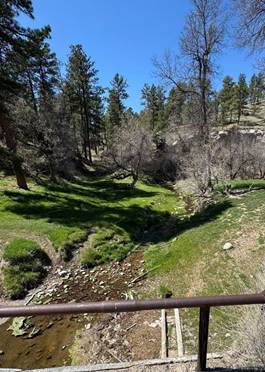
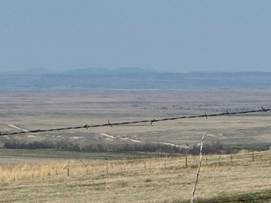


 Sunday Morning Greek Blog