I think it’s time I told this story. This is going to be so much different than my other posts, because I don’t anticipate I will use much Greek or Hebrew, although I am certain I will cite some Scripture.
The story begins back in about 2001 when I lived in Paxton, Illinois. My family and I had moved there in 1999 so I could take a position with Paxton Church of Christ. For whatever reasons, the position didn’t work out: it wasn’t a good fit for me, but I still knew I needed to be in the community. About 2001, the community got wind that the Miami Native American tribe was considering suing the State of Illinois to recover land outside of Paxton so they could build a casino. The community was in an uproar, especially since the mayor at the time came out in favor of it.
After about six months, the hubbub died down, and the Miami backed off as well, because it was obvious they didn’t have a claim on the area (they do have a historic presence a little further east, however, in NE Indiana). Even to this day, one can still see “NO CasiNO” signs around Paxton. But was it all just a show on the part of the anti-casino crowd? I didn’t ask that question until six years later, when the heart of my story begins.
King Richard
In March 2007, I saw an article in the Paxton Record that a local gas station owner, Richard Schwarz, was going to open “King Richard’s Raffle House.” After all the fuss about the proposed Native American casino, I figured it would be a slam dunk to shut this thing down before it got off the ground, but in the long run, there wasn’t much public opposition to the raffle house, even though I had the private encouragement of friends. The city had to pass a special ordinance allowing the “raffle house” to operate, and it had to be in accord with State laws on raffles. Legally any organization in the city that conducted any kind of raffle had to apply and pay the fee. The raffle law was part of all the gaming laws in Illinois (casinos, bingo, slots, etc.), most of which were taxed strictly. Bingo halls, for example, had to pay 5 percent off the top of their revenues, and according to a friend who worked with the Knights of Columbus bingo hall in the area, they were watched pretty closely. As long as such places took care to follow the law, I wasn’t going to oppose them.

Figure 1: The van that delivered the bingo equipment to King Richard’s Raffle House: “The Bingo Store on Wheels”
The raffle law was really designed to cover more traditional raffles, where you buy a ticket and hope your ticket gets drawn for the prize. But when King Richard started decorating the storefront in downtown Paxton in anticipation of opening, what was plastered all over the windows? Construction paper cutouts of bingo balls, with both the letter and the number! So from the start, it was obvious this was going to be an attempt to skirt the bingo laws of Illinois. The State even had a law that said bingo equipment could only be used for actual bingo operations, but the city council didn’t seem to think that was relevant. Figure 1 shows the van that delivered the bingo board in Figure 2. (Sorry about the quality; I took the picture on a nighttime setting, and that never worked too well on my camera.) It also delivered a rather pricey electronic bingo-ball machine that drew the numbers. Players used cards that looked exactly like bingo cards without BINGO on them.
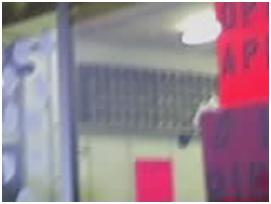
Figure 2: (Sorry about the quality) This is the bingo number board in King Richard’s Raffle House. “BINGO” was covered up on the left of the sign.
Before opening night, April 10, 2007, Schwarz must have realized what trouble he would get in if he continued to promote his operation as “bingo” (he promoted it as “glorified bingo” to the city council) so the bingo-ball cutouts mysteriously disappeared and were replaced with only numbers in circles. Same idea, but somehow he thought that city and state officials would be fooled by the missing letters. Whether they were fooled or not, neither the state nor the city did anything about it. But read on, because the raffle house issue resurfaced in Urbana a couple years later, with different results.
Crunching Numbers
The idea behind the raffle house was that a nonprofit organization could rent the building and equipment and conduct the raffle games to raise money. However, Schwarz owned the equipment and he leased the building. The state law and city ordinance were clear that the charity had to lease the building. Schwarz had to submit financial records to the city on a monthly basis, so I started tracking and crunching the numbers he had reported. What I found was disturbing, confusing, and downright deceptive. What the numbers revealed was that, at least on paper, he was charging the charity $500/night(!) for the building plus $2 per person and $50/night for the city license fee. The average gross receipt per person was over $70. The charity had to agree to a one-month gig at the place, which worked out to a minimum of twelve nights per month. Again, on paper, that works out to almost $7000 per month just to be in the building. I don’t know too many charities that would be willing to expend that kind of money for a separate, temporary building for a month to raise money.
Opening night, seventy-six people paid to play at the raffle house. Table 1 shows what the numbers looked like for that opening night (I obtained the numbers monthly through an official FOIA request presented to the city):
|
Date
|
Month
|
#Play
|
Gross recpts
|
prizes
|
discounts
|
Hall Exp.
|
Raffle Exp.
|
Jars Holding
|
Net Proceeds
|
Sponsor Game
|
|
4/10
|
April |
76
|
$5,831.75
|
$4,065.00
|
$0.00
|
$652.00
|
$725.75
|
$98.00
|
$291.00
|
|
Table 1: First-night proceeds from King Richard’s Raffle House.
So the charity (The Trimble Foundation, which Schwarz himself operated), again, on paper, spent $652 to rent a building for one night and got $291 in return. Not exactly a great return on investment. In fact, that’s a loss. The scary thing is, this was the best night for the house until July of that year as far as attendance goes. In fact, the average attendance for April was 32 persons/night the house operated. Now I keep saying “on paper,” because the books show he didn’t charge the hall expense every night. And sometimes, he never charged the full amount, especially if it meant “breaking even” on the night.
On the few nights the house did show net proceeds, there was no “sponsor game.” As you will see in Table 2, there is an amount in the sponsor game column, and that is what went to the charity that night. The sponsor game doesn’t balance with the rest of the numbers. The sponsor games appear to have been an afterthought, a way for the charity to recover some money that night. You will also notice that there is no hall expense recorded for the next three nights, but there is one for the night (April 17) when the house broke even.
|
Date
|
Month
|
#Play
|
Gross recpts
|
prizes
|
discounts
|
Hall Exp.
|
Raffle Exp.
|
Jars Holding
|
Net Proceeds
|
Sponsor Game
|
|
4/10
|
April |
76
|
$5,831.75
|
$4,065.00
|
$0.00
|
$652.00
|
$725.75
|
$98.00
|
$291.00
|
|
|
4/11
|
April |
12
|
$546.75
|
$1,370.00
|
$0.00
|
$0.00
|
$50.00
|
$22.00
|
($895.25)
|
$25.00
|
|
4/13
|
April |
25
|
$1,204.75
|
$1,584.00
|
$0.00
|
$0.00
|
$50.00
|
$43.00
|
($472.25)
|
$35.00
|
|
4/16
|
April |
18
|
$790.75
|
$1,494.00
|
$0.00
|
$0.00
|
$50.00
|
$31.00
|
($784.25)
|
$25.00
|
|
4/17
|
April |
34
|
$3,050.50
|
$2,237.00
|
$0.00
|
$568.00
|
$186.50
|
$59.00
|
$0.00
|
$51.00
|
Table 2: The first five nights of the raffle house.
Note also that on three of these nights, prize distribution exceeded gross receipts, sometimes more than double. This was a regular pattern for the house, with 31 of its 111 nights of operation in 2007 showing a prize distribution greater than gross receipts, and that is before factoring in hall rental and other expenses. Note then, that even if the charity only “paid” hall expense on those two nights, a total of $1220, they only got back $427 on those first five nights. I would have backed out in a heartbeat if I had seen those kinds of numbers. When all was said and done, after 111 nights over nine months and half a dozen charities tried to tough it out, Table 3 shows the final damage to all involved. After the Watseka flooding (supposedly many regulars were from Watseka) and the implementation of the smoking ban in Illinois in December 2007/January 2008, the raffle house was no more. Over $250,000 had come into the raffle house, and the net loss to all charities (again, on paper; I suspect Schwarz absorbed most of the loss) was around $35,000 after the sponsor game is figured in.
|
3579
|
$250,760.25
|
$213,149.00
|
$7,515.00
|
$33,459.50
|
$29,816.50
|
$6,163.00
|
($39,342.75)
|
$4,846.00
|
|
#Play
|
Gross recpts
|
prizes
|
discounts
|
Hall Exp.
|
Raffle Exp.
|
Jars Holding
|
Net Proceeds
|
Sponsor Game
|
Table 3: The final numbers.
The Battle with City Council
It was one thing to be amazed at how many charities got duped into Schwarz’s scheme. It was equally amazing (and at times amusing were it not for the seriousness of it all) how a bunch of educated men on the city council could be duped by this as well. But then again, maybe that wasn’t so amazing, because all the city had to do was collect the $50/night fee. They never really had any risk for loss. It was all money in the bank for them.
The battle with city hall began in June, after I was fired from a five-year preaching ministry because Schwarz’s charity, unbeknownst to me at the time, had contributed $1000 the previous year to the church. He threatened to withdraw his annual support, which amounted to one tenth of the church’s annual budget, if I didn’t back down. As a man of integrity, I couldn’t. I had carefully researched the Illinois gaming laws and concluded that what Schwarz was doing was wrong, and the city council was complicit, especially since they had passed the ordinance the night before the raffle house opened, and there’s supposed to be a 10-day waiting period before the ordinance is in force in Paxton.
The battle got verbal at times. I even did my best Perry Mason impression and approached the mayor to show him that the proper signatures weren’t on the licenses, which should have invalidated them (if they had been bingo licenses, the State would have invalidated them on the spot). Instead, the city council voted to silence a citizen registering a complaint, because they couldn’t handle the truth. Around October, however, the city proposed some changes to the ordinance that seemed to offer some hope that would shut down the raffle house, or at least force it to offer a legally appropriate raffle. They had adopted some of the language from the state laws that restricted certain activities at the raffle house. I was generally pleased with the progress, and I even said so publicly, but the very next day, something happened that not only caused me to keep my vigilance on the raffle house, but may very well have been a genuine theophany in my own life.
As the Weather Turns
The Tuesday (October 23, 2007) after the committee meeting where the committee announced some of these changes brought some unusual weather. The sky was a brighter blue than usual that fall afternoon, but the wind was blowing from the east, which is extremely unusual for Illinois. At first, some big fluffy clouds began to blow in, but within an hour, clouds had pretty much filled the sky. I thought it was unusual, so when I got back from picking up my daughter from Girl Scouts, I grabbed the camera and walked across the street where I could get an open shot of the sky. I took a random picture of the sky, just to get the clouds and the incredible blue that was showing on the south end of the cloud bank (Figure 3). About 15 minutes later, the kids and I were back in the house, and it got pink outside. This was about a half hour before sunset. I grabbed the camera and we jumped in the car and headed to the west end of town (only a few blocks away), again so I could get a clear picture of the sky. Figure 4 is the amazing view we had that evening of a brilliant sunset. Neither of these photos has been edited. What you see is what the camera caught.

Figure 3: A face in the clouds.

Figure 4: A fiery sunset
I didn’t think much of the first picture, Figure 3, until I was showing it around a school event a few days later, and my daughter said, “There’s a face in the cloud.” Sure enough, I looked at it, and there it was, plain as day. And it was looking right at our house! My spirit (or the Holy Spirit) had told me that Tuesday there had been more to the weather than what met the eye. Even Robert Reese, the weather man for WCIA, commented on pictures others had sent to the station that day about the unusual weather. Now I had some confirmation. To me, anyway, that was the face of God I saw. If you look a little closer at the picture, you might be able to discern half of a second face behind God’s face, one looking directly at the camera. That faces appears to be much more sinister. I decided I probably shouldn’t get too comfortable with what had happened at the council meeting on October 22, and was I ever right.
To Not or Not to Not
When the final proposed changes in the ordinance were publicized in advance of the city council meeting in November, I got them as soon as I could. As I read through the new text, I discovered something very disturbing: where the State statute and the draft version of the city ordinance said “you can not do this” (I paraphrase for simplicity), the text presented to the city council for approval said “you can do this.” In other words, the city ordinance was in direct contradiction to the State statute, a no-no in any State. I made sure I pointed this out to the city attorney and the rest of the city council, but they didn’t seem to have a problem with it. At that point, I knew it was all about the money with them. Their attitude was, why should the state bother with puny little Paxton. They did, after all, have bigger fish to fry, like a governor who was eventually convicted on federal charges and tossed out of office and skyrocketing debt.
By that point, however, it became pretty clear from the numbers that the raffle house was on its last leg. The language that didn’t agree with the state statute wouldn’t really affect organizations that wanted to run traditional raffles, something I never really had a problem with, especially since I knew the integrity of the organizations that conducted the raffles. I knew I had done my best as a citizen to point out the flaws and errors in the system, and only God could take care of the rest.
But that theophany also confirmed in my mind that I had indeed been fighting a good fight, in spite of the criticism I took from my (now ex-)wife at the time. I felt it was important to show my kids that they can stand up against society’s wrongs, even in the face of personal crisis. I felt it was important to maintain a consistent defense against organized gambling establishments in our community. I know I earned the respect of many, but one final event proved to me that I had indeed been on solid ground.
Another Raffle House
About nine months after the raffle house shut down, I received information that a relative of Schwarz’s had a similar operation in Urbana. The tip turned out to be valid, and when I submitted a FOIA request to the City of Urbana for the information about the operation, they discovered they didn’t have any of the financial reports from the owner as State statute required. They eventually sent in an undercover cop who documented that the operation was a cover for bingo, and it was shut down within a week. All I had to do for that was write a letter. Hopefully Paxton’s city council can learn something from Urbana.
Conclusion
The whole series of events with King Richard’s Raffle House may have been the beginning of the end of my marriage, but through it all, I saw visibly God’s hand (and face!) at work. I knew he was with me and watching over me, even though the road was getting extremely rocky. In retrospect, the red cloud bank moving westward may have been as much about God’s anger at the city of Paxton for what they were doing as it was a sign that I should move back to the land of Big Red. It wasn’t too long after that that I started hearing the Husker fight song in my head at all hours of the day. I knew it was inevitable I would return to Nebraska.
I said I would quote some Scripture, so here it is, Matthew 16:1–4 (NIV), and Jeremiah 4:13:
The Pharisees and Sadducees came to Jesus and tested him by asking him to show them a sign from heaven.
He replied, “When evening comes, you say, ‘It will be fair weather, for the sky is red,’ and in the morning, ‘Today it will be stormy, for the sky is red and overcast.’ You know how to interpret the appearance of the sky, but you cannot interpret the signs of the times. A wicked and adulterous generation looks for a sign, but none will be given it except the sign of Jonah.” Jesus then left them and went away.
Look! He advances like the clouds,
his chariots come like a whirlwind,
his horses are swifter than eagles.
Woe to us! We are ruined!
I wasn’t looking for a sign that day. Or maybe I was but just didn’t know it. The sky was red that October evening, so I guess that meant fair weather ahead. It took a while to get there, but I think I’ve found my fair weather in Omaha, in spite of the six-plus inches of snow that kept me home today to write this post. Yes, I miss my kids; they fill my thoughts every day. But I have another kind of fulfillment here, one that the provider in me had not experienced in quite some time. My prayer is that each of you will find your purpose and fulfillment in God’s kingdom.
Peace,
Scott Stocking
 Sunday Morning Greek Blog