It’s been a busy week with family stuff, so I apologize for the lateness of this week’s Lectionary Help. I’ll offer a few quick helps here since Palm Sunday and Holy Week offer so much material for us to preach on.
In Rigged Trial; Real Redemption (Luke 22:54–62) | Sunday Morning Greek Blog, I cover the injustices of the way the Jews used their own “legal” system to condemn Jesus. Everything about the trial before the Sanhedrin was contrary to their own laws and customs. It’s an early example of what we’ve come to call “lawfare” today.
Matthew indicates that Judas threw his blood money back in the temple and hanged himself after betraying Jesus. The pharisees bought the field where Judas hanged himself with that money (Matthew 27:5–10), which is why in Acts 1:18, Peter can say Judas bought the field. It was by proxy through the Pharisees, because they didn’t want their name associated with the title to the land because it was purchased with blood money.
Most scholars believe the description in Acts about Judas’s body bursting open is not a contradiction to Matthew’s “hanging” account. The Acts account comes from Peter to a small group of believers who were already familiar with the full story. It’s likely that Judas’s body started to bloat after he died on the tree and either the rope or the branch it was hanging from broke and caused the gruesome scene.
I also came across the following note on Matthew 27:28–31 in my files:
“The Greek text here has several words with the /pt/ sound or /p/ followed by an unstressed vowel sound. I have to think this is intentional on Matthew’s part to emphasize the mocking (ἐνέπαιξαν, from ἐμπαίζω) aspect of the scene. This passage is a chiasm as well, centering around the mocking (but true) statement, ‘Hail, king of the Jews!’”
One final note: Golgotha is likely the exact location (give or take a few hundred feet) where Abraham had taken Isaac to sacrifice him. The Hebrew text where Abraham says “God himself will provide the lamb” can be repointed (i.e., have a different vowel arrangement below the consonants; vowels weren’t added to the Hebrew text until about AD 1000) to say “God will provide himself as the lamb.” Consider the significance of that for a hot minute.
Peace to you as you approach Holy Week and the Easter season.
This Wednesday marks the beginning of the season of Lent, a time when Christians worldwide anticipate the remembrance of Christ’s death on the cross and the celebration of his resurrection from the dead on Easter Sunday. I can’t help but think there must be a small bit of irony that we celebrate the birth of Jesus and his resurrection, the beginning and ending of his life on earth, only about three or four months apart. Jesus is that special to us that we choose to recognize both those events as holidays in our culture and in Christendom more broadly. Most people who have holidays today only get them for their birthdays, like President’s Day tomorrow, or Martin Luther King Day last month.
We don’t have a holiday that I’m aware of where recognize the death of an individual. We do have Memorial Day, Veterans’ Day, and Pearl Harbor Day to recognize the sacrifices of our loved ones and heroes who’ve served and in many cases given their all for this country for our freedom. Of course, as the old hymn goes, “Jesus gave it all” for each of us as well, but for our spiritual freedom and eternal life with him in Heaven.
Jesus knows what his end goal is: the cross. But he also doesn’t want his disciples to be taken by surprise by that event either. In Matthew 16, Jesus begins to warn his disciples that he must be handed over by the Jewish leaders who hated his disruption of their power over the people to the Romans for the death penalty. The first time Jesus says this, Peter is indignant: Most English translations have Peter saying something like “Never!” or “God Forbid!” The one word that Peter utters is the word for “Mercy!”
It was a dire prediction after all, and I’m sure the disciples weren’t ready for that just yet. That’s when Jesus responds to Peter, “Get thee behind me, Satan!” Keep in mind that just a few verses earlier Jesus said he was going to build his church on Peter, or at least on the truth of his confession that Jesus is the Christ.
But Jesus doesn’t stop there. In all three gospel accounts of this first prediction, Jesus goes on to say something about each of them having to take up their own cross to follow Jesus. In other words, they need to “die” too. But for those who would come to Christ later, that experience of “dying,” that is, “taking up the cross,” will look very different. That has got to be pretty earth shaking for a young group of disciples who thought that Jesus was going to lead them in breaking away from Roman rule. This background is important to emphasize here for what is about to happen.
About six days later, according to Matthew’s account, it’s at this point that the story from our gospel reading this morning kicks in. Jesus chooses what is apparently his “inner circle”—Peter, James, and John—to go up onto a high mountain, and he wastes no time getting to the reason he came: He transfigures himself before them to reveal his heavenly glory. Matthew says Jesus’s face “shone like the sun” and his clothes were “bright white.” Luke is much less dramatic: he just says Jesus’s appearance was “different.” In fact, Luke doesn’t even use the word for “transfiguration” in his account. That word is one that should be familiar to you: it’s the Greek word from which we get the English word “metamorphosis” (μεταμορφόομαι metamorphoomai, μεταμορφόω metamorphoō).
Mark is the only other gospel writer to use that word in his account. It simply means to change form. I don’t think anything “physical” happened to Jesus in this event. I think the divine nature of Jesus overpowers the physical nature and manifests its form on top of Jesus’s human form. For added excitement, Moses and Elijah show up in their heavenly forms to chat with Jesus.
But why Moses and Elijah? Luke tells us this: “They spoke about his departure, q which he was about to bring to fulfillment at Jerusalem.”[1] Elijah is not the first prophet in the Old Testament, but he is the most famous, and he never died. Maybe Elijah is sharing his experience of having his human form whisked off to heaven and what Jesus should expect at his resurrection. Elijah also represents John the Baptist, the last of the prophets under the old covenant, as Jesus would go on to explain in Matthew 17:12.
Moses’s presence is easy to explain. Moses was the one who was initially given the Law by God that he passed on to the Israelites, so it makes sense that he would be present to see the one in whom all that law is fulfilled. What did Jesus say in the Sermon on the Mount? “Do not think that I have come to abolish the Law or the Prophets; I have not come to abolish them but to fulfill them.”[2] The apostle Paul would say some 25 years later, “Christ is the culmination of the law so that there may be righteousness for everyone who believes.”[3] Both Moses and Elijah together represent the full experience of how God revealed himself in the Old Testament, and both of them get to see the fulfillment of their respective roles in that revelation firsthand.
The transfiguration event doesn’t seem to take very long, maybe a few minutes at the most, but then again, the disciples seem to be in a bit of daze at the whole event. It’s not long after they come down from that mountain-top experience that Jesus again repeats his prediction of dying. This puts a closing bracket on the transfiguration story and provides a final clue as to what we can take away from that story.
Jesus reveals his divine nature to his inner circle in the transfiguration event so that they can have assurance that Jesus’s death will not be the end of the story. The disciples see that Moses and Elijah are still alive, so there is proof of life after death. For the disciples to both see the glory of God in Jesus and hear his voice also puts them in the same unique class as Moses and Elijah, men who have seen the glory of God, have heard his voice, and have lived to tell about it.
There are at least three takeaways for us in this story, then.
Heaven is real and the patriarchs are alive and well in that realm;
Jesus himself will be resurrected when the time comes; and
Jesus has the fulness of divinity in him, i.e., he’s the Son of God.[4]
It’s possible this event may also be a sort of looking forward to what will happen on the Day of Pentecost. The tongues of fire I’m sure looked a bit different than what Peter saw in the transfiguration, but there would have been no doubt in his mind that this was God at work. In fact, Peter mentions this event in his second letter:
16 For we did not follow cleverly devised stories when we told you about the coming of our Lord Jesus Christ in power, but we were eyewitnesses of his majesty. 17 He received honor and glory from God the Father when the voice came to him from the Majestic Glory, saying, “This is my Son, whom I love; with him I am well pleased.” i18 We ourselves heard this voice that came from heaven when we were with him on the sacred mountain.[5]
Now I’ve been calling this event the “Transfiguration” because that’s the fancy, $20 religious term that’s in the Lectionary and that has been used for hundreds of years in English translations. I do believe it deserves that special designation, because it’s not something you see every day. But in everyday usage, this word simply means “transform,” and we find it in two other passages that have significance in our own faith walk. In 2 Corinthians 3, Paul is writing about the “greater glory of the new covenant” (NIV heading) and how we are being “transformed” into the image of Christ as we follow him and live in him:
“And we all, who with unveiled faces contemplate the Lord’s glory, are being transformed into his image with ever-increasing glory, which comes from the Lord, who is the Spirit.”[6]
In other words, our transformation, our heavenly visage when we finally meet our Savior in glory, will be glorious in and of itself. We really will have a “glow” to us, so it seems. I’m looking forward to that day, and I pray you are too.
The other passage where we find this word is Romans 12:1–2:
Therefore, I urge you, brothers and sisters, in view of God’s mercy, to offer your bodies as a living sacrifice, holy and pleasing to God—this is your true and proper worship. 2 Do not conform to the pattern of this world, but be transformed by the renewing of your mind. Then you will be able to test and approve what God’s will is—his good, pleasing and perfect will.[7]
The “therefore” in this passage is important, because it follows on the heels of Paul’s 11-chapter treatise on righteousness and faithfulness. At the center of that argument is the event that triggers our transformation from being world-focused to being God-focused: baptism. Paul says that those “who were baptized into Christ Jesus were baptized into his death.”[8]
This is what it means to be the “living sacrifice” Paul speaks of in Romans 12. Not only are we “buried with Christ,” but we’re raised up to live a new life. When we’re in Christ, he can begin and continue the work of transforming us into his image through the working of Holy Spirit. This is how much Christ loved us and continues to love us. He will never leave us nor forsake. Even if we blow it sometimes, he’s still faithful to continue loving and guiding us into his way.
As we transition from Epiphany to Lent this week, let us consider how we can improve our focus on Christ and living for him in service of others. May God bless you and yours this week. Amen.
My, how time flies! Next Sunday, February 15, 2026, is “Transfiguration Sunday,” the last Sunday before the Lenten season begins. Thank you for reading my new Lectionary Help series. Last week’s post was the most popular post on my blog for the week, almost twice what it was the week before. If you’re sharing these with your congregation or colleagues, a double dose of thanks for that! Now, let’s look at Matthew 17:1–9.
Word Study
We can’t talk about “transfiguration” without talking about the Greek word Matthew uses to describe the event, and it should be a familiar one to you: μεταμορφόομαι (metamorphoomai), μεταμορφόω (metamorphoō).[1] Those of you who studied Greek may recognize that this verb occurs in deponent form (usually implies no direct object or perhaps middle voice, suggesting the action of the verb is focused on the speaker themselves) and active voice, at least in the lexical entry.
New Testament authors only use the verb four times.[2] In addition to today’s passage, we find it in Mark’s account of the event (9:2). Luke does not use this word in his account (9:28–36) but only mentions that Jesus’s “appearance” changed (“The form [εἶδος eidos] of his face [was] different”).
Paul uses the word in Romans 12:2 (“be transformed by the renewing of your minds”) and 2 Corinthians 3:18 (“And we all, who with unveiled faces contemplate the Lord’s glory, are being transformed into his image with ever-increasing glory, which comes from the Lord, who is the Spirit.”[3]). In both instances, the passive would seem to be appropriate since it refers to changes you and I undergo because of what Christ is doing in the lives of the faithful. Although Paul was not yet a follower at the time of the Transfiguration event, it seems clear in the 2 Corinthians passage that he’s alluding to that.
In all four occurrences, the morphologies I checked[4] all identified the forms as passive voice. However, I would argue that the two occurrences in the gospels should be identified as middle voice, because Jesus has the power within himself to control the event. I don’t know that this is a huge thing theologically, whether God was doing it or Jesus was doing it, but as I’ll discuss below, I think the events leading up to this suggest Jesus initiates this for his inner circle.
The other NT reading for the Lectionary is 2 Peter 1:16–21. Peter references his participation in the Transfiguration event, which he is now free to do since Christ has risen. It’s in the opening chapter of his first epistle, so I wonder how long he was holding on to that little tidbit waiting for the opportunity to publish it! It’s not a boast, though. He’s merely establishing his credibility as an eyewitness to the event, so we can, I think, safely say that the Transfiguration is a genuine event and not resort to some psychological, metaphysical, or naturalistic explanation for the event.
Context
In the synoptic gospels, all three authors have the Transfiguration story closely tied to Jesus’s first and second predictions of his death. Matthew and Luke have it immediately after that prediction, while Mark inserts the pericope about taking up the cross after the prediction. All three follow the Transfiguration pericope with a pericope of Jesus healing a demon-possessed boy followed by Jesus’s second prediction of dying. Luke adds after the second prediction that “Jesus resolutely set out for Jerusalem,”[5] which establishes the historical setting for the rest of Luke’s gospel. I don’t think it’s too much of a leap of faith to say that Jesus is using the Transfiguration event to assure his disciples that:
Heaven is real and the patriarchs are alive and well in that realm;
Jesus himself will be resurrected when the time comes; and
Jesus has the fulness of divinity in him, i.e., he’s the Son of God.[6]
Those are the highlights I noticed as I begin my own preparation for preparing a message for next Sunday. As always, feel free to comment here in the blog or on my Facebook page for the blog. Also watch for the Reel as I’m going to dive into creating some video content for these Lectionary Help posts as well.
If you want to see past Lectionary Help articles on the blog, just search “Lectionary” from the blog search feature, usually on the right side of your computer screen. Peace to you all!
I preached this sermon at Mount View Presbyterian Church on November 23, 2025. It was the last Sunday of Year C of the Lectionary Calendar, commonly known as Reign of Christ the King Sunday. It was also the Sunday before Thanksgiving and the Sunday before the first Sunday in Advent. I had not checked the advanced copy of the church bulletin thinking they would have the Lectionary gospel reading for the day printed, but as it turned out, they had a Thanksgiving Service planned (more music), so I hadn’t prepared a message based on the reading. I went ahead preached the message I had prepared, which worked out find, because with more music, the service was a little longer than usual, and my message had been shorter than usual. I’ve also included some links to past Advent messages since the season is upon us.
We had a soup lunch afterwards and had a drawing to give away a few of the quilts our ladies had made. I won what I’m calling my Joseph Quilt. It is a nice sized quilt worked on by several of the ladies. My mom provided the stitching/decoration around the border.
Have you ever seen one of those movies where they start with some dramatic scene. In the cop shows, it’s usually a murder or finding someone badly injured in an unexpected place. In a Hallmark movie, it might be a wedding scene or a passionate kiss (we all know that’s coming in the Hallmark movie, so no need to put it off until the end!). But then in the next scene, the graphic pops up: “Six months earlier.” The opening scene has gone by so quickly that you didn’t even get a chance to figure out much about who the characters are, then you’re thrust back in time and have to figure it out all over again.
Today we come to the conclusion of the liturgical calendar: “Reign of Christ the King” Day. It’s hard to believe Advent (and the new liturgical year) starts next week. The Lectionary is kind of like those movies I mentioned earlier. Even though we read about the crucifixion of Jesus this morning, we’re not going to get back to that dramatic event of the Resurrection that kicked off the last eight months of the calendar until Easter next year.
This past year, we’ve journeyed through the gospel of Luke, which has the most material on the life of Jesus. Five months ago, we read in Luke 9:51 that Jesus “resolutely set out for Jerusalem.” The rest of Luke’s gospel from that point on is set in that context of Jesus knowing his life would be cut short. Yet he continued loving, healing, and teaching the masses about God’s true love for them. He also did not shy away from confronting the religious leaders of his day for their abuse of the spiritual authority God had entrusted to them. That violation of God’s trust brings us to where we are today in the gospel, the crucifixion.
Luke has details in this story that the other three gospel writers do not have. Luke is the only one who has Jesus saying “Father, forgive them, for they do not know what they are doing.” He wasn’t just talking about how the Roman soldiers were treating him either. Matthew and Mark tell us that the criminals who were crucified with Jesus were BOTH hurling insults at him, but Luke indicates that one of them must have had a change of heart after hearing Jesus say “Father forgive them” and asked Jesus for forgiveness in his last hour. Jesus, of course, granted it.
The religious leaders were jeering and sneering at him as well. “He saved others, or so he claims! Let him save himself if he’s the Messiah!” One might expect that kind of behavior from criminals, but from those who had presumably dedicated their lives to serving God at the Temple or in the local synagogues? You know you must be getting close to the corruption and hardness of heart when the people who should be on your side are rejecting you for your teachings.
Even though our gospel reading stops just short of the final moments of the crucifixion, we are all familiar enough with that story to finish it from memory. And we know that because Christ defeated death and rose again into his heavenly glory, he lives and reigns as King of Kings and Lord of Lords. While his kingdom is here on earth, it is not of this world. Paul says in Ephesians 1:3 that God has “blessed us [i.e., Christ followers] in the heavenly realms with every spiritual blessing in Christ. It was evident from the moment of Pentecost that God had begun a new work in his people through the empowering of the Holy Spirit sent to us by our risen Savior.
As Christ followers, then, we are by default emissaries of the King of Kings and Lord of Lords. In the rest of the New Testament we see Paul and the other apostles planting and shepherding churches that are growing by leaps and bounds in various places. In many cases, the word of God has already spread to places where Paul had yet to travel because other believers were doing that missionary work as well. In the first chapter of Paul’s letter to the Colossians, we get a glimpse at Paul’s heart for them in the first chapter. Paul praises them for having a faith that is “bearing fruit and growing” in their hearts and around the world. Let’s pick up his praise for them in verse 9:
9 For this reason, since the day we heard about you, we have not stopped praying for you. We continually ask God to fill you with the knowledge of his will through all the wisdom and understanding that the Spirit gives, t10 so that you may live a life worthy of the Lord and please him in every way: bearing fruit in every good work, growing in the knowledge of God, 11 being strengthened with all power according to his glorious might so that you may have great endurance and patience, 12 and giving joyful thanks to the Father, who has qualified you to share in the inheritance of his holy people in the kingdom of light. 13 For he has rescued us from the dominion of darkness and brought us into the kingdom of the Son he loves, 14 in whom we have redemption, the forgiveness of sins. [1]
Paul has incredible respect for the Colossians and wants to ensure they continue on the path of growing in righteousness and faithfulness. This is significant in that Colossae was an incredibly diverse town in south-central Asia Minor. He wants them to be filled “with the knowledge of his will through all the wisdom and understanding that the Spirit gives.” Paul has a similar thought for the Ephesians in the opening of that letter: “18 I pray that the eyes of your heart may be enlightened in order that you may know the hope to which he has called you, the riches of his glorious inheritance in his holy people, 19 and his incomparably great power for us who believe.”[2]
In Colossians 1:6, Paul affirms that the gospel is “bearing fruit and growing through the whole world. He reassures the Colossians are doing their small part to contribute to that in vs. 10.
Being strengthened in all power means that they understand the working of the Holy Spirit in their lives. They do have some challenges, apparently, with some coming among them making “fine sounding arguments” against the gospel. But Paul has confidence that their knowledge will help them discern false teachings and stay the course of the true gospel with patient endurance.
They are also continually giving thanks because they’ve been rescued from darkness. They believed the gospel and have been living it out boldly because they know they’ve been forgiven and redeemed.
After praising them, Paul continues from verse 15 talking about the supremacy of Christ and why he reigns as King of Kings and Lord of Lords:
15 The Son is the image of the invisible God, the firstborn over all creation. 16 For in him all things were created: things in heaven and on earth, visible and invisible, whether thrones or powers or rulers or authorities; all things have been created through him and for him. 17 He is before all things, and in him all things hold together. 18 And he is the head of the body, the church; he is the beginning and the firstborn from among the dead, so that in everything he might have the supremacy. 19 For God was pleased to have all his fullness dwell in him, 20 and through him to reconcile to himself all things, whether things on earth or things in heaven, by making peace through his blood, shed on the cross. [3]
The concept of Jesus being the “firstborn” here seems to have a dual meaning. In verse 15, Paul says Jesus is the firstborn over all creation. That seems to suggest what we learn from John, that Jesus, the light of the world, was the “light” that God created on Day One of creation. A few verses later, in verse 18, Paul calls Jesus “the beginning,” which would seem to confirm the Genesis theory, but the then also calls Jesus “firstborn from the dead.” John also uses the phrase “firstborn from the dead” of Jesus in the opening chapter of Revelation (1:5). This of course is a reference to his resurrection.
Even though there are a few others in the history of the Bible who were raised from the dead, they all came back to life in their original human bodies. Jesus is the first one whose body was raised from the dead AND transfigured into its heavenly version. That earns him the title of head of the church—King of Kings and Lord of Lords—having supremacy over everything. This supremacy is not only for this world, but in the heavenly realms as well as Paul indicates.
Harkening back to Ephesians 3:10, we see that we have a role in proclaiming the gospel not only here but also in the heavenly realms. “10 His intent was that now, through the church, the manifold wisdom of God should be made known to the rulers and authorities in the heavenly realms.”[4] The passage in Ephesians 6 on the armor of God reaffirms our role in fighting the good fight not only against flesh and blood, but against the powers in the heavenly realms. We have the divine protection and strength to stand firm in those battles because of Christ’s victory over death and the redemption he won for us. Not only does he reign as King of Kings and Lord of Lords in our lives, but he has also provided the means for us to walk faithfully in this world.
As we wrap up the liturgical year and look toward Advent and the Christmas season, we can take comfort and courage in having citizenship in the kingdom of Christ. A blessed Thanksgiving to all of you this week, and please join us for the meal after service. Amen.
What will the resurrection be like? A similar question that some may have is, “What will Heaven be like?”
Our passage this morning opens the gates of pearl for us just a bit to give us a glimpse into life in our eternal home. We will also look at the epistle reading today a little later from 2 Thessalonians and other relevant passages to get a wider perspective of what the Bible says about life beyond the grave.
Before we get there, however, let’s take a look at our reading from Luke.
The first verse of our passage sets the context for us. The Sadducees are questioning Jesus about the resurrection, trying to trick him into some logical trap. But of course, Jesus knows what they’re up to. The Sadducees were different from the Pharisees in several ways, but the biggest difference is that the Sadducees strictly adhered to the Pentateuch, the first five books of the OT, so ALL of their theological beliefs derived from the Pentateuch. Anything that happened in the OT after that was judged in the light of the Pentateuch.
The Pentateuch, however, never explicitly mentions resurrection or anyone rising from the dead, so the Sadducees rejected the concept of the resurrection outright. Not only that, they by default rejected any concept of eternal punishment or eternal reward. If there’s no resurrection, who would be around to get punished or rewarded? They also rejected the concept of angels or any kind of spiritual realm other than that which God inhabited. This made for a very legalistic and moralistic interpretation of Scripture, because only in this life could you be rewarded for believing in God and following Torah. So, as the line we often teach to children, this is why they were sad, you see.
One interesting historical note here: the Sadducees were not a very large group. Josephus tells us that the Sadducees disappeared after the destruction of Jerusalem in AD 70. It seems like some sort of divine providence had a hand in the Sadducees rising up at the precise time in history when Jesus appeared so we’d have a record of the antiresurrection group and some examples of how to defend resurrection theology from the Old Testament.
The Sadducees try to trip Jesus up with a question about Levirate marriage, that is, the concept of the responsibility of a younger brother to provide an heir if their oldest brother failed to do so through the elder brother’s wife. That seems like a strange concept to us in the 21st Century, but in those days, it was necessary to preserve family history and property. The Sadducees go through the progression of all the brothers and the wife dying and ask Jesus whose wife she will be.
Jesus’s response is not what they expected. He basically says that marriage is strictly an earthly institution and will not be a factor in heaven. I imagine it is hard for us to grasp that concept. Jesus does seem to imply that we will recognize people we knew on earth by making the point about Abraham, Isaac, and Jacob, but he also says we will be like the angels as well. So it seems reasonable we would be reunited with loved ones.
At the end of Jesus’s explanation, some of the teachers of the law (not the Sadducees) praised Jesus for his answer. Very likely that was because the burning bush reference was from the Pentateuch, the only part of the Bible the Sadducees used for doctrine. In other words, Jesus essentially embarrassed the Sadducees by showing them they don’t understand a basic principle from the Pentateuch they revere so much.
Now when Jesus says those in Heaven will be “like the angels” needs some special consideration here. Paul uses a single word, an adjective, here that means “angel-like” (ἰσάγγελος isangelos). It’s the only time this word is used in the Bible. The implication here is not necessarily that they are of the same make-up of the angels, otherwise he would have used the regular word for angel. They are “angel-like” because they will never die. I still think we retain basic human form, but our bodies will be transformed into immortal material. Here’s how Paul words it in 1 Corinthians 15:
38 But God gives it a body as he has determined, and to each kind of seed he gives its own body. 39 Not all flesh is the same: People have one kind of flesh, animals have another, birds another and fish another. 40 There are also heavenly bodies and there are earthly bodies; but the splendor of the heavenly bodies is one kind, and the splendor of the earthly bodies is another.[1]
…
42 So will it be with the resurrection of the dead. The body that is sown is perishable, it is raised imperishable; 43 it is sown in dishonor, it is raised in glory; it is sown in weakness, it is raised in power; 44 it is sown a natural body, it is raised a spiritual body.
If there is a natural body, there is also a spiritual body.[2]
So we humans will have our own unique spiritual bodies in eternity distinct from the type of bodies angels have. I can’t prove what I’m about to say, but I’ve given considerable thought to what Paul means by comparing our bodies to a “seed.” Did you know that human DNA can survive long after the body is gone through the natural decomposition process? I have to wonder if that scientific fact about DNA has any relationship to our resurrection bodies. In other words, does our DNA contain a “divine code” that is activated at the final resurrection to reconstitute our bodies into their eternal, spiritual form? We often wonder if we will recognize others in Heaven. Wouldn’t DNA accomplish that? Now again, I’m just speculating here; I have no proof of this. God could just as easily use some other method to distinguish our appearance. But I think it is an interesting proposition worth dwelling on. My “Bones” article on my blog addresses this subject, and it’s been the second-most popular post this year, so there seems to be quite a bit of interest in the topic.
Paul addresses how we arrive at that day of resurrection. In 1 Thessalonians 4 and 5, we have these words from Paul:
13 Brothers and sisters, we do not want you to be uninformed about those who sleep in death, so that you do not grieve like the rest of mankind, who have no hope. 14 For we believe that Jesus died and rose again, and so we believe that God will bring with Jesus those who have fallen asleep in him. 15 According to the Lord’s word, we tell you that we who are still alive, who are left until the coming of the Lord, will certainly not precede those who have fallen asleep.[3]
…
4 But you, brothers and sisters, are not in darkness so that this day should surprise you like a thief. 5 You are all children of the light and children of the day. We do not belong to the night or to the darkness. 6 So then, let us not be like others, who are asleep, but let us be awake and sober.[4]
In 2 Thessalonians, the epistle reading from today’s Lectionary, Paul assures his readers that certain things must happen before the Lord returns for us:
2 Concerning the coming of our Lord Jesus Christ and our being gathered to him, we ask you, brothers and sisters, 2 not to become easily unsettled or alarmed by the teaching allegedly from us—whether by a prophecy or by word of mouth or by letter—asserting that the day of the Lord has already come. 3 Don’t let anyone deceive you in any way, for that day will not come until the rebellion occurs and the man of lawlessness is revealed, the man doomed to destruction. 4 He will oppose and will exalt himself over everything that is called God or is worshiped, so that he sets himself up in God’s temple, proclaiming himself to be God.[5]
This “man of lawlessness,” also known as the Antichrist, must be revealed at some point before the end comes. People have postulated that many historical and current figures have been the Antichrist. You can do a Google search and find out who those folks are; I won’t get into that here. But the call is not for us to be able to identify who this Antichrist is. The call is for us to be ready for that day.
Matthew 24:42–44 puts it this way:
42 “Therefore keep watch, because you do not know on what day your Lord will come. 43 But understand this: If the owner of the house had known at what time of night the thief was coming, he would have kept watch and would not have let his house be broken into. 44 So you also must be ready, because the Son of Man will come at an hour when you do not expect him.[6]
In the very next chapter we have the parable of the sheep and the goats at the judgment seat. Most of us are familiar with that story. Hebrews 9:27–28 says we all must face judgment, but if we are living our lives in and for Christ we have an absolute guarantee of salvation:
27 Just as people are destined to die once, and after that to face judgment, 28 so Christ was sacrificed once to take away the sins of many; and he will appear a second time, not to bear sin, but to bring salvation to those who are waiting for him.[7]
The judgment scene from Matthew 25 confirms this: those who are ministering to the poor and needy and who are sharing the good news of Christ not just in word but in deed as well will enter into that resurrection reward. I’m confident that you here at Mount View are all running a good race and will cross over into glory on that final day. I pray that you will have the strength to continue to do so and reap a great harvest for the kingdom of God.
God is good. God is faithful. And whether he returns before or after our final day on earth, we can know that our final destination is the place he’s prepared for us in eternity. May the peace of God go with you all today. Amen!
I preached this message October 19, 2025, one week after Mount View’s 70th Anniversary celebration.
The Lord be with you.
In the late fifth century BC, Athens successfully defended its right to govern itself as a democracy in the Peloponnesian War. In the Funeral Oration of Pericles, its author Thucydides says this about freedom to the Athenians: “For you now it remains to rival what they [Pericles and the soldiers who died in the first year of the Peloponnesian War] have done and, knowing the secret of happiness to be freedom and the secret of freedom a brave heart, not idly to stand aside from the enemy’s onset” (Per Bartlett’s Quotations; alternate translation: “These take as your model, and judging happiness to be the fruit of freedom and freedom of valor, never decline the dangers of war”[1]). In other words, freedom required everyone to defend it as a matter of lifestyle.
About 800 years before that, about 2,000,000 newly freed slaves found themselves at the foot of Mount Sinai ready to receive their document of freedom from Egypt and self-governance: the Ten Commandments. But just before that happened, Moses had a visit from his father-in-law Jethro. Up to that point, Moses had been the sole judge and leader of Israel through the early days of wilderness wandering. Jethro realized what a huge task Moses had before him and suggested he might want to delegate some of the responsibility to capable men to help ease his burden. Jethro gave him this advice in Exodus 18:21–22a:
Select capable men from all the people—men who fear God, trustworthy men who hate dishonest gain—and appoint them as officials over thousands, hundreds, fifties and tens. 22 Have them serve as judges for the people at all times, but have them bring every difficult case to you.”[2]
For our gospel passage this morning, it’s important to note what the qualifications are for the first judges ever appointed for the Hebrews: “Men who fear God, trustworthy men who hate dishonest gain.” Contrast that with the description of the judge in our gospel passage this morning: “A judge who neither feared God nor respected man.”[3]
As we’ve been going through Luke gospel, we’ve seen quite a few parables, and a few of them have featured some rather questionable characters. In the Parable of the Lost Son, we saw the son who wasted his inheritance on riotous. Immediately after that parable, we looked at the parable of the shrewd manager who did some sneaky stuff to make himself and his master look good. Then we saw the rich man who ignored the invalid Lazarus at his gate. So it shouldn’t surprise us to find an unscrupulous judge in this parable who has no regard for the law of God or the human condition.
But we also have a persistent widow in our passage today, and some of these same parables we’ve looked at had a persistence theme in them as well. Just before the Parable of the Lost Son, we have two parables about a woman who swept her whole house to look for a lost coin and a shepherd who left his 99 sheep unattended in the pen while he went off to search for one lost sheep. We also have the story of the ten lepers who cried out to Jesus to heal them, and of course, he did.
And one more thing before we get to our passage this morning: Jesus has just finished answering the pharisees’ question about when the end would come. He addresses them only briefly by telling them “The kingdom of God is in the midst of you.” Jesus turns to his disciples and paints a rather bleak picture of what the end will look like. Not only does he compare the end of days to the fire and brimstone of Sodom and Gomorrah, but he also speaks of separation from their loved ones.
So you can see why Luke introduces the Parable of the Persistent Widow with “He told them a parable to the effect that they ought always to pray and not lose heart.”
So we come to the high point of the story here: the faithful persistence of a poor widow who had no family, apparently, to help her versus a heartless, uncompassionate, and corrupt judge who only looked out for himself. Who will win this showdown?
Now even though this is a parable, some might think Jesus has a particular judge in mind when he starts this parable. It’s interesting that Jesus begins this parable with the words (according to most English translations) “In a certain city….” What most English translations don’t let you know that the word translated “certain” is also used to describe the judge: “In a certain city there was a certain judge….” Now it gets more intriguing.
Based on Jesus’s final statement in verse 8, he could also be referring to the general state of justice in Israel. It’s like he’s saying to his audience: “You know how it is. Wherever you go, there’s always that one judge. Yeah, you know the type: corrupt as a three drachma coin!” In spite of the judge being a scoundrel, the woman peacefully (that’s important to note) but repeatedly came to the judge to request protection from her “adversary.” It’s not clear who her adversary was or why they were her adversary; that’s not important to the story. And it’s not clear what sort of “attack” the judge feared from the woman. It’s doubtful it would have been a physical attack; more likely an accusation about the judge’s integrity and ability to be a fair judge.
The end result in the parable is that the judge does grant the woman relief. Jesus goes on to give the lesson of the parable: We need to be persistent in prayer. “Pray continually” as Paul puts it in 1 Thessalonians 5:17. Jesus throws in a rhetorical question, however, at the end of the passage: “When the Son of Man comes, will he find faith on the earth?” The implication here is that the kind of faith that prompts people to pray at all, let alone continually, may be extremely rare in the last days.
I was at my home church’s annual men’s retreat on Friday and Saturday. I think I’m the only one left with perfect attendance at the retreats since they started in 2013. I was encouraged to see a lot of younger men come out this time, many new faces, who were excited about their faith and the opportunity to fellowship and develop that deeper connection to God. God is on the move to bring revival again, especially with the assassination of Charlie Kirk, and I think if Jesus came back today, he could answer the question about finding faith on earth a resounding yes.
But it will take more than just persistent prayer to maintain that faith. The power of prayer is supported by the foundational truths of the faith as written in Scripture. The other New Testament passage in the Lectionary today focuses on that: 2 Timothy 3:14–4:5:
14 But as for you, continue in what you have learned and have become convinced of, because you know those from whom you learned it, 15 and how from infancy you have known the Holy Scriptures, which are able to make you wise for salvation through faith in Christ Jesus. 16 All Scripture is God-breathed and is useful for teaching, rebuking, correcting and training in righteousness, 17 so that the servant of God p may be thoroughly equipped for every good work.
4 In the presence of God and of Christ Jesus, who will judge the living and the dead, and in view of his appearing and his kingdom, I give you this charge: 2 Preach the word; be prepared in season and out of season; correct, rebuke and encourage—with great patience and careful instruction. 3 For the time will come when people will not put up with sound doctrine. Instead, to suit their own desires, they will gather around them a great number of teachers to say what their itching ears want to hear. 4 They will turn their ears away from the truth and turn aside to myths. 5 But you, keep your head in all situations, endure hardship, do the work of an evangelist, discharge all the duties of your ministry. [4]
The last part of chapter 3 we just read emphasizes the need for continuing in and continually learning from God’s word by diligent study. Timothy himself had been steeped in the study of God’s word from early on in his life; he probably knew more about scripture than most of the apostles, and so he had, seemingly, a greater responsibility for taking the lead in spreading the good news.
We also see here the familiar passage about God’s word being fully inspired, that is, “God-breathed.” The original “written” word would most likely have been considered 100% accurate in spite of being first written by the hands of men. While Paul’s statement here primarily refers to the Old Testament scripture, we do get a hint in 2 Peter 3:16 that Paul’s letters seem to be quickly attaining the status of Scripture as well. Scripture is “profitable” (ὠφέλιμος ōphelimos) for “teaching, rebuking, correcting, and training in righteousness”; dedication to studying Scripture helps solidify it in our hearts and minds.
Paul ordains Timothy in the opening verses of chapter 4, most likely for taking over the leadership of the church at Ephesus. Paul wants Timothy to make sure the church in Ephesus will stay strong in their faith. His primary charge to Timothy is to “Preach the word!” The tradition of the Christian university where I attended seminary referred to a young man sponsored by his home church to go to Bible college as a “Timothy.” The rallying cry of that school when it was founded just after the end of WWII was “The Preachers Are Coming!” Note that this preaching included the very things that chapter three said about the word of God: “Correct, rebuke, and encourage—with great patience and careful instruction.”
The current revival we’re seeing especially of young people either returning to or for the first time checking out church reveals that we have been in a time that Paul describes in 4:3: people are concocting and promoting crazy ideas about God, Christianity, and faith. We are a family of people who love our brothers and sisters in the faith deeply, yet the world tries to make a caricature of that by projecting their own shortcomings onto believers broadly.
Like Lyle said last week, if we want to have another 70 years of fruitful ministry, we need to trust “the man with the plan,” Jesus. We can certainly pray for more people to come but we also have to be willing to take some action steps as well to get the word out. We have to let people know that we’re here for them by going out and meeting them where they’re at. We can plant and we can water. We can serve and persuade. We can invite and enroll. But ultimately, as Paul says in Corinthians, it is God who causes the growth. He sends just what and who is needed to accomplish his will and purposes for the kingdom, and he does it in his good timing.
I think Paul says it best in Romans 10:14–15: 14 How, then, can they call on the one they have not believed in? And how can they believe in the one of whom they have not heard? And how can they hear without someone preaching to them? 15 And how can anyone preach unless they are sent? As it is written: “How beautiful are the feet of those who bring good news!”[5] In other words, we need a spiritual pedicure. Now I thought I was the only one with an odd enough sense of humor who could come up with the phrase “spiritual pedicure,” but when I searched the phrase, I found a sermon by Josh Cardwell from Revolution Church in Crossville, Tennessee entitled “Time for a Spiritual Pedicure.” I’m gonna have to meet this guy.
I am proud of this congregation and I am grateful that I got to share in the 70th anniversary celebration last Sunday of your “beautiful feet,” the ministry you’ve sustained during that time. It’s kind of wild for me to realize that I was born within the first 10 years of this congregation. My how time flies. My hope and prayer is that Mount View will continue to be a vital presence in this community and neighborhood. We have a rich tradition and experience to offer those seeking to get reconnected with the kingdom of God. I pray that we continue to be a bright and shining light in a dark world. Amen.
[1] Thucydides. 1910. The Peloponnesian War. Medford, MA: London, J. M. Dent; New York, E. P. Dutton.
I preached this message at Mount View Presbyterian Church in Omaha, NE, on September 21, 2025. It was 11 days after Charlie Kirk was assassinated, so I opened my message with a bit of testimony about that and my own experience ministering on a college campus.
Good morning! The Lord be with you.
Before I get into my message this morning, I want to say a few words about Charlie Kirk, his ministry, and how the events of September 10 impacted me. My second ministry position was a call to be the campus minister at Northern Illinois University in DeKalb, just west of the Chicago suburbs back in the early 1990s. We would set up a table weekly in the student center to pass out literature and just be available to talk to students and other campus personnel who would walk by. Many student groups would do this, not just the religious groups.
The campus was home to the largest Gay-Lesbian Student Union (as it was known at the time) as well. They would have weekly (or so it seemed) articles in the student newspaper that were often hostile toward certain aspects of Christianity. Some of these articles seemed to focus on the widely publicized actions of the Westboro Baptist Church in Topeka, Kansas, a group that would often show up at funerals of gay people or military people holding signs that promoted violence towards those populations. You may remember that, so I won’t repeat the verbiage on the signs here.
As a pastor, I felt it was important that someone take the opportunity to promote a more positive view of Christianity to the group on campus, one that focused on the love of Christ and a respect for human dignity, regardless of what my personal feeling on the subject were. I walked across the street from our campus house to the student center where that group had their office (church groups were forbidden from having offices there) and said, “Hey, I want to talk. Not all Christians are the way you portray them.” That led to me getting invited to several panel discussions in which I was able to present a conservative Christian view focused on the love of Jesus and his acceptance of people where they’re at. I received some positive feedback from those encounters and felt like I had done a little bit, at least, to tone down the rhetoric.
When Charlie Kirk came on the scene 13 years ago, I realized he was doing nearly the same thing I had been doing, except he had a more charismatic approach that appealed to the masses. I was excited that such a ministry had risen up and had great success in sharing the gospel on college campuses everywhere. Assassinating Charlie Kirk is meant to strike fear in the hearts of Christians everywhere, especially those who proclaim the gospel in the public space. But most Christians I know and have interacted with will say that their faith in God overcomes whatever fear they may be feeling right now. I’m in that camp as well.
I want to assure you that I am not afraid to continue proclaiming the gospel of Christ to you to the best of my ability. While it may be unlikely anyone would target me or the church here, we can’t assume it wouldn’t ever happen either. I would encourage you to be careful and stay watchful. I believe God is and has been doing something mighty to bring revival to our nation, so when God sends revival opportunities our way, let’s not hesitate to take advantage of those.
Thank you for bearing with me while I shared my heart there. If any of you need to talk through your feelings about these recent events, I want to make myself available. Now let’s dive into this morning’s gospel passage.
Our passage may seem rather odd to our sensibilities when we look at how the merchant’s account manager discounted some bills to earn some favors on his way out the door. However, we have some obvious clues from the biblical context and some not so obvious clues from the cultural context of the story that can help us make sense of what’s going on here.
First, the biblical context: This story immediately follows the Parable of the Lost (or Prodigal) Son. Even though Luke 15 has three parables about “lost” items or people, there is a verbal connection to what we might call the “lost” accounts receivable manager. The word for “squandered” (διασκορπίζω diaskorpizō[2]) used to describe the actions of the Prodigal Son is used to describe the manager’s action (“wasting” in the NIV) in chapter 16. But the parable of the shrewd manager ends quite differently. We know that the manager was accused of “squandering” the owner’s possessions, but Luke doesn’t tell us the specifics. In other words, at first glance, it would seem Jesus (or Luke) is comparing the Prodigal Son to the shrewd manager.
In addition to this biblical context, scholars have described some of the cultural context around being a merchant.[3] First, the cultural expectation of any merchant was that they not rise above or try to escape their existing social or “in-group” status. That meant dealing honestly and fairly with their customer and not engaging in price gouging on sales or usury on credit transactions. However, it was almost always a seller’s market, so many merchants were looked upon about the same way the Jews looked upon tax collectors. One nonbiblical writer of the biblical era put it this way: “A merchant can hardly keep from wrongdoing, nor is a tradesman innocent of sin.”[4] The temptation for the merchant (and really for any entrepreneur) was to make as much as they could without pricing their customers out of the market.
When we come to the discounts the manager offered to the merchant’s clients, then, one of two things (or perhaps both) may be happening. The first possibility is the manager has marked up the sale/trade price so he can take his own cut for his pay (something the merchant would not have quibbled about) when he collects on the debt, much like the tax collectors did when collecting taxes. But since he knows he’s on his way out, he discounts his cut of the take and takes the hit, knowing that he’ll score points with (and perhaps get hired by) one of the clients receiving the discount.
The second thing that happens here, whether it is the manager’s markup or a portion of the merchant’s own markup or profit, is that this discount makes the merchant look good in the eyes of the clients and the people. He looks like he’s NOT one of those greedy merchants that likes a high markup. In other words, he’s viewed as trying to maintain his social status and not using greed to get ahead. This is likely why Jesus says the manager is behaving shrewdly. He essentially puts the merchant in the position of making him look like the greedy one if he punishes the account manager further for his little trick or reneges on the discount.
We have one more bit of biblical context to bring in here to wrap this up. We didn’t read the verses immediately following the passage printed in the bulletin, but it may represent the ultimate motive for Jesus telling all of the “lost” parables from Luke 15 and the Parable of the Shrewd Manager in chapter 16:
“The Pharisees, who loved money, heard all this [that is, the four parables from chapters 15 and 16] and were sneering at Jesus. 15 He said to them, ‘You are the ones who justify yourselves in the eyes of others, but God knows your hearts. What people value highly is detestable in God’s sight.’”[5]
In other words, these two closing verses to the section suggest that the Pharisees themselves, just like the prodigal son and just like the shrewd manager, were “squandering” their responsibility to proclaim God’s truth and were only interested in getting ahead socially and financially. They were hypocrites, and they were upset with Jesus about calling out their hypocrisy.
The contrast between the Parable of the Lost Son and the Parable of the Shrewd Manager should be highlighted here, especially in light of Jesus’s statement in vs. 9 about “us[ing] worldly wealth to gain friends for yourselves, so that when it is gone, you will be welcomed into eternal dwellings.”[6] The Prodigal partied his inheritance away; nothing he did with the inheritance helped him build a network of potential success. Not only was the Prodigal a “lost” son, but a foolish son as well, especially when contrasted against the Shrewd Manager. The Shrewd Manager knew he had one last shot to make at least one good connection for a possible job after he finished settling accounts for his soon-to-be ex-boss. He didn’t burn any bridges. He made every discount count. He used money to serve him; he wasn’t serving the money.
You and I may not be wealthy in the eyes of the world. But the ultimate question that comes from the conclusion of our passage this morning is, “How are we using what we have, whether it’s material things or talents, to make a difference for Christ? To “win friends and influence people” as the Dale Carnegie’s training puts it? God calls us to serve him first and foremost regardless of our wealth. Blessings to you as you go forth from here this morning to carry his hope to a lost world. Amen.
I preached this message August 31, 2025, the Sunday after the school shooting in Minneapolis. This was a rough one to preach, as I tried not to get too political. But I’ve also had a long history of interacting with the LGBT community and promoting a compassionate response from Christians even in the face of sometimes harsh disagreements. The congregation received it well.
Jesus says this in Luke 12:8–10:
8 “I tell you, whoever publicly acknowledges me before others, the Son of Man will also acknowledge before the angels of God. 9 But whoever disowns me before others will be disowned before the angels of God. 10 And everyone who speaks a word against the Son of Man will be forgiven, but anyone who blasphemes against the Holy Spirit will not be forgiven.[1]
The events of this week compel me to address a completely different subject than what is suggested by the texts we read in the bulletin today. But other passages from today’s Lectionary readings are completely on target for what I’m addressing today, so I will work those in as I go along.
With each school shooting or other mass casualty event perpetrated by those who seem to have lost their moral compass, the common-courtesy sentiment of “Our thoughts and prayers are with you” seems to come under increasing attack by those who rarely, if ever, have expressed any modicum of faith in God. As a Christ-follower, I find this attitude incredibly difficult to understand. When a loved one dies, many of us will say something like, “I’m sorry for your loss” and perhaps follow that up with “My thoughts and prayers are with you.” How long before “I’m sorry for your loss” becomes a target of those who have no faith in God?
Now most of you, I think, can attest to the fact that I have been extremely cautious about addressing politics in my messages. For me to address something that might even come close to a political position, I would need to lay out a clear biblical principle for which I think we have some common ground as Christ-followers. Our salvation does NOT depend on our politics: who we voted for; what platform we support, and so forth. Our salvation depends completely on what Jesus accomplished on the cross and in his resurrection. Period. This morning is one of those mornings where the spiritual and faith issues outweigh whatever political concerns may be.
This issue of people who perceive themselves to have a certain amount of power and influence criticizing our “thoughts and prayers” is insulting to Christ-followers in more ways than one. That sentiment is NOT political, but spiritual, and it’s a spiritual act of warfare against those who may only have thoughts and prayers to offer. First, it calls into question the sincerity of those who express “thoughts and prayers.” It is an act of arrogant judgment against well-meaning people who are in fact more likely to pray and think about those affected than their self-absorbed critics are. Do they really expect that everyone has something more actionable to offer up? It’s almost as if they’re saying, “Just keep your mouth shut about God and let us handle it.
Second, those who have a critical attitude about “thoughts and prayers” have probably crossed over the line of the unforgiveable sin of blasphemy against the Holy Spirit by denying the power of our thoughts and prayers. The cultural, societal, psychological, and political issues raised by tragic events are extremely complicated many times and as such can be overwhelming to the average person. “My thoughts and prayers are with you” is a simple statement that on the one hand represents “I understand the enormity of the situation,” but on the other hand is a desire to reach out to a power greater than themselves and perhaps try to gain some insight into actionable solutions, especially within their own faith communities.
Third, “thoughts and prayers” is an immediate, courteous response to a tragedy. It’s another way of saying “Let me know how I can help” or “Let me know what specific things I can pray about for you.” It’s an invitation to build community, especially in situations where the victims may have been vulnerable or marginalized. It is an offer to drill down deeper and address the root causes of the symptomatic manifestations of the problems and not just the symptoms themselves. It may be true that actions speak louder than words, but thoughtless actions or actions that fly in the face of God’s divine plan or a Judeo-Christian ethical framework may lead to even more disastrous results. I fear that we may be on the brink of the latter if we as Christ-followers do not act upon God’s prompting to give thoughtful consideration to both how we pray and what we pray for. In fact, this seems to be an age-old problem that the psalmists and the prophets wrestled with thousands of years ago.
Hear these words from the prophet Jeremiah 2:4–13 as he warns Judah of the coming exile:
4 Hear the word of the Lord, you descendants of Jacob, all you clans of Israel.
5 This is what the Lord says:
“What fault did your ancestors find in me, that they strayed so far from me?
They followed worthless idols and became worthless themselves.
6 They did not ask, ‘Where is the Lord, who brought us up out of Egypt and led us through the barren wilderness, through a land of deserts and ravines, a land of drought and utter darkness, a land where no one travels and no one lives?’
7 I brought you into a fertile land to eat its fruit and rich produce.
But you came and defiled my land and made my inheritance detestable.[2]
8 The priests did not ask, ‘Where is the Lord?’
Those who deal with the law did not know me; the leaders rebelled against me.
The prophets prophesied by Baal, following worthless idols.[3]
9 “Therefore I bring charges against you again,” declares the Lord. “And I will bring charges against your children’s children.
10 Cross over to the coasts of Cyprus and look, send to Kedar j and observe closely; see if there has ever been anything like this:
11 Has a nation ever changed its gods?
(Yet they are not gods at all.)
But my people have exchanged their glorious God for worthless idols.
12 Be appalled at this, you heavens, and shudder with great horror,” declares the Lord.
13 “My people have committed two sins:
They have forsaken me, the spring of living water, and have dug their own cisterns, broken cisterns that cannot hold water.[4]
When we look at a school shooting like what happened in Minneapolis this past week or at a Tennessee Christian school a couple years ago or even the one in Uvalde, Texas, we’re dealing with two primary causes in my mind. The first is a mental health issue. Setting the issue of gender dysphoria aside for the moment, which appears to have been a contributing factor in at least two of these instances based on the shooters’ manifestos, I think most of us agree that something went terribly wrong in the minds of those who think they needed to vent whatever anger or hatred they had on soft, easy targets like a grade school. Somewhere along the way, someone missed or intentionally overlooked important clues about a child’s or young person’s possible predisposition toward violence, if it was even there.
The fact that we’re human and NOT omniscient about everyone’s predispositions is, then, one of the primary reasons why we need “thoughts and prayers.” Our thoughts help us to examine a situation or situations we find ourselves in and make judgments about what is going on around us. “See something; say something” is the typical line we use. I would rather be guilty of misjudging a potential problem than ignoring it all together.
The second thing we’re dealing with is the problem of evil. My experience in interacting with people in the LGBT community goes back to the mid-1980s when my pastor asked me to speak with someone my age who was struggling with overcoming his attraction to men. We met a couple times and he even came to a couple of our college-group Bible studies. This was right before I left for seminary in 1987, so I lost touch with him and never found out where he landed.
When I got to seminary, I had a friend in the college who wanted me to talk to another young man about similar issues. If I remember correctly, he was a former student at the Bible college. But then I also had a college friend in the dorm at seminary who was raped by a male seminary student. He was kicked out of the seminary.
When I started as a campus minister in 1989 at Northern Illinois University, I discovered they had the largest “Gay-Lesbian Student Union” in the nation. Their rhetoric in the student paper was extremely hostile to Christianity and the church. But I was undaunted at the time and walked straight into the lion’s den and said I would like to have a productive, public dialogue with them and give them a more positive view of Christianity. I was invited to several forums to discuss the issues and concerns and had earned the respect of some of the panelists and leaders. I was able to present the conservative Christian view of homosexuality at a diversity conference back before DEI was a thing. I was even interviewed for a grad student’s documentary on gays in the military, and my commentary was included in the final production.
In the past ten years the issue has hit closer to home as I have several friends and extended family members who’ve had to navigate these kinds of issues. I am not without compassion when it comes to these issues, but I have strongly held beliefs based on nearly 40 years’ experience.
I say all this not to pat myself on the back, but to show that I’ve got some street cred when I speak about LGBTQ issues and that I’m not just spouting viewpoints from one particular perspective. I’ve done my homework., and I think that’s an important part of the “thoughts” when I say my thoughts and prayers are with the victims of the latest school shooting.
When I say this is a problem of “evil,” then, it is “evil” in the sense that I have developed a firm conviction that ANY sexual activity outside the bonds of heterosexual matrimony, regardless of the gender of those involved, is deemed to be a violation of God’s divine design for humanity. The author of Hebrews says in 13:4: “Marriage should be honored by all, and the marriage bed kept pure, for God will judge the adulterer and all the sexually immoral.”
For whatever reason, the apostle Paul in his treatise on “the obedience that comes from faith,” otherwise known as Romans, feels it’s important in the first chapter to address the issue of “unnatural” relations between women and the “shameful acts” between men (Romans 1:24–32). He makes no bones about having the proper relationship with the opposite sex and keeping that relationship pure.
One more thing before I move on. The word translated “homosexual” in 1 Corinthians 6:9 is translated as “fine clothes” in the gospels, and “soft” in reference to an animal’s coat or a grassy field on which horses train in ancient Greek literature. But when the word is applied to persons in ancient Greek literature, it always takes on a negative connotation. In the Iliad, it is used to describe a ship captain, Hector, who is dead because his body was “softened” with many spears. It also applies to a soldier who does not want to fight bravely. But in 1 Corinthians 6:11, Paul assures his readers that, because of their redemption, they no longer bear that shameful title.
I think it’s important as a church then, no matter how uncomfortable we may be, to address the issue of gender dysphoria. At a very high level, what happens is that a young person somehow develops a certain stereotype of what they think it means to be a boy or a girl, or a young man or a young woman and then decides their mindset somehow better aligns with the opposite sex or that they don’t like the stereotype for themselves.
Now I’m not trained in counseling people with gender dysphoria, so I can’t say for sure what happens to a young person at this point, but I think it’s safe to say that influences on them become more intense and come from a number of different angles and perspectives, some of which may not be honorable or based in a Christian compassionate care model. In other words, it can get really confusing for a young person who isn’t even sure if their initial self-analysis of the stereotype is based in reality. It’s easy to see why they feel anxious about what is going on in their lives. They and their families must be under an incredible amount of pressure given the potential backlash they may encounter.
Compassion must be the key here, and often it’s not. Gender dysphoria is, by definition, a psychological or mental health diagnosis. As such, then, the first method of treatment in many people’s minds should be some form of mental health counseling, and many States have already passed such laws to require that prior to any discussion of transitioning. Providing a physical, surgical “fix” to a person’s gender dysphoria issues is far from a perfect fix, and studies show that it creates a whole new set of mental health issues in many cases, and not a few have desired to be detransitioned. In some respects, it’s like soldering an electrical cord to the two ends of the battery contacts in a battery-operated radio. The radio is designed to run on the voltage of a couple batteries. It’s not designed to take 120 volts straight from the outlet! You need an adapter. But God did not design the human body to undergo such a transition. Great Britain, to their credit, has stopped transition surgeries on youth altogether because they have begun to recognize the solution was worse than the original problem.
I started out by saying I wanted to defend those who say “My thoughts and prayers are with you.” What I’ve given you hear is a sampling of the “thoughts” that I bring into the situation, and no one can accuse me of not having any intention of taking action on this subject consistent with Christian compassion and not in defiance of God’s creative order. This isn’t an empty sentiment with me, and I’m sure it’s not with you either. I’m guessing some of you have these experiences in your own families or among your friends and that you’ve already formed your opinions. I’m speaking from my own perspective here and I don’t expect everyone to agree with me. Jesus died for everyone, and that includes trans people or anyone else in the LGBT community. Regardless of where you fall on this issue, always show compassion and the love of Christ to those who need it most.
As for prayers, this is not an empty sentiment either, especially when we consider what the Bible tells us to pray for. Here’s just a sample: [NOTE: The congregation received a separate list of these verses as a help to guide them in their “thoughts and prayers.” I ran out of time when we got to this point, so I picked a few and said a brief prayer based on each one to close out the message.]
2 Chronicles 7:13–14:
13 “When I shut up the heavens so that there is no rain, or command locusts to devour the land or send a plague among my people, 14 if my people, who are called by my name, will humble themselves and pray and seek my face and turn from their wicked ways, then I will hear from heaven, and I will forgive their sin and will heal their land.[5]
Nehemiah 6:9, as the Jews are being threatened for rebuilding the walls of Jerusalem:
9 They were all trying to frighten us, thinking, “Their hands will get too weak for the work, and it will not be completed.”
25 You spoke by the Holy Spirit through the mouth of your servant, our father David:
“ ‘Why do the nations rage and the peoples plot in vain?
26 The kings of the earth rise up and the rulers band together against the Lord and against his anointed one.[7]
…
30 Stretch out your hand to heal and perform signs and wonders through the name of your holy servant Jesus.”
31 After they prayed, the place where they were meeting was shaken. And they were all filled with the Holy Spirit and spoke the word of God boldly.[8]
Romans 12:9–21, esp. 17–18
17 Do not repay anyone evil for evil. Be careful to do what is right in the eyes of everyone. 18 If it is possible, as far as it depends on you, live at peace with everyone.[9]
Ephesians 3:10–11
His intent was that now, through the church, the manifold wisdom of God should be made known to the rulers and authorities in the heavenly realms, 11 according to his eternal purpose that he accomplished in Christ Jesus our Lord.[10]
Ephesians 6:12
12 For our struggle is not against flesh and blood, but against the rulers, against the authorities, against the powers of this dark world and against the spiritual forces of evil in the heavenly realms.[11]
1 Timothy 2:1–2
I urge, then, first of all, that petitions, prayers, intercession and thanksgiving be made for all people—2 for kings and all those in authority, that we may live peaceful and quiet lives in all godliness and holiness.[12]
James 5:16b
The prayer of a righteous person is powerful and effective.[13]
Psalm 81:10–16
10 I am the Lord your God, who brought you up out of Egypt.
Open wide your mouth and I will fill it.
11 “But my people would not listen to me; Israel would not submit to me.
12 So I gave them over to their stubborn hearts to follow their own devices.
13 “If my people would only listen to me, if Israel would only follow my ways, 14 how quickly I would subdue their enemies and turn my hand against their foes!
15 Those who hate the Lord would cringe before him, and their punishment would last forever.
16 But you would be fed with the finest of wheat; with honey from the rock I would satisfy you.” [14]
I preached this message on August 24, 2025, at Mount View Presbyterian Church in Omaha, NE.
God has a sense of humor sometimes, especially when it comes to us preacher-folk. This month is the absolute busiest month of the work year for me every year, because I have to review all 89 of our standard operating procedure documents. I also have the additional task this year of moving all those documents into a new template, and of course, the documents aren’t formatted to make that easy. I can’t just copy our three- and four-level outline steps from one document to the other, because somewhere in the last six years, somebody played around with the format I had made consistent across all documents six years ago, and they’re not even numbered correctly when I open them. Go figure.
But that’s not indicative of God’s sense of humor. His sense of humor lies in the fact that today, the gospel passage is all about, you guessed it, the Sabbath, our day of rest. I didn’t think I’d have much of a sabbath this weekend, but we already had tickets to go to the Sunflower Festival at Nelson Produce Farms yesterday and, in spite of feeling the pressure to stay home and get things done, I went. I told myself I needed it, because the Spirit was nudging, no shoving me, to take that needed break. Afterwards, we hung out with my sister, ordered some Casey’s pizza, and played a game. So now I don’t feel the conflict preaching this message today that I would have had I not taken that needed rest.
Now that I’ve got that off my chest, let’s look at something much more important than my hectic schedule, shall we? In our gospel passage this morning, Luke 13:10–17, we read about the story of Jesus teaching in a synagogue on his way to Jerusalem and healed a woman who’d been crippled for 18 years. It’s interesting to note here that in this passage, which is unique to Luke’s gospel, Luke never tells us that the woman made any attempt to ask for healing. One might fairly assume she was hoping for that as news of Jesus’s miracles was spreading around the region.
She never asked Jesus for healing, and Jesus never asked her if she wanted to be healed. He just called her to the front of the synagogue and proclaimed, “Woman, you are set free from your infirmity.” Verse 14 is the “hinge” verse in this passage, and it reveals quite a bit about the attitude of some who think the stricter rules of the Sabbath can’t be broken for broken people. You can always keep the Sabbath holy by doing good on the Sabbath.
Most of us know that the Sabbath started way back in Genesis 2, after God finished creating the heavens and the earth. Genesis 2:2–3 describes it poetically this way:
2 By the seventh day God had finished the work he had been doing; so on the seventh day he rested from all his work. 3 Then God blessed the seventh day and made it holy, because on it he rested from all the work of creating that he had done.[1]
The important thing to note about this passage is that the words for “seventh” (שְׁבִיעִי šeḇî·ʿî, from שֶׁבַע (šě·ḇǎʿ “seven”) and “rest” (שָׁבַת šā·ḇǎṯ) derive from a cognate Hebrew root word that is used to translate the word “Sabbath” (שַׁבָּת šǎb·bāṯ). In other words, God considered the idea of a Sabbath rest so holy that he built it into the fabric of creation. First of all, he created us last as the crowning gem of his creation. We were made in his image. But this doesn’t just mean a physical image. We’re not just robots.
The other thing about this verse is that it closes the creation narrative that began with Moses telling us that “the earth was formless and empty.” “Empty” doesn’t mean “nothing” of course. There was apparently a thick watery vapor, sort of a giant greenhouse effect, surrounding the dark planet. If you and I were in that kind of setting, we might feel anxious, discombobulated. In other words, it was chaos. No order to anything. But in God’s work of creation, we begin to see how he starts to bring order to the planet: marking out the limits for the waters below and the waters above; then bringing forth the land and the vegetation on the land. The first signs of visible life. Then, after populating space with the heavenly bodies that bring us light, he spends the next two days creating all the living creatures of the earth, finishing off with man. God has brought order out of chaos. Declaring a Sabbath is essential to maintaining that order.
God gave us the raw materials on earth (and in space) to manifest the creative ability that he himself demonstrated in creation. Granted, we can’t make something out of nothing like he can, nor can we create new laws of physics or thermodynamics or tectonic plate movements, or any other physical or chemical laws that govern the created order. But we do have the ability to understand these laws and use them to manipulate our environment for survival, like how to plant and grow crops, how to build structures that endure, and how to treat sickness and disease.
Of course, he also gave all living things the ability to reproduce and perpetuate life on earth. The psalmist can say we are fearfully and wonderfully made because of the incredibly detailed composition of our being, right down to the unique DNA profile each of us possesses. In fact, did you know that our DNA can survive long after we’ve died? That’s a fascinating fact about God’s creation that I believe theologians have glossed over when it comes how that affects our place in eternity. Is our DNA the “seed” Paul talks about that is translated into our heavenly bodies at the resurrection? Many people ask, “Will I be able to recognize loved ones in heaven?” If our DNA has a role in that, you have your answer.
One other thing about being made in God’s image. God understands our need for this Sabbath rest as well, because he did quite a bit of work not just to create the natural environment, but all the rules, laws, and principles as well that hold his creation together. He knows that we need rest as well, which is why he laid out some rules to help us get that rest. God laid out these rules primarily so we could get the rest we need, NOT for the sake of the Sabbath day itself. According to Exodus 20:8, the Sabbath day is already holy: “Remember the Sabbath day by keeping it holy.”
This was probably the original commandment, one of the two “positive” commandments in the Decalogue. The rest of this command about working six days and resting on the seventh was likely too large to fit on the stone tablets Moses brought down from the mountain. Many scholars believe that Moses probably added that bit to the commandment as he wrote all this down as they traveled through the wilderness to the Promised Land. The word for “work” in Exodus 20 and elsewhere in the Old Testament usually refers to some kind of manual labor. The religious leadership over the years had likely added a lot of “oral” and “cultural” tradition to that command, thus leading to all the legalism around it we see among the Scribes and Pharisees in the New Testament and surviving Jewish writings from that time.
Another key passage from on the Sabbath comes from one of the other verses in the Lectionary today, Isaiah 58:13–14.
13 “If you keep your feet from breaking the Sabbath
and from doing as you please on my holy day,
if you call the Sabbath a delight
and the Lord’s holy day honorable,
and if you honor it by not going your own way
and not doing as you please or speaking idle words,
14 then you will find your joy in the Lord,
and I will cause you to ride in triumph on the heights of the land
and to feast on the inheritance of your father Jacob.”
This concept of the Sabbath is connected with the idea of fasting in Isaiah 58, which is where we get the tie-in to our gospel passage today. The Sabbath not only referred to the seventh day of the week, but also to any solemn day where the people would be commanded to fast and pray.
The connection to fasting important because it shows the kind of fasting God expected, and that sounds very much like our Gospel text this morning. Here’s Isaiah 58:6–9a:
6 “Is not this the kind of fasting I have chosen:
to loose the chains of injustice
and untie the cords of the yoke,
to set the oppressed free
and break every yoke?
7 Is it not to share your food with the hungry
and to provide the poor wanderer with shelter—
when you see the naked, to clothe them,
and not to turn away from your own flesh and blood?
8 Then your light will break forth like the dawn,
and your healing will quickly appear;
then your righteousness v will go before you,
and the glory of the Lord will be your rear guard.
9 Then you will call, and the Lord will answer;
you will cry for help, and he will say: Here am I. [3]
The ministry we have as Christ-followers is not just for our own advantage. As Ephesians says, we can walk in good works because that’s why he has redeemed us. Not only do we invite friends and family to join us in worship on Sunday morning, but we also have ministries that reach outside our four walls, like the quilting ministry. The quilts are gifts typically for those who’ve been displaced somehow by life’s unfortunate circumstances. I’m sure they bring comfort and peace and perhaps even a measure of security to those in difficult times. Gifts for the food bank do the same. They help break the oppression that often accompanies poverty.
In the New Testament, Mark records Jesus’s words on the Sabbath in his Gospel, 2:27: “The Sabbath was made for man, not man for the Sabbath.” Interestingly enough, this comes right after a passage on Jesus being questioned about fasting. I think that’s probably intentional on Mark’s part. Jesus says there that he is Lord of the Sabbath, Jesus is referencing King David, when they entered into the “house of God” and ate consecrated bread. and ate grain from the field on the Sabbath in response to the disciples eating heads of grain from the edges of the fields they passed by. They were just trying to survive.
When we come back to our gospel passage this morning, we can see how Jesus’s action of healing a crippled woman on the Sabbath fit with the Old Testament description in Isaiah 58 of fasting and keeping the Sabbath holy. The Sabbath gives God’s people permission to take a break from work and focus on God.
It is amazing how even something as simple as a Sabbath day of rest can be problematic for those who are not Christ-followers, even to the point of persecuting the church. The French Republican calendar was an attempt during the French Revolution in the late 18th and early 19th century to replace the Gregorian calendar with three 10-day “weeks” in each of the 12 months. According to an article on the Encyclopedia Britannica Web site, they replaced all the “Saint So-and-So” days and Christian festival days with names of things primarily from the natural order.[4]
Even in our culture, companies like Chik-fil-A and Hobby Lobby get a bad rap from secularists for being closed on Sundays (admittedly, there are probably a lot of Christ-followers who do wish Chik-fil-A was open on Sundays). But these companies have a firm belief in the concept of the Sabbath for their employees. But even they will make exceptions at times. In 2016 when the shooting happened at the gay night club in Orlanda where 49 people were killed and 53 more injured, Chik-fil-A showed up on Sunday with a food truck to feed the investigators as they processed the crime scene.
God understands that we all need rest from the pressures and worries of life. Make a point to plan that rest into your schedule, especially if you feel like you’re running around like a chicken on its way to the frying pan. For most people who work, that day might be Saturday or Sunday. If you don’t work, pick any day that works for you as a “God and Me” day. Know the rest that God intends for you hear on earth until that day when you enter into his permanent “rest” in his heavenly kingdom. Peace to you. Amen.
I preached this message on July 27, 2025 (Year C, Proper 12), at Mount View Presbyterian Church, Omaha, NE.
The last line of our Declaration of Independence says this:
“And for the support of this Declaration, with a firm reliance on the protection of divine Providence, we mutually pledge to each other our Lives, our Fortunes and our sacred Honor.”
The Declaration of Independence uses several different terms for our heavenly Father: “Nature’s God,” “Creator,” “Supreme Judge of the world,” and in the last line of the Declaration, “Providence.” Even “Prudence,”[1] might be considered a reference to God because it derives from the same root for “Providence.”
“Providence,” when capitalized, means “God conceived as the power sustaining and guiding human destiny.” The adjective “provident” is relevant to our passage today: “making provision for the future.”
As you listened to the New Testament reading this morning, you may have thought the switch from an abridged version of the Lord’s prayer to teaching about God’s providence seemed a bit “abrupt.” But if you look closely at how the portion of the Lord’s prayer is formatted in most English Bible, you’ll see that the central line is “Give us this day our daily bread.” He then goes on to relate Jesus’s teaching about what a good neighbor might do even though they might feel “put-out” by the expectation in the middle of the night.
To understand the story of the neighbor’s request, I want to remind you about what I talked about a couple weeks ago about what it meant to be a neighbor and part of an in-group. First of all, notice that Jesus puts his listeners in the position of the one needing the bread. To make this easier to follow, I’m going to give the three men in this story names. Since the man in story is played by you in Jesus’s parable, you can insert your own name in there, but I’m going to use Joel for our example, because he’s always willing to play along with me when I ask for audience participation, and Joel is a good biblical name. We’ll call Joel’s neighbor Hosea since that’s the Bible book that comes before Joel, and we’ll call Joel’s visitor Malachi, since that’s the last book of the minor prophets.
Even though Hosea probably doesn’t know Malachi, because both men are friends with Joel, Joel would have a cultural, in-group expectation that Hosea would show the same hospitality and respect to Malachi as he would to him and would not make Joel look bad to Malachi. The other thing to consider here is that Joel seemingly has enough trust in his relationship with Hosea that waking him up at midnight for bread doesn’t seem out of bounds with the cultural norms of the day. Hosea is certainly not happy about being awakened in this manner, but he realizes that his neighbor Joel must really be in a bind if he has the “shameless audacity” to wake him up at midnight. It is that trust in the relationship between Joel and Hosea that compels Hosea to get up and give Joel the bread he needs.[2]
One final note here: Joel’s audacious act would have signaled to Hosea that if Hosea was ever in a similar spot, Joel would be willing to help him as well. This was not so much a matter of tit-for-tat; Hosea would not have had an expectation of any compensation or immediate reciprocation. It was more of a “pay-it-forward” act. Nor was it “charity” or even “welfare” in the way we might typically think of it. It’s a two-way street. It is simply the mindset of those first-century listeners who would have understood the cultural dynamic at work here and who take their cultural obligations seriously.
The important consideration here is that this cultural dynamic was intended for the success and longevity of the community. When those in the in-group and allied with the in-group are supported by the in-group, the in-group becomes stronger and more closely united. This provides a sense of internal security for the in-group. They don’t have to rely on outside sources to support their cultural priorities.
This is the kind of thing we see going on in the early chapters of the book of Acts. We see the believers willingly selling property to help meet the needs of less fortunate believers. We see them sharing meals together. We see them meeting together for prayer, worship, and instruction. We see them resolving conflicts so that all the widows can be cared for. And we even see Paul condemn Ananias and Sapphira to death for lying about what they gave for those needs, even though they had absolutely no obligation to give every last drachma of their proceeds on the sale.
As I said a couple weeks ago, this kind of internal support system is how the community maintained their honor and integrity. This also represents how God works with us, especially when it comes to prayer. Verses 9–10 give us the moral of the story: don’t be afraid to ask—and be persistent when you do!
I wish I understood why our current culture has gotten to the place where we are afraid or embarrassed to ask for help from those we know, especially within the church. Part of it may have to do with the government thinking they need to take over the responsibility of “charity,” and then regulating it to the point where it becomes burdensome for private nonprofit entities to respond to needs. I fear it’s created a mindset that government should be the first place you look for help, not the church.
But I digress. The last part of our gospel passage this morning reveals the goodness of God. Some may have the opinion that God only wants to punish us, or that the bad things that happen to us are the result of a cruel God. But God is not cruel in the way he responds to our prayers. James confirms the goodness of God as revealed in the last part of our gospel passage:
James 1:5–8 says:
5 If any of you lacks wisdom, you should ask God, who gives generously to all without finding fault, and it will be given to you. 6 But when you ask, you must believe and not doubt, because the one who doubts is like a wave of the sea, blown and tossed by the wind. 7 That person should not expect to receive anything from the Lord. 8 Such a person is double-minded and unstable in all they do.[3]
And later in 4:1–3, James says almost the same thing, with a different twist:
What causes fights and quarrels among you? Don’t they come from your desires that battle within you? 2 You desire but do not have, so you kill. You covet but you cannot get what you want, so you quarrel and fight. You do not have because you do not ask God.3 When you ask, you do not receive, because you ask with wrong motives, that you may spend what you get on your pleasures.[4]
Our reading form Psalm 138 this morning also affirms the goodness of God when we ask him for help. Verse 3 says, “When I called, you answered me;
you greatly emboldened me.[5]” There’s that boldness we saw in the man who asked for bread from his neighbor. Verse 6 says, “Though the Lord is exalted, he looks kindly on the lowly; though lofty, he sees them from afar.”[6]
Your presumed standing with God matters not. In fact, he has a special place in his heart for those of us who think we’re “lowly.”
David is willing to bow down to God and give him unfettered praise for the way he has provided for him. He recognizes God’s protection, God’s preservation, and God’s power. God is there for us when we need him. Even if we don’t get the answer we want, we, like the three men in the fiery furnace, know that God will save us one way or another when we put our trust in him.
Paul affirms this in Colossians 2:6–7 as well: “So then, just as you received Christ Jesus as Lord, continue to live your lives in him, 7 rooted and built up in him, strengthened in the faith as you were taught, and overflowing with thankfulness.”[7] We can show the same thankfulness that David did in Psalm 138.
At the beginning of my message this morning, I mentioned how the Declaration of Independence refers to God as “Providence.” He is the provider and we can trust in him. But this also implies a mutual trust as well, just as we have as the body of Christ united. Jefferson closes the Declaration of Independence with a line that sums up nicely the commitment we should have to the body of Christ as we walk faithfully with Jesus: “We mutually pledge to each other our Lives, our Fortunes and our sacred Honor.”[8] We are God’s witnesses on earth to his great and marvelous deeds. How can we do anything less than give him all our praise for the ways he provides for us. Don’t be afraid to ask God to do some great things for you as you walk with him. Amen.
[1] According to Merriam-Webster, “prudence” is derived from the same root as “providence.” “Prudence” means “the ability to govern and discipline oneself by the use of reason” or “skill and good judgment in the use of resources,” which is perhaps a meaning relevant to this message.
[2] This is known as a “dyadic alliance” or “dyadic contract.” See Malina, Bruce J. The New Testament World: Insights from Cultural Anthropology, revised edition, pp. 99–103, 115. Wesley/John Knox Press, 1993. See also Malina’s Windows on the World of Jesus, pp. 48–49.
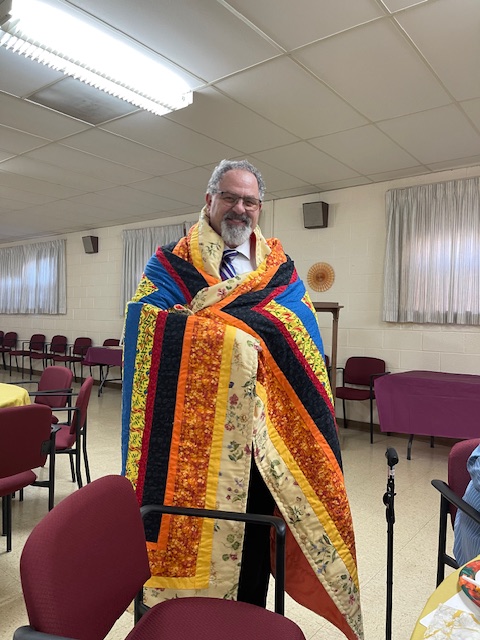
 Sunday Morning Greek Blog