Heavenly Father, we come before you first and foremost pleading for your mercy in our lives. We admit that we are sinners and in need of your grace-filled salvation. But those of us who believe also know that in submitting ourselves to you and uniting with your death in our baptism, we were also raised to life to walk in your righteousness and power. Lord, we admit that we don’t often live in that power, which Ephesians says is like the resurrection power you used to raise Jesus from the dead. But now especially, O Lord, we who are Christ followers and God fearers need to rise up in that holy power that you’ve blessed us with in the heavenly realms.
Lord, even though our ultimate faith and trust must be in you, we recognize that we are stewards of the world and the times you’ve placed us in. As stewards and ambassadors of your kingdom, you have given us the responsibility to pray for those in power over us. You established the institution of government so that mankind might live in peace and order, regardless of that form of government. But as with any position of power comes the temptation to abuse it and oppress those who should be governed in peace. In our great nation of America, we are seeing the abuses of this power laid bare at almost every turn, and no one party or individual in power is solely responsible for this.
We know that mankind are not angels, that we are flawed, and flawed individuals have been leading us for nearly 250 years in this nation. But the flaws have nearly reached the peak of wickedness at the time of Noah. The principalities and powers that you ordained in the heavenly realms to oversee the nations and their government have become drunk with power and wickedness on the blood and toil of the innocents. From the blood of murdered children in the womb to blood in the streets for intentionally keeping people in poverty to lives lost to alcohol and drug addiction to poor state of our own health because of unscrupulous policies to benefit industries that keep us dependent on chemicals, almost everything controlled by the rich and powerful in the earthly realm seems destined to hasten our own demise.
So, Lord God, we come to you praying for the redemption of those powers and authorities in the heavenly realms, as you commanded your church to do in Ephesians. But Lord, we cannot do this with prayer alone. We give you thanks for providing flawed men and women in positions of power who desire to bring justice to the wicked, mercy to the oppressed, and walk humbly before you. We need these people in positions of power to use every tool at their disposal to undo the results of wicked and selfish leaders in our government. Expose the corruption! Punish the wicked, regardless of political affiliation! Let them confess their evil deeds and be treated according to the principles of government and justice you inspired our founders to set forth in the beginning.
Lord, we lift up our voices in prayer and to call others to prayer, especially those who understand the spiritual forces at work. We must with prayers and petitions support those in power who seek to do good, who seek to overturn the wickedness of times past, and who seek to bring restoration to those harmed by evil, greedy men and women. Let your justice be visible for all to see so mankind will know that you are a righteous and holy God. Let your church rise up to care for the poor and truly needy. Let professionals rise up who can bring healing and hope to those afflicted with mental disorders. Let your church shine like the sun into every dark corner, not only exposing the darkness, but finding and restoring those who are lost or trapped in that darkness.
Lord, we humbly but boldly ask for your hand to continue to work through those doing your will and doing the right thing. Raise up leaders where we need brave men and women to take the lead. Pour out your spirit in a double portion on these men and women and let the world see what your kingdom in supposed to be. In the name of Jesus our risen and glorious Lord, AMEN!
I preached this message on February 22, 2026, the First Sunday in Lent, Year A.
When you think about it, Satanism, the worship of Satan, is an oxymoron. I know what you’re thinking, and you’re right. “That’s a weird way to start a sermon, preacher!” Yep, guilty as charged. But seriously, why would anyone want to put their “faith” in Satan when all the evidence points his core nature? He’s pure evil. He’s deceptive. He hates those who worship God. I would dare say he’s more interested in getting you to not worship and serve God than he is having people worship him. But he can ignore those people, because they’re already solidly in his camp.
John says this about the devil when he confronts the Pharisees in the Temple in John 8:
44 You belong to your father, the devil, and you want to carry out your father’s desires. He was a murderer from the beginning, not holding to the truth, for there is no truth in him. When he lies, he speaks his native language, for he is a liar and the father of lies. 45 Yet because I tell the truth, you do not believe me! 46 Can any of you prove me guilty of sin? If I am telling the truth, why don’t you believe me? [1]*
Adam and Eve had a first-hand encounter with Satan in the very beginning. He lied about what eating the fruit from the Tree of the Knowledge of Good and Evil could do for them. Yes, after eating the apple, they did experience the shame of their nakedness, so at least that much of what Satan said was true, but it was a half-truth at best. The lie that Satan told Eve was “You will be like God.” That was a lie in so many ways, and here’s why:
God is not just omniscient, knowing all that can be known, but he is omnipotent and omnipresent as well. Adam and Eve, relatively speaking, only got a fraction of the knowledge that God had about such things and NONE of the power or presence that God had. Their shame at disobeying caused them to fear the presence of God when God had designed Eden and the world for them to live in his presence. They lost power, because at that point, death became a necessity for survival. An animal would have to die to clothe them. Blood sacrifices became necessary for temporary atonement. And God’s son would have to die to redeem them forever from the curse.
Satan won that first round with God’s precious new creation, but out of that came the first prophecy of Satan’s defeat at the hands and feet of God’s son. It’s no wonder, then, that he thought he could try and pull that off when God’s one and only son came on the scene. If he could get Jesus to stumble, the world would be his, or so he thought.
In the garden, Eve had become convinced somehow that the forbidden fruit “was good for food and pleasing to the eye, and also desirable for gaining wisdom.” It shouldn’t surprise us that Satan used those same three categories to tempt Jesus in the desert as in our Gospel passage this morning. “I know you’re hungry for some food, Jesus. Go ahead and turn these stones into bread.” But Jesus knew, unlike Adam and Eve, that there was more to God than producing a little supernatural “manna” to satisfy what must have been an intense human experience of hunger. “Man shall not live on bread alone, but on every word that comes from the mouth of God.”
Satan tried to trick him by twisting a promise of God into a perversion of wisdom. “Come on Jesus. You know God will catch you if you jump off the top of the Temple here! Imagine the scene when the crowd watches the angels swoop you up at the last second! You’ll be a superhero!” But Jesus knows it is foolish to put God to the test like that, and rebuked Satan with that fact in no uncertain terms.
Satan had one more chance. He took Jesus to a high mountain where he had a “pleasing sight” awaiting him—”all the kingdoms of the world and their splendor.” But once again, Jesus knew the price was too high to go along with Satan’s schemes, and he knew none of them would bring about what God had promised him when he fulfilled his mission. “You know the commandment, Satan. I will have no other gods before me. He was there to “worship the Lord God and serve him only.” The liar failed at trying to fool the one in whom there was no lie and only truth.
And that was the beginning of the end for Satan. Jesus won that battle, but Satan didn’t give up that easily. He had to switch his focus to others, and most of you know who that would be: someone from his inner circle. The signs would be there early on that something wasn’t quite right with Judas. Even Peter gets some of the blame, but that, it seems, may have been more to his impetuous nature at times, and Jesus had other plans for him anyway.
The power of death was defeated at the cross. I’m sure that was something that Satan actually felt. Jesus had even told Peter that the gates of hell could not withstand the coming of God’s kingdom, and I think for a while anyway, as the church began to coalesce after Pentecost, God and Jesus kept Satan at bay to give the fledgling believers a head start at getting the gospel out.
I want to turn now to Romans 5:12–19, the other New Testament passage in the Lectionary readings today, to look at the results, if you will, of Jesus’s victory over death and how he, as the New Adam, broke the curse brought on by the First Adam, who through passivity allowed his wife to give in to the serpent and joined her in her disobedience. Romans 5 has a powerful message about how you and I can be strengthened in our own faith walk because of what Jesus accomplished on the cross and in his resurrection from the dead.
Hear what Paul has to say:
12 Therefore, just as sin entered the world through one man, and death through sin, and in this way death came to all people, because all sinned—
13 To be sure, sin was in the world before the law was given, but sin is not charged against anyone’s account where there is no law. 14 Nevertheless, death reigned from the time of Adam to the time of Moses, even over those who did not sin by breaking a command, as did Adam, who is a pattern of the one to come.
15 But the gift is not like the trespass. For if the many died by the trespass of the one man, how much more did God’s grace and the gift that came by the grace of the one man, Jesus Christ, overflow to the many! 16 Nor can the gift of God be compared with the result of one man’s sin: The judgment followed one sin and brought condemnation, but the gift followed many trespasses and brought justification. 17 For if, by the trespass of the one man, death reigned through that one man, how much more will those who receive God’s abundant provision of grace and of the gift of righteousness reign in life through the one man, Jesus Christ!
18 Consequently, just as one trespass resulted in condemnation for all people, so also one righteous act resulted in justification and life for all people. 19 For just as through the disobedience of the one man the many were made sinners, so also through the obedience of the one man the many will be made righteous.[2]
Even though Paul says plainly in 1 Timothy 2:14 that it was Eve who was deceived and sinned first (sorry, ladies, I’m just the messenger here), Paul considers the blame for “original sin” to be squarely on Adam’s shoulders. Adam had one command, and he (and Eve) blew it. But because it was a single command and the Law had not come yet, God could not permanently charge Adam with a violation of his law. Instead, they were expelled from the garden because they could not be trusted. That doesn’t mean they weren’t loved, though. God would declare even as he announced their punishment that the seed of the woman would crush the head of the serpent.
Paul demonstrates that Jesus fulfilled the role that Adam never could. Adam’s disobedience or lack of faithfulness brought sin into the world, but Jesus’s one act of faithful obedience, submitting to crucifixion, is the only act that could defeat the power of sin once for all and bring righteousness to all who would follow him. It took one sin by Adam to mess up things for everybody, but one faithfully obedient savior to restore us to God in his righteousness.
Romans says that Jesus Christ is our righteousness. He earned that designation by fulfilling the whole Law of God. But God still needed that once-for-all blood sacrifice that would make the animal and grain sacrifices of the Old Testament completely obsolete. Jesus was the only one who could be that spotless lamb. But it wasn’t just because of his 100% obedience to the law. The crucifixion had one more element that made it absolutely effective and impossible for the devil to challenge or destroy: It was love, pure and simple.
“For God so loved the world.” Only a perfect man with a fully divine nature who showed us beyond a shadow of doubt how he and his Father loved us in person and face to face could make that sacrifice. The bulls and goats and birds that were sacrificed under the Old Covenant could not ever love us the way Jesus did and does, which is why his sacrifice stands not only above the old sacrificial system, but above every other religion as well. Buddha, Siddhartha Gautama, was a real person, but he never loved anything about the world that should have mattered to him. He just tried to obtain a state of nothingness, a very selfish goal that no one else, by definition, could help him achieve. There’s no personal connection there and no promise of any help from the supernatural realm. Jesus’s sacrifice was by far the most superior of any that could have happened on this world God created with love, and the only one that can guarantee us eternal life in God’s glorious new kingdom.
As believers, then, know that you are “in Christ” in every sense of the concept. We are baptized “into Christ,” which means we are baptized into his death. So we share in his death so we can be free of the requirements of the law, beneficiaries of grace, and servants of righteousness. As you go forth in the world from here, declare God’s word unashamedly to those who need to hear the hope of his good news. Amen.
[1]The New International Version. 2011. Grand Rapids, MI: Zondervan. *I didn’t say it in my message, but I sure thought about adding: “The Pharisees must have had Jesus Derangement Syndrome.”
Welcome to Lectionary Help for the first Sunday of Lent, February 22, 2026, the temptation of Christ in the wilderness. The celebration of Easter/Resurrection of the Lord is on April 5 this year.
I’ll just pull a relevant quote from the sermon linked above, as I think it’s succinct enough to give you the sense of the words used for “temptation” and “testing.”
Word Study (from the sermon linked above)
Tempt, test (πειράζω peirazō)
Temptation, testing (πειρασμός peirasmos)
So why do three of the versions I mentioned use “test” instead of “temptation” for the same Greek or Hebrew word? Well, as I tell my students when they ask me questions like that, the answer is “context, context, context.” If you follow the use of the words in their respective story settings, you find that “testing” has to do with the relationship between God and humans. The general thrust of the verses in question goes one of three ways: either God is testing his people to see how they respond, or the people are testing God by NOT doing what he’s commanded them to do, or one person is testing another’s character. And consistent with the concept of testing, sometimes there’s a judgment or “grade” on how we responded to the test.
“Temptation” is a subset of testing. That is, all temptations are tests, but not all tests are temptations. The word “temptation” is used by these English translation committees to indicate a situation in which some personified evil power or influence is at work.
Application
In the message above, I offer three ways after the example of Jesus to fight against temptation and weaken their influence in your life:
Pray! (Hebrews 4:15–16)
Live in the will of God; Live “in Christ” (1 John 2:15–17)
Memorize and proclaim God’s word (Psalm 119:11)
Epistles passage (Romans 5:12–19)
If you’re looking for a different angle to approach the theme, consider using Romans 5:12–19 as your starting point. I’ve had Romans on the brain for the past couple months because I gave the kickoff message to our 2026 first semester church-wide small group study in Romans (Romans 1 & 2: Jesus Our Righteous and Faithful Savior (StoneBridge small group kickoff) | Sunday Morning Greek Blog). I side with the subjective genitive approach to Romans when it comes to talking about both righteousness and faithfulness, so Jesus is “the righteous one who lives by [his] faithfulness” and we’re saved through the faithfulness of Jesus, the Righteous One.
Having established my foundation for my understanding of Romans, I’ll give some quick hits here.
The “sin entered the world through one man” concept is countered by Jesus, the Righteousness of God, the “one man” through whom all are made righteous by being “in Christ.” Jesus’s faithfulness secures that for us.
Verse 19 makes the connection to the stated theme of Romans (leading the Gentiles to the “obedience of faithfulness”; 1:5 & 16:26): “Through the obedience [of faithfulness] of the one man the many will be made righteous.” This is the set-up for Paul’s discussion of baptism in chapter 6: If we’re baptized into Christ, we’re baptized into his death. That “death” is how we’re freed from the law (Romans 7), and our subsequent emersion (coming out of the baptismal waters) results in life “in Christ.” Our righteousness is not something separate imparted to us; it’s something we walk in when we walk “in Christ.”
Blessings this week as you enter into the Lenten season. If you’re in a tradition that gives up something for Lent, try giving up those things that keep you from drawing closer to your Savior. I’ve preached the above sermon twice in the last four years, so time for me write something afresh.
I preached this message October 19, 2025, one week after Mount View’s 70th Anniversary celebration.
The Lord be with you.
In the late fifth century BC, Athens successfully defended its right to govern itself as a democracy in the Peloponnesian War. In the Funeral Oration of Pericles, its author Thucydides says this about freedom to the Athenians: “For you now it remains to rival what they [Pericles and the soldiers who died in the first year of the Peloponnesian War] have done and, knowing the secret of happiness to be freedom and the secret of freedom a brave heart, not idly to stand aside from the enemy’s onset” (Per Bartlett’s Quotations; alternate translation: “These take as your model, and judging happiness to be the fruit of freedom and freedom of valor, never decline the dangers of war”[1]). In other words, freedom required everyone to defend it as a matter of lifestyle.
About 800 years before that, about 2,000,000 newly freed slaves found themselves at the foot of Mount Sinai ready to receive their document of freedom from Egypt and self-governance: the Ten Commandments. But just before that happened, Moses had a visit from his father-in-law Jethro. Up to that point, Moses had been the sole judge and leader of Israel through the early days of wilderness wandering. Jethro realized what a huge task Moses had before him and suggested he might want to delegate some of the responsibility to capable men to help ease his burden. Jethro gave him this advice in Exodus 18:21–22a:
Select capable men from all the people—men who fear God, trustworthy men who hate dishonest gain—and appoint them as officials over thousands, hundreds, fifties and tens. 22 Have them serve as judges for the people at all times, but have them bring every difficult case to you.”[2]
For our gospel passage this morning, it’s important to note what the qualifications are for the first judges ever appointed for the Hebrews: “Men who fear God, trustworthy men who hate dishonest gain.” Contrast that with the description of the judge in our gospel passage this morning: “A judge who neither feared God nor respected man.”[3]
As we’ve been going through Luke gospel, we’ve seen quite a few parables, and a few of them have featured some rather questionable characters. In the Parable of the Lost Son, we saw the son who wasted his inheritance on riotous. Immediately after that parable, we looked at the parable of the shrewd manager who did some sneaky stuff to make himself and his master look good. Then we saw the rich man who ignored the invalid Lazarus at his gate. So it shouldn’t surprise us to find an unscrupulous judge in this parable who has no regard for the law of God or the human condition.
But we also have a persistent widow in our passage today, and some of these same parables we’ve looked at had a persistence theme in them as well. Just before the Parable of the Lost Son, we have two parables about a woman who swept her whole house to look for a lost coin and a shepherd who left his 99 sheep unattended in the pen while he went off to search for one lost sheep. We also have the story of the ten lepers who cried out to Jesus to heal them, and of course, he did.
And one more thing before we get to our passage this morning: Jesus has just finished answering the pharisees’ question about when the end would come. He addresses them only briefly by telling them “The kingdom of God is in the midst of you.” Jesus turns to his disciples and paints a rather bleak picture of what the end will look like. Not only does he compare the end of days to the fire and brimstone of Sodom and Gomorrah, but he also speaks of separation from their loved ones.
So you can see why Luke introduces the Parable of the Persistent Widow with “He told them a parable to the effect that they ought always to pray and not lose heart.”
So we come to the high point of the story here: the faithful persistence of a poor widow who had no family, apparently, to help her versus a heartless, uncompassionate, and corrupt judge who only looked out for himself. Who will win this showdown?
Now even though this is a parable, some might think Jesus has a particular judge in mind when he starts this parable. It’s interesting that Jesus begins this parable with the words (according to most English translations) “In a certain city….” What most English translations don’t let you know that the word translated “certain” is also used to describe the judge: “In a certain city there was a certain judge….” Now it gets more intriguing.
Based on Jesus’s final statement in verse 8, he could also be referring to the general state of justice in Israel. It’s like he’s saying to his audience: “You know how it is. Wherever you go, there’s always that one judge. Yeah, you know the type: corrupt as a three drachma coin!” In spite of the judge being a scoundrel, the woman peacefully (that’s important to note) but repeatedly came to the judge to request protection from her “adversary.” It’s not clear who her adversary was or why they were her adversary; that’s not important to the story. And it’s not clear what sort of “attack” the judge feared from the woman. It’s doubtful it would have been a physical attack; more likely an accusation about the judge’s integrity and ability to be a fair judge.
The end result in the parable is that the judge does grant the woman relief. Jesus goes on to give the lesson of the parable: We need to be persistent in prayer. “Pray continually” as Paul puts it in 1 Thessalonians 5:17. Jesus throws in a rhetorical question, however, at the end of the passage: “When the Son of Man comes, will he find faith on the earth?” The implication here is that the kind of faith that prompts people to pray at all, let alone continually, may be extremely rare in the last days.
I was at my home church’s annual men’s retreat on Friday and Saturday. I think I’m the only one left with perfect attendance at the retreats since they started in 2013. I was encouraged to see a lot of younger men come out this time, many new faces, who were excited about their faith and the opportunity to fellowship and develop that deeper connection to God. God is on the move to bring revival again, especially with the assassination of Charlie Kirk, and I think if Jesus came back today, he could answer the question about finding faith on earth a resounding yes.
But it will take more than just persistent prayer to maintain that faith. The power of prayer is supported by the foundational truths of the faith as written in Scripture. The other New Testament passage in the Lectionary today focuses on that: 2 Timothy 3:14–4:5:
14 But as for you, continue in what you have learned and have become convinced of, because you know those from whom you learned it, 15 and how from infancy you have known the Holy Scriptures, which are able to make you wise for salvation through faith in Christ Jesus. 16 All Scripture is God-breathed and is useful for teaching, rebuking, correcting and training in righteousness, 17 so that the servant of God p may be thoroughly equipped for every good work.
4 In the presence of God and of Christ Jesus, who will judge the living and the dead, and in view of his appearing and his kingdom, I give you this charge: 2 Preach the word; be prepared in season and out of season; correct, rebuke and encourage—with great patience and careful instruction. 3 For the time will come when people will not put up with sound doctrine. Instead, to suit their own desires, they will gather around them a great number of teachers to say what their itching ears want to hear. 4 They will turn their ears away from the truth and turn aside to myths. 5 But you, keep your head in all situations, endure hardship, do the work of an evangelist, discharge all the duties of your ministry. [4]
The last part of chapter 3 we just read emphasizes the need for continuing in and continually learning from God’s word by diligent study. Timothy himself had been steeped in the study of God’s word from early on in his life; he probably knew more about scripture than most of the apostles, and so he had, seemingly, a greater responsibility for taking the lead in spreading the good news.
We also see here the familiar passage about God’s word being fully inspired, that is, “God-breathed.” The original “written” word would most likely have been considered 100% accurate in spite of being first written by the hands of men. While Paul’s statement here primarily refers to the Old Testament scripture, we do get a hint in 2 Peter 3:16 that Paul’s letters seem to be quickly attaining the status of Scripture as well. Scripture is “profitable” (ὠφέλιμος ōphelimos) for “teaching, rebuking, correcting, and training in righteousness”; dedication to studying Scripture helps solidify it in our hearts and minds.
Paul ordains Timothy in the opening verses of chapter 4, most likely for taking over the leadership of the church at Ephesus. Paul wants Timothy to make sure the church in Ephesus will stay strong in their faith. His primary charge to Timothy is to “Preach the word!” The tradition of the Christian university where I attended seminary referred to a young man sponsored by his home church to go to Bible college as a “Timothy.” The rallying cry of that school when it was founded just after the end of WWII was “The Preachers Are Coming!” Note that this preaching included the very things that chapter three said about the word of God: “Correct, rebuke, and encourage—with great patience and careful instruction.”
The current revival we’re seeing especially of young people either returning to or for the first time checking out church reveals that we have been in a time that Paul describes in 4:3: people are concocting and promoting crazy ideas about God, Christianity, and faith. We are a family of people who love our brothers and sisters in the faith deeply, yet the world tries to make a caricature of that by projecting their own shortcomings onto believers broadly.
Like Lyle said last week, if we want to have another 70 years of fruitful ministry, we need to trust “the man with the plan,” Jesus. We can certainly pray for more people to come but we also have to be willing to take some action steps as well to get the word out. We have to let people know that we’re here for them by going out and meeting them where they’re at. We can plant and we can water. We can serve and persuade. We can invite and enroll. But ultimately, as Paul says in Corinthians, it is God who causes the growth. He sends just what and who is needed to accomplish his will and purposes for the kingdom, and he does it in his good timing.
I think Paul says it best in Romans 10:14–15: 14 How, then, can they call on the one they have not believed in? And how can they believe in the one of whom they have not heard? And how can they hear without someone preaching to them? 15 And how can anyone preach unless they are sent? As it is written: “How beautiful are the feet of those who bring good news!”[5] In other words, we need a spiritual pedicure. Now I thought I was the only one with an odd enough sense of humor who could come up with the phrase “spiritual pedicure,” but when I searched the phrase, I found a sermon by Josh Cardwell from Revolution Church in Crossville, Tennessee entitled “Time for a Spiritual Pedicure.” I’m gonna have to meet this guy.
I am proud of this congregation and I am grateful that I got to share in the 70th anniversary celebration last Sunday of your “beautiful feet,” the ministry you’ve sustained during that time. It’s kind of wild for me to realize that I was born within the first 10 years of this congregation. My how time flies. My hope and prayer is that Mount View will continue to be a vital presence in this community and neighborhood. We have a rich tradition and experience to offer those seeking to get reconnected with the kingdom of God. I pray that we continue to be a bright and shining light in a dark world. Amen.
[1] Thucydides. 1910. The Peloponnesian War. Medford, MA: London, J. M. Dent; New York, E. P. Dutton.
I left for an eight-day road trip to Houston and then Minneapolis the day after Charlie Kirk was assassinated. With all the travel and spending time with my kids for the first half of the trip and my coworkers the last half, it was difficult to sit down and focus on any serious reflection. This is probably good, because I’ve had a chance to see the reactions of others and witnesses the abomination of those especially on the Left who are mocking or celebrating Charlie’s death before I could finish up what I’m presenting here. The problem is Evil, pure and simple, and Charlie was a warrior fighting against the darkness of that evil in the heart of enemy territory at times. I had done the same thing on a much smaller scale thirty some years ago as a campus minister, so I appreciated Charlie’s courage. Here’s my reflection on how he influenced and emboldened me.
As a former campus minister who, with some fear and trepidation, walked into the offices of the nation’s largest Gay/Lesbian Student Union at Northern Illinois University in the early 90s to try to develop a dialogue with a very militant group (at least their rhetoric against Christians in the school paper made it seem as such), I have looked up to Charlie Kirk ever since he came on the scene in 2012. His approach was similar to mine. Let’s talk about the assumptions you’re making about Christianity and that some Christians are making about homosexuals. AT NIU, I was able to have what I thought were “productive” conversations with the G/LU to show a more compassionate side of Christianity that didn’t hate the sinner a la Westboro Baptist in Topeka, Kansas, back in the day. I earned enough respect to be invited to sit on some panel discussions, and several appreciated the tone I took. (For historical context, keep in mind that “political correctness” was just starting to rear its ugly head in those days.)
Unfortunately, that rhetoric has now reached intolerable levels. The way to counter speech you don’t like should be more speech. That is the Right’s attitude with a few rare exceptions. However, the Left’s attitude has been to cancel, shame, dox, impose fear, name calling, and rename our position as “politically incorrect.” Let’s not forget that they also burned up cities and vilified the police, and even committed open anarchy in places like Seattle all in the name of a criminal drug addict who refused to comply with police. Now you can add deadly violence to that as well. I’m not going to be silenced, and I have never shied away from confronting such things in my blog or from the pulpit.
I don’t think it’s a cop-out to suggest that mental health is part of the problem here, but the bigger problem is just plain evil. If we just say “Violence is wrong regardless of who commits it,” but it misses the point of the larger scope of violence, not just the act of cold-blooded murder. (The echoes of those criticizing “Our thoughts and prayers are with you” is still ringing loudly in my ears.) The moral equivalence would seem to stop there. Charlie Kirk stood for freedom of speech and freedom of peaceably assembling, guaranteed First Amendment rights. As a Christian, I believe those First Amendment rights are also God-given rights based in the Bible. Those First Amendment rights are guaranteed and protected, in part, by the Second Amendment, the right to keep and bear arms. Tyranny seeks to strip those rights from those who are citizens. The Second Amendment should not necessarily be the first response unless danger is imminent, but it can’t be ignored, either.
When you juxtapose what Charlie Kirk stood for against say the Democratic Farm-Labor Party former Speaker of the Minnesota House who was targeted, the moral contrast is stark if not frightening. Charlie stood for free speech, community engagement, and dialogue with those who disagreed with him. He believed in human dignity. That’s the fundamental basis for First Amendment rights. On the other hand, the Minnesota State Legislature, led by Speaker Hortman at the time, passed a law in 2023 that expanded abortion rights and eliminated clear language about NOT classifying pedophilia as a sexual orientation in favor of extremely vague language:[1]
Let the record show that Speaker Hortman voted in the affirmative for that bill (2023 S.F. 2909).[2]
Here’s a Twitter post that gives additional evidence that the bill (now law) is a step toward normalizing pedophilia.[3]
Here’s the finished product after it was enrolled (i.e., the law was updated):[4]
Yet for all these things she supported, she was never targeted by a MAGA loyalist for violence. Nor, apparently, were any of these things the motive for her and her husband’s assassin. Let the record show that their assassin was apparently not a MAGA supporter. He had “No Kings” literature in his vehicle when they caught him, and the “No Kings” rallies in Minnesota were cancelled after that discovery.[5] Those were anti-Trump rallies planned around the time of the 250th anniversary of the Army. Just a few days earlier, Hortman had voted with Republicans in the Minnesota Legislature as the only Democrat in support of a bill stripping State-funded health care benefits from adult illegal aliens (Who Is Vance Boelter? What We Know About Suspect in Democ… – Newsweek). Presumably that is what prompted the assassin to take lethal action (https://x.com/amuse/status/1969070353356820789). That puts the lie to the claim that the Right fostered any kind of culture of violence in this situation. When the violent, dangerous criminal and drug user George Floyd died, the country erupted in violence. No one in the media seemed to condemn that kind of violence. If violence is never okay, then why didn’t anyone make a concerted effort to stop that kind of violence when it spread across the country?
Yet when Charlie Kirk gets murdered by an assassin, Christians come together and pray and do NOT riot in the streets or burn down cities. When a liberal speaker comes to a campus to speak, there’s barely a fuss about security. When someone like Charlie or Ben Shapiro or Candice Owens comes to a campus to speak, there are riots and violent protests and a heightened need for greater security.
The causes of the Left’s violent bent are precisely the kinds of things Hortman and her Leftist colleagues supported. Abortion is the murder of innocents; the blood of the innocent is on the hands of the so-called professionals who perform them AND the politicians who legitimize the procedure. Otherwise, why would Minnesota law have to exempt abortion from the Minnesota criminal Murder statute when it comes to unborn deaths? If violence is never okay, then why do people continue to want to legitimize the violence of abortion against the innocent and helpless unborn?
Transitioning youth is also an act of violence against the human body. It involves bloodshed as well when you start cutting off body parts and making phony structures (glory holes; inflatable penises; etc.) in the body. It involves violence against the body when you start introducing high doses of the opposite-sex hormone into a system that was designed to function on the hormone native to the biological sex of the individual. If violence is never okay, then why is the violence of transitioning youth and making them infertile for life in many cases still tolerated and promoted?
Whether you transition from boy to girl or girl to a boy, pumping opposite-sex hormones into a body not designed for those hormones is like putting motor oil into the fuel tank of a car designed for unleaded gasoline. The body will push back against that. It will try to create what is missing or eliminate what it considers invasive. We’re starting to see what happens with these kinds of procedures, both mentally and physically. That’s why many European countries have started restricting or banning such transition procedures.[6] The individuals often end up in worse mental and physical shape than they were in before the transition. If violence is never okay, then why do we continue the violence of experimental surgeries on vulnerable populations?
In other words, when the Left condemns violence, they should start within their own house. None of these facts justify in any way the assassination of Hortman and her husband. But they do create the contrast between what Hortman stood for and what Charlie stood for.
Charlie Kirk argued against these acts of violence; held peaceful, orderly assemblies where he allowed those who disagreed with him to come to the front of the line; and preached the gospel of peace and salvation in Jesus Christ to a generation in need of hope, yet he was violently assassinated by a left-wing nut who confessed openly to it. If violence is never okay, then why do some on the Left mock, ridicule, and cheer on the death of a man of peace?
If you haven’t already seen it, I would encourage you to watch Erika Kirk’s Address to the Nation on Charlie Kirk’s Assassination she made just two days after his death. I would encourage you to look up the recording of the September 15, 2025, broadcast of the Charlie Kirk Radio Show hosted by Vice President J.D. Vance where he interviews several people from the Trump administration (including Robert F. Kennedy) talking about the influence and character of Charlie Kirk on their own lives.
Let me ask this question of men: Men, are you living the kind of life and loving your wife in such a way that she would praise you as Erika did Charlie? None of us are perfect, of course, but what can each of us do better? Women, do you love and support your husbands in such a way that they know they are appreciated and honored in your home?
Charlie Kirk’s assassination shows that the Left will stop at nothing to try to silence Christians and the political Right. We who believe are ALL in danger and need to be vigilant against such attacks. But we must also pray and allow God to be the one to take revenge in his time, not in our own. This is not to say we can’t act to protect ourselves or others from an immediate threat like an active shooter situation or an out-of-control individual flailing a knife around. The people who kill or try to kill in cold blood like these assassins and would-be assassins have mental health issues. We need to keep cooler heads and immerse ourselves in prayer and service. Get connected with a community of believers if you’re not already. Stay in your community of believers for mutual support and encouragement. Don’t stray from your community and act the lone wolf.
Put on the full armor of God, everyone. We are likely going to need it.
I preached this message August 31, 2025, the Sunday after the school shooting in Minneapolis. This was a rough one to preach, as I tried not to get too political. But I’ve also had a long history of interacting with the LGBT community and promoting a compassionate response from Christians even in the face of sometimes harsh disagreements. The congregation received it well.
Jesus says this in Luke 12:8–10:
8 “I tell you, whoever publicly acknowledges me before others, the Son of Man will also acknowledge before the angels of God. 9 But whoever disowns me before others will be disowned before the angels of God. 10 And everyone who speaks a word against the Son of Man will be forgiven, but anyone who blasphemes against the Holy Spirit will not be forgiven.[1]
The events of this week compel me to address a completely different subject than what is suggested by the texts we read in the bulletin today. But other passages from today’s Lectionary readings are completely on target for what I’m addressing today, so I will work those in as I go along.
With each school shooting or other mass casualty event perpetrated by those who seem to have lost their moral compass, the common-courtesy sentiment of “Our thoughts and prayers are with you” seems to come under increasing attack by those who rarely, if ever, have expressed any modicum of faith in God. As a Christ-follower, I find this attitude incredibly difficult to understand. When a loved one dies, many of us will say something like, “I’m sorry for your loss” and perhaps follow that up with “My thoughts and prayers are with you.” How long before “I’m sorry for your loss” becomes a target of those who have no faith in God?
Now most of you, I think, can attest to the fact that I have been extremely cautious about addressing politics in my messages. For me to address something that might even come close to a political position, I would need to lay out a clear biblical principle for which I think we have some common ground as Christ-followers. Our salvation does NOT depend on our politics: who we voted for; what platform we support, and so forth. Our salvation depends completely on what Jesus accomplished on the cross and in his resurrection. Period. This morning is one of those mornings where the spiritual and faith issues outweigh whatever political concerns may be.
This issue of people who perceive themselves to have a certain amount of power and influence criticizing our “thoughts and prayers” is insulting to Christ-followers in more ways than one. That sentiment is NOT political, but spiritual, and it’s a spiritual act of warfare against those who may only have thoughts and prayers to offer. First, it calls into question the sincerity of those who express “thoughts and prayers.” It is an act of arrogant judgment against well-meaning people who are in fact more likely to pray and think about those affected than their self-absorbed critics are. Do they really expect that everyone has something more actionable to offer up? It’s almost as if they’re saying, “Just keep your mouth shut about God and let us handle it.
Second, those who have a critical attitude about “thoughts and prayers” have probably crossed over the line of the unforgiveable sin of blasphemy against the Holy Spirit by denying the power of our thoughts and prayers. The cultural, societal, psychological, and political issues raised by tragic events are extremely complicated many times and as such can be overwhelming to the average person. “My thoughts and prayers are with you” is a simple statement that on the one hand represents “I understand the enormity of the situation,” but on the other hand is a desire to reach out to a power greater than themselves and perhaps try to gain some insight into actionable solutions, especially within their own faith communities.
Third, “thoughts and prayers” is an immediate, courteous response to a tragedy. It’s another way of saying “Let me know how I can help” or “Let me know what specific things I can pray about for you.” It’s an invitation to build community, especially in situations where the victims may have been vulnerable or marginalized. It is an offer to drill down deeper and address the root causes of the symptomatic manifestations of the problems and not just the symptoms themselves. It may be true that actions speak louder than words, but thoughtless actions or actions that fly in the face of God’s divine plan or a Judeo-Christian ethical framework may lead to even more disastrous results. I fear that we may be on the brink of the latter if we as Christ-followers do not act upon God’s prompting to give thoughtful consideration to both how we pray and what we pray for. In fact, this seems to be an age-old problem that the psalmists and the prophets wrestled with thousands of years ago.
Hear these words from the prophet Jeremiah 2:4–13 as he warns Judah of the coming exile:
4 Hear the word of the Lord, you descendants of Jacob, all you clans of Israel.
5 This is what the Lord says:
“What fault did your ancestors find in me, that they strayed so far from me?
They followed worthless idols and became worthless themselves.
6 They did not ask, ‘Where is the Lord, who brought us up out of Egypt and led us through the barren wilderness, through a land of deserts and ravines, a land of drought and utter darkness, a land where no one travels and no one lives?’
7 I brought you into a fertile land to eat its fruit and rich produce.
But you came and defiled my land and made my inheritance detestable.[2]
8 The priests did not ask, ‘Where is the Lord?’
Those who deal with the law did not know me; the leaders rebelled against me.
The prophets prophesied by Baal, following worthless idols.[3]
9 “Therefore I bring charges against you again,” declares the Lord. “And I will bring charges against your children’s children.
10 Cross over to the coasts of Cyprus and look, send to Kedar j and observe closely; see if there has ever been anything like this:
11 Has a nation ever changed its gods?
(Yet they are not gods at all.)
But my people have exchanged their glorious God for worthless idols.
12 Be appalled at this, you heavens, and shudder with great horror,” declares the Lord.
13 “My people have committed two sins:
They have forsaken me, the spring of living water, and have dug their own cisterns, broken cisterns that cannot hold water.[4]
When we look at a school shooting like what happened in Minneapolis this past week or at a Tennessee Christian school a couple years ago or even the one in Uvalde, Texas, we’re dealing with two primary causes in my mind. The first is a mental health issue. Setting the issue of gender dysphoria aside for the moment, which appears to have been a contributing factor in at least two of these instances based on the shooters’ manifestos, I think most of us agree that something went terribly wrong in the minds of those who think they needed to vent whatever anger or hatred they had on soft, easy targets like a grade school. Somewhere along the way, someone missed or intentionally overlooked important clues about a child’s or young person’s possible predisposition toward violence, if it was even there.
The fact that we’re human and NOT omniscient about everyone’s predispositions is, then, one of the primary reasons why we need “thoughts and prayers.” Our thoughts help us to examine a situation or situations we find ourselves in and make judgments about what is going on around us. “See something; say something” is the typical line we use. I would rather be guilty of misjudging a potential problem than ignoring it all together.
The second thing we’re dealing with is the problem of evil. My experience in interacting with people in the LGBT community goes back to the mid-1980s when my pastor asked me to speak with someone my age who was struggling with overcoming his attraction to men. We met a couple times and he even came to a couple of our college-group Bible studies. This was right before I left for seminary in 1987, so I lost touch with him and never found out where he landed.
When I got to seminary, I had a friend in the college who wanted me to talk to another young man about similar issues. If I remember correctly, he was a former student at the Bible college. But then I also had a college friend in the dorm at seminary who was raped by a male seminary student. He was kicked out of the seminary.
When I started as a campus minister in 1989 at Northern Illinois University, I discovered they had the largest “Gay-Lesbian Student Union” in the nation. Their rhetoric in the student paper was extremely hostile to Christianity and the church. But I was undaunted at the time and walked straight into the lion’s den and said I would like to have a productive, public dialogue with them and give them a more positive view of Christianity. I was invited to several forums to discuss the issues and concerns and had earned the respect of some of the panelists and leaders. I was able to present the conservative Christian view of homosexuality at a diversity conference back before DEI was a thing. I was even interviewed for a grad student’s documentary on gays in the military, and my commentary was included in the final production.
In the past ten years the issue has hit closer to home as I have several friends and extended family members who’ve had to navigate these kinds of issues. I am not without compassion when it comes to these issues, but I have strongly held beliefs based on nearly 40 years’ experience.
I say all this not to pat myself on the back, but to show that I’ve got some street cred when I speak about LGBTQ issues and that I’m not just spouting viewpoints from one particular perspective. I’ve done my homework., and I think that’s an important part of the “thoughts” when I say my thoughts and prayers are with the victims of the latest school shooting.
When I say this is a problem of “evil,” then, it is “evil” in the sense that I have developed a firm conviction that ANY sexual activity outside the bonds of heterosexual matrimony, regardless of the gender of those involved, is deemed to be a violation of God’s divine design for humanity. The author of Hebrews says in 13:4: “Marriage should be honored by all, and the marriage bed kept pure, for God will judge the adulterer and all the sexually immoral.”
For whatever reason, the apostle Paul in his treatise on “the obedience that comes from faith,” otherwise known as Romans, feels it’s important in the first chapter to address the issue of “unnatural” relations between women and the “shameful acts” between men (Romans 1:24–32). He makes no bones about having the proper relationship with the opposite sex and keeping that relationship pure.
One more thing before I move on. The word translated “homosexual” in 1 Corinthians 6:9 is translated as “fine clothes” in the gospels, and “soft” in reference to an animal’s coat or a grassy field on which horses train in ancient Greek literature. But when the word is applied to persons in ancient Greek literature, it always takes on a negative connotation. In the Iliad, it is used to describe a ship captain, Hector, who is dead because his body was “softened” with many spears. It also applies to a soldier who does not want to fight bravely. But in 1 Corinthians 6:11, Paul assures his readers that, because of their redemption, they no longer bear that shameful title.
I think it’s important as a church then, no matter how uncomfortable we may be, to address the issue of gender dysphoria. At a very high level, what happens is that a young person somehow develops a certain stereotype of what they think it means to be a boy or a girl, or a young man or a young woman and then decides their mindset somehow better aligns with the opposite sex or that they don’t like the stereotype for themselves.
Now I’m not trained in counseling people with gender dysphoria, so I can’t say for sure what happens to a young person at this point, but I think it’s safe to say that influences on them become more intense and come from a number of different angles and perspectives, some of which may not be honorable or based in a Christian compassionate care model. In other words, it can get really confusing for a young person who isn’t even sure if their initial self-analysis of the stereotype is based in reality. It’s easy to see why they feel anxious about what is going on in their lives. They and their families must be under an incredible amount of pressure given the potential backlash they may encounter.
Compassion must be the key here, and often it’s not. Gender dysphoria is, by definition, a psychological or mental health diagnosis. As such, then, the first method of treatment in many people’s minds should be some form of mental health counseling, and many States have already passed such laws to require that prior to any discussion of transitioning. Providing a physical, surgical “fix” to a person’s gender dysphoria issues is far from a perfect fix, and studies show that it creates a whole new set of mental health issues in many cases, and not a few have desired to be detransitioned. In some respects, it’s like soldering an electrical cord to the two ends of the battery contacts in a battery-operated radio. The radio is designed to run on the voltage of a couple batteries. It’s not designed to take 120 volts straight from the outlet! You need an adapter. But God did not design the human body to undergo such a transition. Great Britain, to their credit, has stopped transition surgeries on youth altogether because they have begun to recognize the solution was worse than the original problem.
I started out by saying I wanted to defend those who say “My thoughts and prayers are with you.” What I’ve given you hear is a sampling of the “thoughts” that I bring into the situation, and no one can accuse me of not having any intention of taking action on this subject consistent with Christian compassion and not in defiance of God’s creative order. This isn’t an empty sentiment with me, and I’m sure it’s not with you either. I’m guessing some of you have these experiences in your own families or among your friends and that you’ve already formed your opinions. I’m speaking from my own perspective here and I don’t expect everyone to agree with me. Jesus died for everyone, and that includes trans people or anyone else in the LGBT community. Regardless of where you fall on this issue, always show compassion and the love of Christ to those who need it most.
As for prayers, this is not an empty sentiment either, especially when we consider what the Bible tells us to pray for. Here’s just a sample: [NOTE: The congregation received a separate list of these verses as a help to guide them in their “thoughts and prayers.” I ran out of time when we got to this point, so I picked a few and said a brief prayer based on each one to close out the message.]
2 Chronicles 7:13–14:
13 “When I shut up the heavens so that there is no rain, or command locusts to devour the land or send a plague among my people, 14 if my people, who are called by my name, will humble themselves and pray and seek my face and turn from their wicked ways, then I will hear from heaven, and I will forgive their sin and will heal their land.[5]
Nehemiah 6:9, as the Jews are being threatened for rebuilding the walls of Jerusalem:
9 They were all trying to frighten us, thinking, “Their hands will get too weak for the work, and it will not be completed.”
25 You spoke by the Holy Spirit through the mouth of your servant, our father David:
“ ‘Why do the nations rage and the peoples plot in vain?
26 The kings of the earth rise up and the rulers band together against the Lord and against his anointed one.[7]
…
30 Stretch out your hand to heal and perform signs and wonders through the name of your holy servant Jesus.”
31 After they prayed, the place where they were meeting was shaken. And they were all filled with the Holy Spirit and spoke the word of God boldly.[8]
Romans 12:9–21, esp. 17–18
17 Do not repay anyone evil for evil. Be careful to do what is right in the eyes of everyone. 18 If it is possible, as far as it depends on you, live at peace with everyone.[9]
Ephesians 3:10–11
His intent was that now, through the church, the manifold wisdom of God should be made known to the rulers and authorities in the heavenly realms, 11 according to his eternal purpose that he accomplished in Christ Jesus our Lord.[10]
Ephesians 6:12
12 For our struggle is not against flesh and blood, but against the rulers, against the authorities, against the powers of this dark world and against the spiritual forces of evil in the heavenly realms.[11]
1 Timothy 2:1–2
I urge, then, first of all, that petitions, prayers, intercession and thanksgiving be made for all people—2 for kings and all those in authority, that we may live peaceful and quiet lives in all godliness and holiness.[12]
James 5:16b
The prayer of a righteous person is powerful and effective.[13]
Psalm 81:10–16
10 I am the Lord your God, who brought you up out of Egypt.
Open wide your mouth and I will fill it.
11 “But my people would not listen to me; Israel would not submit to me.
12 So I gave them over to their stubborn hearts to follow their own devices.
13 “If my people would only listen to me, if Israel would only follow my ways, 14 how quickly I would subdue their enemies and turn my hand against their foes!
15 Those who hate the Lord would cringe before him, and their punishment would last forever.
16 But you would be fed with the finest of wheat; with honey from the rock I would satisfy you.” [14]
With apologies to VP JD Vance for mimicking his title.
I do not do much personal reflection in this blog. I’m mostly about exegesis (studying the text of the Bible in its original languages), hermeneutics (applying the results of exegesis to the understanding and meaning of the Bible), and lately homiletics (declaring the understanding and meaning of the Bible, especially as a sermon or homily, or in this case, a blog post). This ties in with the taglines for my blog that I put on my “business” card: “Dig deeper. Read Smarter. Draw Closer.” This past weekend, I took the opportunity to go to Fort Robinson State Park in northwest Nebraska to share in a fly fishing expedition with several guys (and the wife of one of them) from our church, including our pastor. The Fort Robinson area has several excellent fishing areas, including several streams and creeks; the first ten miles or so of the White River, which ultimately runs through the Badlands in South Dakota and empties into the Missouri River; and several ponds. Many of these locations are stocked by the State fisheries with trout and other popular species of freshwater fish.
I had never done fly fishing before, but the chance to get away and spend some time with friends old and new outweighed any anxiety I may have had about that. I only spent a few hours fishing at a couple ponds and in the White River, but it was long enough for me to observe others doing it, and I got pretty good at the casting part. I had a few curious little fish check out my fly, but never did land anything, which was okay by me. I was just grateful to be there.
Putting the Pieces Together
Part 1: Reflecting on Exegesis
The timing of the trip was divinely appointed for me as it coincided with some serious reflection I’ve been doing about the relationship between the depth of Bible study I typically do (“Dig Deeper”) and what I expect from the small groups I attend or help lead. That reflection was prompted by a recent post from one of the other pastor-bloggers on WordPress, Veritas Domain, and his short article about his “simplified” exegetical method. His method is similar to mine in that there is a heavy focus on the text itself, which is not unusual. I’m trained in Greek and Hebrew, so I start with those texts first, or at least have them open in parallel with the English translation so I can take note of key words (“Read Smarter”). If I’ve done those first two steps, the “Draw Closer” principle usually follows quite nicely.
In my comment back to “SlimJim,” I mentioned that my method was similar, but along with that, I’m finding that my experience with the two small groups I’m connected with at my church and even with my preaching is that having the knowledge that comes from that kind of in-depth study may not always go over well with those who don’t have that specialized training. In our men’s group, I can typically get away with sharing that when I feel it adds something to the discussion, but even then, one of my friends in the group (who happens to be a preacher’s kid) will sometimes say “All that is nice to know, but I want to know what makes me a better Christian, a better man of God.” That is, he wants to get to the “Draw Closer” part.
This brought to mind an article I read a number of years ago (a 1997 issue of Leadership magazine) by Haddon Robinson, in which he’s quoted as saying, “More heresy is preached in application than in exegesis.” In other words, some of us preachers may be pretty good at exegeting and interpreting God’s word, but how are we doing about translating that into action for our respective audiences? Does it really matter if a divine command is in the aorist tense versus the perfect tense if we don’t follow the command ourselves or encourage our audiences to follow the command, or worse, manipulate the command with malicious intent?
Part 2: The Fort Robinson Retreat
I had decided I would drive to Fort Robinson from Omaha, where I live, by way of Nebraska State Highways 92 (first half) and 2 (second half). Together, those two routes take you through the heart of the State, east to west. In addition, Highway 2 runs through the heart of the Sandhills. If you look at a satellite view of Earth along Highway 2, you’ll see that these Sandhills look like a bunch of sand dunes, but they all have grass growing on them, and several small ponds or lakes are scattered throughout. As I was driving through the Sandhills and listening to Rich Mullins and the Passion CDs (yeah, those date me), I began to understand what the Holy Spirit was trying to teach me. But he was only getting started.
I arrived at Fort Robinson State Park after dark, but not so late that I didn’t get to connect with my church friends who had already been there for a full day. We had breakfast the next morning at a small café in nearby Crawford, then struck out to fish. I went with a friend who had been in my small group when I moved back to Nebraska in 2010 and two of his (now grown) sons whom I hadn’t seen in quite some time. It was my first time fly fishing, so my goal was to get the hang of casting and extending my line. We tried the Ice House pond and then walked about a mile to couple bends in the White River (only about 10 miles from its headwater at that point, so no more than about eight feet wide if that. I had a few nibbles at the pond, but nothing in the river. From there we went back to the Grabel ponds, where I finished out the morning having developed a pretty good technique to cast and extend my line, even landing it on top of a 12-inch fish and spooking it away for a moment.
While I was at the section of the White River, I couldn’t help but think and marvel about how God created a means for distributing life-giving water throughout a continent (I knew the term “hydrology,” but I had to look up “limnology” as I was writing this paragraph), especially since, at the end of this month, my brother and I will be at the other end of the White River in South Dakota where it flows through the Badlands (and earns the name “White” from its sediment) and into the Missouri River south of Chamberlain for another fishing trip. God’s creation is an amazing and wonderful thing. That was what the Holy Spirit was continuing to show me, but not for the reason you might think.
Part 3: Sowbelly Canyon Road
One of the sights I had heard about from the guys who had gone up the previous year was Sowbelly Canyon, just north of Harrison, Nebraska. I had no idea what to expect from a “canyon” in Nebraska; certainly nothing like Poudre River Canyon in Colorado where my wife’s family has a cabin. Poudre Canyon is about 50 miles long, and the Poudre River is relatively wide in the canyon. Sow Belly is unique in its own way and was surprisingly beautiful and “cool” in more ways than one. I wish my wife would have been able to come along on this trip.
As you’re driving west on US 20 toward Harrison, you see nothing but a bunch of gently rolling hills on either side of the highway. One would never expect a place of such beauty was just beyond those rolling hills. Even as you crest the top of the canyon, you see an amazing sight below: a single lane dirt road running under a canopy of trees, with unusual rock formations atop the buttes, some of which have formed at right angles. The descent is moderately steep, and at times you have a wall of the canyon on your right (descending) and your left (ascending). At the bottom of the canyon is a small, babbling brook that must have taken a few centuries to form the canyon.
Just before you get to the end of Sowbelly Road on the east end (where it joins Pants Butte Road; no, I’m not making that name up), there’s a spot where you can see at least 80 miles to the north to the Black Hills in South Dakota (the dark mound in the far horizon). Something special happened between God and me via the Holy Spirit on that road, and especially with this particular view. I gained a whole new appreciation for the beauty, majesty, and grandeur of God’s creation. I’d expect something like that in Colorado; I never expected that in seemingly plain old northwestern Nebraska. Boy, was I wrong. What God had started teaching me in the Sandhills came to full fruition at the top of Sowbelly Road.
Part 4: Worldview, Wonder, and Wisdom
So let me bring this all together now. You might remember I started out talking about exegetical methods, methods that were heavily focused on the textual features like grammar, syntax, verb mood and tense, etc. Then it hit me: nothing in my exegetical method intentionally accounts for the majesty and glory of God and his creation. I knew I had to work that in somehow. But God still had one more piece to show me, and it hit me last night at our last small group of the season. Our senior pastor had been with us on this trip, but Sunday morning, one of the teaching pastors was preaching on the trauma Job experienced. I had tried to listen to it Sunday morning while driving through the remotest part of western Nebraska, but just couldn’t get a steady signal.
Fortunately, our Tuesday night group covered it in the study last night, and it was when we were talking about the ending of the book of Job that everything God had been teaching me finally made sense. Job had been arguing with God and his friends about how righteous he was and how he had always given God glory and so on, but God put him in his place. God recounts for Job all that He did by questioning Job: Did you lay the foundations of the earth? Did you create Leviathan and Behemoth? Who are you to tell me how I should act toward you?
That’s when I realized that I’m like Job in that moment. I think I have such a great exegetical method that will keep my doctrine sound and shred every stronghold that tries to set itself against God Almighty, but God’s word is more than the text and the grammar and verb moods and tenses and the participles and the conditional clauses. Those things are static, unchanging. But what does Hebrews 4:12 say? “For the word of God is alive and active. Sharper than any double-edged sword, it penetrates even to dividing soul and spirit, joints and marrow; it judges the thoughts and attitudes of the heart.”[1] Can grammar and syntax do that? I think not.
The other thing that occurred to me is the backstory of how the Jews would understand God’s word versus us gentile Christians. I’ll use just one example here: Communion, or as some call it, the Lord’s Supper or the Eucharist. When we look at the elements (“substantiational” leanings aside), we are meant to experience Christ in some way by “remembering” him. We see one man crucified and risen. But what do Jews remember at Passover? Not one man dying, but ALL the firstborn dying who weren’t protected by the blood of the lamb that they themselves applied to their doorways. They remember God parting the Red Sea so the Israelites could escape the oncoming Egyptians. The disciples didn’t understand immediately that Christ’s death had won them forgiveness and freedom. The Jews DID understand that immediately, with hearts pounding witnessing the very miracles of God at work to rescue them, even as they would tell the stories year after year to their descendants.
Conclusion
In other words, when I exegete and interpret Scripture, I need to look beyond the text and the grammar and all the other “in-the-weeds” details to comprehend a grand vision of a great God and all that he has done and made. That’s where the “draw closer” takes place, as it did for me this past weekend, when I understood who I am in God’s kingdom and that, in spite of his greatness and grandeur, he looks with love at the least of us, at the humblest of us, at our faithfulness. He looks with compassion at those who are lost and searching and even at those who may be angry with him or agnostic toward him, prompting us to share God’s “living and active” word with those who have not yet comprehended that greater vision.
From this point forward, then, I’m adding a couple permanent elements of my “principlizing bridge” (to use Grasping God’s Word’s language) will be to ask first, “How does this passage reveal the glory and majesty and mystery of God to the world?” and second, “How is this passage ‘alive and active’ not only to me but to those I encounter as well?” I feel like I drew a little closer to God this weekend. I pray that my testimony here will do the same for you.
Pastor Scott Stocking, M.Div.
All contents herein are the creative and intellectual property of this author unless otherwise attributed.
I preached this message on Sunday, March 23, 2025, at Mount View Presbyterian Church. I dealt with all four passages for the Lectionary for this Sunday.
Bearing Fruit…and the Cross
Lent is typically thought of in the Christian world as a time of sacrifice. Some people give up meat only to crowd into the numerous fish fries around town. Others might give up chocolate or coffee or caffeinated beverages or shopping or any number of other things that we might consider “vices” personally, but most of those things are not innately spiritual and may in fact make us a bit more difficult at times to live with if we haven’t had our morning cup of Joe. I’m teasing you a bit, of course. But if Lent is supposed to bring us some spiritual benefit, then shouldn’t we be giving up things that can damage our relationship with God? Why not give up greed, pride, selfishness, and other such things?
That seems to be the underlying theme behind our passages today. They might be summed up by John’s exhortation when he was preaching in the wilderness in Luke 3:8: “Produce fruit in keeping with repentance.” In other words, bear fruit while you’re bearing the cross. In our passage from Luke 13 this morning, Jesus seems to be addressing the thought that some had that bad things only happened to bad people. But the circumstances of our demise do not determine our eternal destiny. In spite of the untimely and unfortunate deaths of the Galileans and those in the tower of Siloam, Jesus says the important thing is to repent and be ready.
Jesus switches to talking about the fig tree that won’t bear fruit in the next few verses. The owner of the fig tree wants to cut it down because it’s unproductive. But the vineyard manager said “Give me another year and I’ll have it bearing fruit.” But the connection here with the previous verses and John’s statement about producing fruit in keeping with repentance is unmistakable. If we’re not bearing fruit, that could affect our salvation and our relationship with our Savior. Jesus said in Matthew 7:20: “By their fruit you will recognize them.”
Paul talks about the quality of our works in 1 Corinthians 3:12–15, but he doesn’t use the language of “fruit.”
12 If anyone builds on this foundation using gold, silver, costly stones, wood, hay or straw, 13 their work will be shown for what it is, because the Day will bring it to light. It will be revealed with fire, and the fire will test the quality of each person’s work. 14 If what has been built survives, the builder will receive a reward. 15 If it is burned up, the builder will suffer loss but yet will be saved—even though only as one escaping through the flames.[1]
God, being full of grace and mercy, leaves us a way out when we fall short. That’s what he accomplished through Jesus in his death on the cross and his resurrection from the dead. But instead of focusing on these warnings for the rest of my message this morning, I want to turn the focus around to the theme I mentioned earlier: How do we bear fruit while bearing the cross? That would have been my sermon title in the bulletin if I had remembered to click send on my e-mail to Judy!
I want us then to look at the other three passages from the lectionary today in addition to our gospel passage I touched on at the beginning. In Psalm 63, we’ll look at seeking God in worship. In Isaiah 55, we’ll look at seeking God for our wellbeing. And finally in 1 Corinthians 10, we’ll look at standing firm in our faith to recognize the way out of temptations that can drag us down.
Let’s look at Psalm 63. For a long time our country has been turning away from church attendance and, by implication, from God altogether. A trusted, unbiased Web site called Statista has this summary of church attendance: “According to a 2022 survey, 31 percent of Americans never attend church or synagogue, compared to 20 percent of Americans who attend every week. Despite only about a fifth of Americans attending church or synagogue on a weekly basis, almost 40 percent consider themselves to be very religious.” A 2024 survey by Gallup puts the number of weekly attenders at 20%, with another 9% at “almost every week.” On the flip side, 31% NEVER attend church or other religious service. We could talk about the reasons for this 24/7 for a week, but we’d probably never get anywhere. Psalm 63 tells us why this shouldn’t be, though.
We should be able to come to church to find God. Granted David, who wrote this psalm, had a special relationship with God that enabled and empowered him to be a great leader of his people, but this doesn’t mean that you and I don’t have access to this same relationship in the New Covenant era. David claims to have seen God’s power “in the sanctuary.” It’s not clear exactly what he “saw,” whether it was some physical manifestation of light, a divine presence, or if he’s using the word “see” to describe what he experienced in worship. Regardless, it was clear at least in David’s day, one of the best places to be to encounter God was the sanctuary in the Temple.
In the New Covenant era, God has given his Holy Spirit to each of us who believe. You don’t have to be a king or a prophet any more to have exclusive access to the Holy Spirit. When we come together to worship, to sing praises and hymns, to read God’s word and hear it explained in such a way that it’s relevant to our live and our situations, the Holy Spirit works among us to build and shepherd that unity we have in body of Christ. When we pray together as a congregation, we let God know that we still trust in him to work in our lives and provide for our needs while at the same time letting those whom we’re praying for know that we will support them however we can. When we come together as a worshipping community for projects and collection for the poor, we show and shower God’s love upon those who are truly in need.
But our worship doesn’t just happen in the church building. Verse implies that wherever David is at, he is earnestly seeking God. Later in vs. 6, he say he remembers God in his bed and while he’s keeping watch on the battlefield at night. He sings to God and he clings to God, knowing that God’s presence is always with him through the Holy Spirit. We have that same assurance. Jesus even promised that at his ascension: “I am with you always, even to the end of the age.” Seek God and you will find him, and as you draw closer to him, others will come to see him at work in your lives as well.
As we seek God, we can also know he will provide for our basic needs and do so generously. That is the message of Isaiah 55. Verses 1 & 2 go like this:
God wants to richly bless us. God’s goodness is genuine and original. God isn’t giving us yesterday’s leftovers. Jeremiah says “His compassions never fail. They are new every morning; great is your faithfulness!” (Lamentations 3:22b–23). Sometimes we spend a lot of effort and money pursuing things that don’t bring lasting or eternal satisfaction. God wants us to focus on him and what he provides for us. Later on in Isaiah 55, the prophet says this:
6 Seek the Lord while he may be found;
call on him while he is near.
7 Let the wicked forsake their ways
and the unrighteous their thoughts.
Let them turn to the Lord, and he will have mercy on them,
You heard in that passage the idea I suggested earlier about giving up the things that tempt us to turn from God. But Isaiah also says we need to get rid of the “stinkin’ thinkin’” as well. This is complete repentance: not just changing our behavior but changing our minds and our ways of thinking as well. That’s were the worship comes in from Psalm 63: setting our hearts on Christ.
One of my favorite passages occurs a few verses later in Isaiah 55:
I believe this is one of the greatest passages on evangelism. I love that it says God’s word accomplishes the purpose for which he sent it. When I was preaching early in my career, I was never in a church that followed the lectionary or the liturgical calendar. I could preach on what I wanted or I could pick out a theme or a particular book and prepare a sermon series.
But following the lectionary puts these two verses from Isaiah in a new light for me. Now I don’t know who decided on the three cycle of passages to read, but the lectionary is a “reading plan” adopted by many churches and denominations around the world, so it carries a lot of weight and, aside from the denominational differences and nuances that work their way into sermons on these passages, many churches are on the same page when it comes to what their congregations are presented with each Sunday. Because so many churches have agreed to use it, I believe it’s something that God honors. I think there’s something divine about the spiritual foresight those responsible for developing it, so I honor that.
Occasionally I’ll look at the passage for the day and wonder, “How am I going to preach on that?!” But I trust that there’s some component of God’s timing there, that is, some spiritual benefits he has in mind for sending out his word in this way, and I want to be faithful to communicate that in a way that’s relevant to you and my larger audience on the blog. I genuinely believe the lectionary is one way that God’s word gets from his mouth to our ears and that preachers who follow the lectionary are in many and diverse ways fulling the purposes for which God sends it out in that structure.
Finally, I want to look briefly at 1 Corinthians 10. Paul concludes in the first half of chapter 10 that that the written history of God’s people is intended for our encouragement and exhortation to faithfulness. Here’s what vv. 11–13 say:
11 These things happened to them as examples and were written down as warnings for us, on whom the culmination of the ages has come. 12 So, if you think you are standing firm, be careful that you don’t fall! 13 No temptation has overtaken you except what is common to mankind. And God is faithful; he will not let you be tempted beyond what you can bear. But when you are tempted, he will also provide a way out so that you can endure it.[5]
Paul warns us that we shouldn’t rest on our laurels. Faithfulness is an active, ongoing process in the life of the Christian. There is nothing passive about it. Continue seeking God in worship; continue reading his words to hide them in your heart. Continue loving your neighbor as yourself so they too can see the love of God. Continue putting on the armor of God each and every day so you can take your stand against the devil’s schemes.
May the power of the Holy Spirit go with you this week as you serve our Lord and Savior. Amen.
I presented this message on March 16, 2025, at Mount View Presbyterian Church in Omaha, Nebraska. In studying the two passages, I discovered several thematic connections between Psalm 27 and the central part of Luke’s gospel, especially from 9:51 through Christ’s triumphal entry into Jerusalem in Luke 19.
I had attended StoneBridge (my home church) for the worship part of their service before going to preach, and they did a version of St. Patrick’s Breastplate. I started my message with that this morning (the 15 lines toward the end of the longer prayer).
May the Lord be with you.
Have you ever thought about how you read certain types of literature? If you’re reading a fictional novel, or perhaps a true historical account of real event or someone’s life, it’s probably best to start at the beginning and read through to the end. It’s important to have all the details of the story because some of those details will be important throughout or later in the book. If you’re reading a history book or a historical biography, you may want to focus on a certain topic or certain era covered in the book to get the specific information you’re looking for, but you might miss some important background information that gives more context to events of that period. When you read a newspaper, you look for the headlines that interest you. If you’re looking for a specific answer on something like “How do I change a tire,” “Where do the Sandhill Cranes migrate to,” or “How do I calculate the area of a circle,” you typically wouldn’t have to read an entire reference book relevant to the subject. You’d go to the index or table of contents and look up where to find the information you’re looking for.
The Bible is sort of all these types of literature wrapped up in one collection that contains all these things, from the fictional, but true-to-life parables to the priestly “Chronicles” of the kings to the history of the patriarchs and the gospels, right up to the fantastical imagery of Revelation. Because of this, it’s important that we don’t lock ourselves into one way of reading the Bible. While it’s good to sit down and read large sections of the Bible in one sitting from time to time, we can still miss “the big picture” if we don’t understand or know the historical setting in which it was written.
Even when you read the gospels, if you have a Bible with footnotes, you’ll see that there are all sorts of references to passages in both the Old and New Testament where the gospel writer is either quoting the Old Testament or the editor perceives a connection to another New Testament author’s writings. That’s something you don’t typically get in a fictional novel, but would be helpful, I think.
Our two passages today, Psalm 27[1] and Luke 13, have a thematic connection, but it’s important to recognize that this connection compels us to look at the larger context of Luke’s gospel. Luke 13 is a little more than halfway through Luke’s 24-chapter gospel, but more importantly for our purposes, it’s about halfway between Luke 9:51 and Luke 19:28, which is the beginning of the story of Jesus’s triumphal entry into Jerusalem. Why is 9:51 an important marker? Luke says this: “As the time approached for him to be taken up to heaven, Jesus resolutely set out for Jerusalem.”[2] Luke isn’t even halfway through his gospel and he’s already talking about Jesus getting ready for the cross!
Luke frames the rest of his gospel from 9:51 on in the context of Jesus approaching the cross and preparing himself and his disciples for the implications of that seminal event. In fact, the footnote on this verse in my NIV Bible lists the references to this in the story line along the way: Luke 13:22, 17:11, 18:31, and 19:28.
So let’s take a look at the thematic comparisons between Luke and Psalm 27. Psalm 27:1 is the initial confidence builder for David as he pens this psalm: The Lord is his light, his salvation, and his stronghold, so David has nothing to fear as he leads his people. This confidence is paralleled in Luke 9:51 with his statement that Jesus “resolutely” set out for Jerusalem. The phrase here literally means to “set your face” (or by extension, “set your eyes”) upon Jerusalem. This ties in with Psalm 27:4 as well, when David speaks of dwelling in the house of the Lord and gazing on his beauty in the temple. The temple, of course, was in Jerusalem. In today’s gospel passage, Jesus seems to hint that he’s only three days away from Jerusalem and needs to press on.
In Psalm 27:2–3, David says that in spite of his enemies advancing against him, he will remain confident of the Lord’s help. As Jesus journeys toward Jerusalem in Luke, he encounters his own opposition along the way. In 9:53, the Samaritan village he was near wanted nothing to do with him because he was headed for Jerusalem. In chapter 11, we see opposition from the pharisees and experts in the law as he’s working miracles and teaching about the kingdom. By the end of chapter 11, Luke says this after delivering a list of “woes” to his critics: “53 When Jesus went outside, the Pharisees and the teachers of the law began to oppose him fiercely and to besiege him with questions, 54 waiting to catch him in something he might say.”[3] No love lost there between Jesus and that group of elitists.
Just like David, though, Jesus’s confidence doesn’t wane. He continues on his journey gathering an ever-larger following warning them about the opposition they themselves would face for being his followers and encouraging them to be ready when his time does come. In chapter 13, he faces opposition from a synagogue leader who is upset because Jesus healed someone on the Sabbath! Imagine that! In our passage this morning, the Pharisees seem to think they’re doing Jesus a favor by telling him to leave the region because Herod wants to kill him. But Jesus presses on, even with a bit of sarcasm, or so it seems, when he says in so many words that Jerusalem is the only place for a prophet to die.
The rest of Luke up to the point where he reaches Jerusalem gives us several more examples of this opposition, but we can save that for another time. I mentioned earlier about Psalm 27:4–5 hinting at the importance of temple. For Jesus, the temple was the true home of his family: after all, it was his father’s house. If he knows he’s going to die, he wants to be as close to his family home as possible. His statement in Luke 13:35 about “Blessed is he who comes in the name of the Lord” looks forward to his triumphal entry into Jerusalem. I believe Jesus takes a sense of pride and ownership in the temple, even though it is a structure made by human hands.
We saw after Christmas how Jesus as a boy stayed at the temple and impressed the religious leaders with his knowledge of and wisdom about God’s law. His first order of business after arriving in Jerusalem at the end of Luke 19 is to clear out the corruption in his father’s house. Even as he knew this would be one of his last weeks to experience the earthly temple, he wanted to leave it in better condition than he found it by restoring it to a place of prayer and genuine worship. He knew he would be the sacrificial lamb, and there would be no more need to sell lambs and birds in the temple for the sacrifices. It would be restored to a purer state. In the book of Acts, we see that his followers have been meeting regularly at the temple since his crucifixion, and it is there that the church is born on the day of Pentecost. That was the “Garden of Eden” for Christ followers.
The last half of Psalm 27 is one of David’s most heartfelt prayers for protection against his enemies and for the security of God’s presence with and acceptance of David as his chosen ruler for God’s people. Jesus taught his disciples to pray in Luke 11, the shorter version of the Lord’s prayer. In that prayer, we hear some of the same themes of praise, provision, and forgiveness. He understands the goodness of God’s provision.
But we also hear in that Psalm the foreshadowing of the cross. In verse 12, David asks not to be turned over to his enemies, which sounds very much like Jesus’s plea in the Garden of Gethsemane to have the cup of suffering removed from him. David’s pleas in verse 9 sound very much like Jesus’s words on the cross, “Why have you forsaken me?” Those words come from Psalm 22, where many of the aspects of Jesus’s crucifixion are foretold.
Just as David in the last two verses of Psalm 27 affirms his confidence in the goodness of the Lord and can encourage the worshipers to “be strong and take heart,” so Jesus has confidence in his dying moments to selflessly tell the thief on the cross that he too will join him in paradise when they die. I don’t believe that David intended Psalm 27 to be a messianic psalm, nor do I think Luke intended the central part of his gospel to mirror the themes of Psalm 27, but the parallels are striking and certainly worth noting.
But these parallels are academic. What does all this mean for you and me as we walk with our savior?
First, when we run up against roadblocks or challenges to our faith or we find that doubts are creeping in, we can remain confident that our light, our stronghold, surrounds us with his protection. We need not fear or doubt, but if we wait on the Lord and strengthen our hearts by abiding in God’s word, we can be confident we will see the goodness of the Lord, just as David was. We can walk in the victory of the cross in the overcoming resurrection of our savior.
Second, we can heed the exhortation of Hebrews 10:19–25, which sums up these three themes concisely:
19 Therefore, brothers and sisters, since we have confidence to enter the Most Holy Place by the blood of Jesus, 20 by a new and living way opened for us through the curtain, that is, his body, 21 and since we have a great priest over the house of God, 22 let us draw near to God with a sincere heart and with the full assurance that faith brings, having our hearts sprinkled to cleanse us from a guilty conscience and having our bodies washed with pure water. 23 Let us hold unswervingly to the hope we profess, for he who promised is faithful. 24 And let us consider how we may spur one another on toward love and good deeds, 25 not giving up meeting together, as some are in the habit of doing, but encouraging one another—and all the more as you see the Day approaching.[4]
Worshiping together as a church family, whether we’re a family of 20 or 200 or 2,000, provides a powerful sense of belonging to each of us. We know we have a place to call our spiritual home, just as Jesus considered the temple his spiritual home. We can feel safe here with one another.
Finally, the power of praying together as a church family cannot be overstated. Our prayers, whether in our own closets at home or corporately in our liturgy here, keep us connected to and in constant communication with our heavenly father. We can be assured that he hears us and works to respond to our prayers according to his will and his love for us.
As we go through this Lenten season, let us not forget the forgiveness we have from God and not forget to offer forgiveness and grace to those who need to hear that message. Peace to all of you. Amen.
Pastor Scott Stocking, M.Div.
[1] Psalm 27 parallels Psalm 31 with similar themes. Psalm 31 will figure prominently in the Lectionary beginning the Sunday before Palm Sunday next month.
I’m not looking for a show of hands here, but I want you to think about this for a moment: How many of you can say you have an enemy? Now for myself, I can’t imagine that anyone in this congregation has an enemy, but then, I don’t know everything about your lives or what struggles or challenges you all have overcome throughout your life on God’s green earth. If you have an enemy, do you remember how they became your enemy?
I have had enemies in my life. The usual way I’ve made an enemy is that I’ve spoken an uncomfortable truth to someone and they haven’t wanted to accept it. When I lived in Paxton, Illinois, a local businessman wanted to start what he called a “Raffle House.” We had had issues a few years prior to that with a native American tribe trying to reclaim some land outside the town for a casino. The community successfully rebuffed it, in part because they were able to demonstrate there was very little evidence that the tribe had legitimate historical claim to the area. Because of that opposition, I figured there was still some fire left in the community to oppose a gambling operation in our conservative little town.
To make a long story short (A Tale of Two Photos), I discovered he was essentially offering a Bingo game without a State license to play Bingo and in the process skirting the 5% tax on Bingo required by State law, so I tattled on him in a letter to the editor. The Raffle House only lasted about 8 months before it went belly-up. A few months later, I received a tip from the owner’s disgruntled ex wife (or so it seemed) about a similar operation one of his relatives was running in the large college town 25 miles down the road. I reported it to the police there, and they shut it down almost immediately. The Raffle House owner wound up getting me fired from the church I was serving at the time because he had given money to the church, which he never attended, and demanded I recant. I didn’t recant, so I quit.
I don’t think that guy ever forgave me for the grief I caused him. But I forgave him. In fact, the experience I gained in researching the laws and regulations regarding that story helped land me my first full-time job after I moved back to Omaha a few years later. Did I “love” my enemy by confronting him? I’d had no interaction or relationship with him prior to all this coming up, but I’d heard a lot of things about his character, and very little was positive. Was I doing good to him by warning him about the State laws he seemed to be violating?
The Bible speaks of many different kinds of enemies and different ways we can respond to them. Our enemies can come from anywhere and can range from those who don’t know us at all to members of our own family (Matthew 10:36). They can be people who hate or dislike you for any number of reasons, including your gender or your skin color. They could be people to whom we speak uncomfortable or challenging truths (Galatians 4:16).
This of course is one of the more prominent messianic psalms about Jesus being victorious over his “enemies.” Many Jews in the time of Jesus saw that as a promise that the Messiah would overthrow Roman rule, but God had a different idea. The enemies God had in mind were the Jewish leaders who had imposed a bunch of legalistic requirements on the Jews that weren’t necessary for salvation.
Paul says in his discussion of the resurrection in 1 Corinthians 15 says that Christ “must reign until he has put all his enemies under his feet. 26 The last enemy to be destroyed is death.”[2] So we’ll never really be free of our ultimate enemy, death, until Christ is victorious at the consummation of history.
The New Testament speaks quite a bit about how to deal with our enemies. “Resist the devil and he will flee from you.” “Turn the other cheek,” which in that culture meant don’t give your enemy the opportunity to continue to pummel you unless he wants to disgrace himself. “Carry the soldier’s pack a second mile,” which would by default bring shame upon the soldier. “Lend without expecting anything back.”
I could say much more about what the Bible says about our enemies, but I think we could probably learn a little more dealing with enemies if we take a look at the story of man who had enemies within his own family as well as at the highest levels of the Egyptian government. I’m speaking, of course, about Joseph. Genesis 45:1–15 tells the story about Joseph reconciling with his brothers, and I want to read that first here. But I will go back and highlight some of the other events of his life that reveal how he responded to having and rediscovering his enemies.
Then Joseph could no longer control himself before all his attendants, and he cried out, “Have everyone leave my presence!” So there was no one with Joseph when he made himself known to his brothers. 2 And he wept so loudly that the Egyptians heard him, and Pharaoh’s household heard about it.
3 Joseph said to his brothers, “I am Joseph! Is my father still living?” But his brothers were not able to answer him, because they were terrified at his presence.
4 Then Joseph said to his brothers, “Come close to me.” When they had done so, he said, “I am your brother Joseph, the one you sold into Egypt! 5 And now, do not be distressed and do not be angry with yourselves for selling me here, because it was to save lives that God sent me ahead of you. 6 For two years now there has been famine in the land, and for the next five years there will be no plowing and reaping. 7 But God sent me ahead of you to preserve for you a remnant on earth and to save your lives by a great deliverance. w
8 “So then, it was not you who sent me here, but God. He made me father to Pharaoh, lord of his entire household and ruler of all Egypt. 9 Now hurry back to my father and say to him, ‘This is what your son Joseph says: God has made me lord of all Egypt. Come down to me; don’t delay. 10 You shall live in the region of Goshen and be near me—you, your children and grandchildren, your flocks and herds, and all you have. 11 I will provide for you there, because five years of famine are still to come. Otherwise you and your household and all who belong to you will become destitute.’
12 “You can see for yourselves, and so can my brother Benjamin, that it is really I who am speaking to you. 13 Tell my father about all the honor accorded me in Egypt and about everything you have seen. And bring my father down here quickly.”
14 Then he threw his arms around his brother Benjamin and wept, and Benjamin embraced him, weeping. 15 And he kissed all his brothers and wept over them. Afterward his brothers talked with him.[3]
Those of you who know the story of Joseph, or who have seen Andrew Lloyd Webber’s Joseph and the Amazing Technicolor Dreamcoat, know how Joseph, the first born of Jacob’s first love, Rachel, was his favorite son and had received “a coat of many colors,” or as more recent translations put it, a “richly ornamented” (NIV 1984) or “ornate” (NIV 2011) coat, or as the NRSV puts it, “a long robe with sleeves,” which doesn’t sound nearly as exciting as the other descriptions. The point is it was a special coat that made his brothers extremely jealous. As the apple of Jacob’s eye, Joseph (17 years old at the time) had earned the ire of all his brothers. Not a very good way to enter adulthood!
Add to that his dreams that his whole family, including his father, would one day bow down to him, and it’s not hard to understand the intense jealousy toward him. Although it’s not biblical text, I think the line Joseph’s brothers sing in “Joseph’s Coat” from the musical captures their jealousy quite nicely: “Being told we’re also-rans/does not make us Joseph’s fans.” From that point on, they had it in for Joseph. So they did what any jealous brothers would do: they overpowered him, faked his death, and sold him to some nomadic Ishmaelites, who in turn sold him into slavery in Egypt. That haunted the brothers for the rest of story.
But Joseph, having escaped the enmity of his brothers, found himself as a favorite slave in the house of Potiphar, the captain of the Egyptian guard. However, even in that position, he had an “enemy” in Potiphar’s wife, who repeatedly attempted to seduce him. That eventually cost him his lofty position and landed him in jail. He probably could have been executed on the spot for such things, but I think Potiphar knew the character of his wife and needless to say, he didn’t think too highly of her. My guess is Potiphar knew Joseph hadn’t done anything wrong, but to save face publicly, he had to punish him.
Joseph found himself interpreting the dreams of two other officials of pharaoh, one being favorable and the other proving fatal, and the beneficiary of the favorable interpretation eventually remembered Joseph could interpret dreams and might be able to interpret a couple dreams pharaoh had dreamed. Joseph’s interpretation made sense to pharaoh, so pharaoh made him second in charge of Egypt. That essentially neutralized any of Joseph’s remaining enemies, if there were any left. Nine years later, two years into the famine, Joseph found himself with the perfect opportunity to get revenge on his brothers when they came to Egypt looking for food.
Most of you will remember that Joseph immediately recognized his brothers at this point, but they didn’t have a clue they were looking at their younger brother. So, like any good brother who’d been victimized by the rest of his brothers, he decided to play some head games with them to make them feel some pain. He had to be careful, though, because he was questioning his brothers closely about their intentions and accused them of being spies. They eventually “bought” some grain but had to leave one of their brothers in Joseph’s custody while they went back to Judah to get their youngest brother, Benjamin, whom Joseph may not have known.
The brothers went back to Judah to get Benjamin and discovered all their silver had been returned to them. Not sure how they missed THAT on the long trip. When they returned to Egypt a second time, Joseph kept at it with the mind games by seating his brothers from oldest to youngest and giving Benjamin five times the portions everyone else had.
That brings us to chapter 45. In spite of the fun Joseph must have been having playing these mind games with his brothers, he found he still loved all his brothers and broke down crying in a separate chamber. When he had composed himself, he returned to the dinner table and revealed himself to his brothers. Talk about being blindsided!!!
From this very real story then, what can we learn about dealing with anger or dealing with our enemies? [See also Psalm 37, which was read in the service before the message.] First, Joseph seemed to take much of this in stride. Never once do we read anything in the last fourth of Genesis about Joseph complaining about having been sold into slavery or wrongly accused of crimes against Potiphar’s wife. He knew what his own dreams meant and perhaps even when he was on the right path to fulfill those dreams, so he persevered through the worst conditions.
Second, and related to the first, Joseph never seemed to let anger get the best of him. When others in Joseph’s position found themselves faced with unfairness, they may not have endured with such patience and grace. His cool head landed him in the #2 spot in Egypt, where his dreams finally came through: his father and brothers had to bow down to him to get the food they needed to survive. He trusted God to get him through to the fulfillment of those dreams.
Finally, he made a generous offer to his brothers and their now-large families: they could live in the land of Goshen during the famine so they wouldn’t have to make the longer trips from Judah. You and I may not have land-a-plenty to give away, but we can usually find a way to provide some small gift. There’s nothing wrong with a peace offering, especially if you know it would be accepted and there’s been a genuine attempt at reconciliation.
So what is the way to love your enemies? If you’re not a police officer arresting someone or a mama bear safeguarding her children, maybe you can try killing them with kindness. If God’s kindness leads us to repentance; if God can be kind to the ungrateful and wicked, then I think we can find a way to respond similarly when faced with the actions of our enemies. Kindness and love are always appropriate, and I learned even this past week just how important that is for maintaining peace. But that’s a story for later time. Grace and peace to you. Amen.







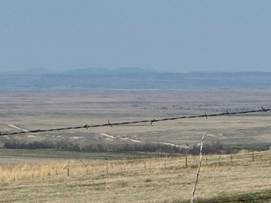

 Sunday Morning Greek Blog