Sunday Morning Greek Blog

June 16, 2025

Trinity Power (Psalm 8; John 16:12–15)

Historical context and notes: I preached this message on Father’s Day, June 15, 2025, at Mount View Presbyterian Church. It was also “Trinity Sunday” on the Lectionary calendar, the Sunday after Pentecost. Culturally, this weekend also saw the parade/celebration for the 250th anniversary of the U.S. Army, “No Kings” protests nationwide (thus a few extra references to God as our King), the onset of a conflict between Israel and Iran with the goal of degrading Iran’s nuclear weapons capabilities, and the politically motivated assassination of a Minnesota State representative.

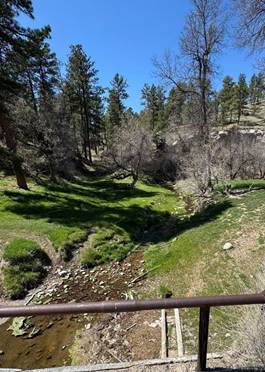
Happy Fathers’ Day, and a blessed Trinity Sunday to all of you. I’ve had a busy three weeks traveling hither and yon. Two weeks ago, my brother and I took our third annual fishing trip to South Dakota and caught our limit of walleye both days. Last weekend, my wife and I went to Branson with our small group and saw the production of David at the Sight and Sound theater. If you ever go to Branson, the Sight and Sound theater is well worth the price of a ticket. The entire operation is a ministry that focuses on telling biblical and patriotic stories. They tie the biblical story to the message of the cross toward the end, and after the show some of the cast make themselves available to pray with people.

Now even though I had a very relaxing few weeks off and feel somewhat refreshed from a busy schedule, I’m not ashamed to admit that it’s been kind of tough to focus on writing a message this week with all the other chaos going on in the world. Nevertheless, I think perhaps the example of Jehoshaphat in the Old Testament can help us deal with the potential chaos some may be experiencing. When Jehoshaphat was faced with a nearly impossible battle in 2 Chronicles 20 against the Moabites, Ammonites, and Meunites, he had the people pray in the temple courtyard. The next morning, he put the men’s choir out in front of the army as they marched toward the Desert of Tekoa. As they sang, God set ambushes, and the three opposing armies wound up destroying each other. Israel never had to lift a finger to fight. God is the true King, and when we put him first, good things can happen.

In our Old Testament reading this morning, the first couple verses of Psalm 8 say this:

Lord, our Lord,

how majestic is your name in all the earth!

You have set your glory

in the heavens.

Through the praise of children and infants

you have established a stronghold against your enemies,

to silence the foe and the avenger. [1]

If those two examples aren’t enough to show the power of praise, consider the story of the walls of Jericho which, by the Jews marching around the city, blowing their trumpets, and lifting up a mighty shout of praise, crumbled as a result of that sonic boom. God is the true King, and when we put him first, good things can happen. Psalm 22:3 in the English Standard Version says, “Yet you are holy, enthroned on the praises of Israel.”[2] If you’re used to the King James Version, that verse is translated, “Thou that inhabitest the praises of Israel.”[3]

This demonstrates the point that our praise is mighty and effective against evil because the God who dwells in that praise as it goes forth from our lips and our lives is mighty. This is God Almighty, God the Father, God the King, the creator of all that is made, even life itself; the giver of breath; the author of wisdom and truth.

We see the might, power, and even the orderliness of God in the creation narrative, for example. On Day One, he begins with the “formless and void” rock we call Earth and creates “light.” We don’t know what that light is, because the things that make or reflect light aren’t created until Day 4. What is this Day One light then? Is it the light that emanates from God because of his spiritual nature? Is it the afterglow of a “big bang” that produced the formless and void Earth and everything else in the universe? Is it meant to have a more metaphorical meaning like moral clarity? Or is it a reference to someone who would later claim that he is the light of the world, and of whom John would make the claim that nothing in this world was made without him? Hmmm. More on that later.

On Day Two, God separated the waters below from the waters above, most likely a vapor canopy that created a greenhouse effect for the new life that was coming. The separation between the waters was called “sky.” On Day Five, he created the creatures that dwell in the air and the creatures that dwell in the sea.

On Day Three, he brought forth dry land and created the diversity of flora that grows on the earth today. I find it interesting that the plants that need the sun to photosynthesize and grow are created the day before the sun is created. Anyone ever notice that? That’s one reason why I think each of the days of creation represent a 24-hour time period. If the vegetation had been created thousands of years before the sun came to exist, it would not have survived. On Day Six, he creates all the creatures that would dwell on land, including his ultimate creation, Mankind.

With each day of creation, not only is God creating people and animals and plants and objects in the solar system, he’s also creating all of the physical, biological, geological, and psychological (and all the other “-logicals”) rules and principles by which all the natural, or created, world operates under. On Day Seven, God rested. He had taken the “formless and void” third rock from the sun and transformed it into a well-formed, orderly creation.

Not only was God mighty and powerful as our king, though. He was also the epitome of righteousness. In him there is no fault, no stain, no sin. Perhaps that is why his “light” is the brightest of all, so bright that no mortal, sinful man can stand in the presence of it. From the Fall to the Flood, God demonstrated great patience with the wickedness of man, but God had a built-in judgment plan. The vapor canopy had worked quite well to ensure the young earth would flourish and grow, but man’s wickedness had become too much for God to bear. He told righteous Noah to build an ark and brought Noah a pair of every kind of animal to rescue them through the Flood.

The Bible says the rain came down and the flood gates of the earth were opened. Sounds to me like a giant meteor pierced the vapor canopy and all that water condensed and fell to the earth. It also may have broken up Pangea, the not-so-hypothetical single continent that once existed on Earth and started what we know today as plate tectonics, the movement of the continents, and all the fun stuff that comes with that, like earthquakes and volcanoes. This shows the enduring power of God’s creation, but it also shows that he is a God who expects the praise we give him for his righteous judgments.

The signature expression of God’s righteousness is the Ten Commandments. The first three commandments are specific to our direct relationship with God: Don’t put anything above God. Don’t make an image of God to worship. Don’t misuse the name of God. I think we all get that. The next two are positive commands that have to do with what God expects from us: Keep the Sabbath day holy. Honor your parents, who represent God’s authority over you on earth.

The final five commands have to do with our relationships with one another. They are prohibitions against committing violent acts. According to Merriam-Webster, “violence” not only means committing a physical act of aggression like murder, assault, or rape, but it can also mean “injury by or as if by distortion, infringement, or profanation” and gives the synonym “outrage.” Even coveting is not just a thought crime about desiring someone else’s property. When Jesus summarizes the Ten Commandments in Mark 10:19, he uses the Greek word translated “defraud,” “cheat,” or “rob” in the New Testament (ἀποστερέω apostereō). Coveting is violence, because its goal is to obtain something by illicit means.

Because the Ten Commandments are God’s foundational laws, and because they addressed fundamental issues of our relationships with God and with others, a violation of any of them could have resulted in the death penalty, were it not for the provisions in the law for blood sacrifice and the forgiveness of sin. But God knew from the time of the Fall he would need another way to address mankind’s sin. That’s where the second person of the trinity is introduced to the world.

Of course, this is Jesus, the son of God, conceived by the Holy Spirit, born of the virgin Mary. He would come to walk among us as a human being and learn, through his fully divine nature and insight”, what it was like to live as a mortal among mortals. Hebrews 4:15 says: “For we do not have a high priest who is unable to empathize with our weaknesses, but we have one who has been tempted in every way, just as we are—yet he did not sin.”[4] This Law is good because it shows us what sin is, but the Law itself is not able to provide forgiveness, righteousness, or salvation. Only perfect obedience can do that, but no one is perfect, at least, no one who is fully mortal.

Romans 10:4 says: “Christ is the culmination of the law so that there may be righteousness for everyone who believes.”[5] That word “culmination” (τέλος telos) doesn’t mean the Law is no longer relevant. It means that what the Law was intended to accomplish, imperfect as we are, is now accomplished through the faithfulness of Christ in his death on the cross and our faith in acknowledging Jesus Christ as our risen Savior. This is what John means when he calls Jesus “the word.” What we call “the Ten Commandments” in Hebrew is just simply “Ten Words” (עֲשֶׂ֖רֶת הַדְּבָרִֽים ʿǎśě·rěṯ de·ḇār îm). Jesus’s death on the cross paid the penalty for all time for violating God’s Law. All we need to do is trust in his grace and mercy and live faithfully for him. He is, after all, declared to be Lord of Lords and King of kings in Revelation 19:16.[6]

This is where we meet the third person in the Trinity. I’m not sure what passage your speaker addressed on Pentecost last Sunday, but if it was John 14, you would know that Jesus promised the Holy Spirit would come and teach us what we would need to know to live faithfully for Christ. We do have the Bible, but without the Holy Spirit to help us spiritually understand, discern, and apply the words of the Bible, they are ultimately just words on a page. The Holy Spirit is the divine presence in our lives. The Spirit is the fulfillment of the promise Jesus made at his ascension that he would be with us always even to the end of the age.

The words of our gospel reading this morning bear repeating here:

12 “I have much more to say to you, more than you can now bear. 13 But when he, the Spirit of truth, comes, he will guide you into all the truth. He will not speak on his own; he will speak only what he hears, and he will tell you what is yet to come. 14 He will glorify me because it is from me that he will receive what he will make known to you. 15 All that belongs to the Father is mine. That is why I said the Spirit will receive from me what he will make known to you.”[7]

In a world hounded by chaos and strife in these days, I find it comforting that we have a God who loves us and has provided the way of salvation for us through Jesus’s death and resurrection and the infilling of the Holy Spirit. It is through the Spirit that we can also lift up songs of praise and worship, which brings us full circle this morning. God inhabits the praise of his people by virtue of the Holy Spirit dwelling in our lives. This is our powerful weapon to confront the evil around us. The Spirit also brings comfort, healing, and restoration to our lives.

The words from last week’s gospel passage are appropriate to repeat here, and I’ll close with this.

27 “Peace I leave with you; my peace I give you. I do not give to you as the world gives. Do not let your hearts be troubled and do not be afraid.”[8]

May the peace of God go with you today. Amen.


[1] The New International Version. 2011. Grand Rapids, MI: Zondervan.

[2] The Holy Bible: English Standard Version. 2016. Wheaton, IL: Crossway Bibles.

[3] The Holy Bible: King James Version. 2009. Electronic Edition of the 1900 Authorized Version. Bellingham, WA: Logos Research Systems, Inc.

[4] The New International Version. 2011. Grand Rapids, MI: Zondervan.

[5] The New International Version. 2011. Grand Rapids, MI: Zondervan.

[6]See also 1 Timothy 6:15b and Revelation 17:14.

[7] The New International Version. 2011. Grand Rapids, MI: Zondervan.

[8] The New International Version. 2011. Grand Rapids, MI: Zondervan.
May 7, 2025

Sowbelly Elegy: The Majesty of God in Exegesis

With apologies to VP JD Vance for mimicking his title.

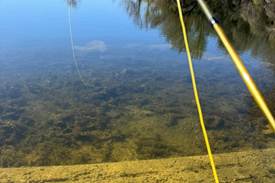
I do not do much personal reflection in this blog. I’m mostly about exegesis (studying the text of the Bible in its original languages), hermeneutics (applying the results of exegesis to the understanding and meaning of the Bible), and lately homiletics (declaring the understanding and meaning of the Bible, especially as a sermon or homily, or in this case, a blog post). This ties in with the taglines for my blog that I put on my “business” card: “Dig deeper. Read Smarter. Draw Closer.” This past weekend, I took the opportunity to go to Fort Robinson State Park in northwest Nebraska to share in a fly fishing expedition with several guys (and the wife of one of them) from our church, including our pastor. The Fort Robinson area has several excellent fishing areas, including several streams and creeks; the first ten miles or so of the White River, which ultimately runs through the Badlands in South Dakota and empties into the Missouri River; and several ponds. Many of these locations are stocked by the State fisheries with trout and other popular species of freshwater fish.

I had never done fly fishing before, but the chance to get away and spend some time with friends old and new outweighed any anxiety I may have had about that. I only spent a few hours fishing at a couple ponds and in the White River, but it was long enough for me to observe others doing it, and I got pretty good at the casting part. I had a few curious little fish check out my fly, but never did land anything, which was okay by me. I was just grateful to be there.

Putting the Pieces Together

Part 1: Reflecting on Exegesis

The timing of the trip was divinely appointed for me as it coincided with some serious reflection I’ve been doing about the relationship between the depth of Bible study I typically do (“Dig Deeper”) and what I expect from the small groups I attend or help lead. That reflection was prompted by a recent post from one of the other pastor-bloggers on WordPress, Veritas Domain, and his short article about his “simplified” exegetical method. His method is similar to mine in that there is a heavy focus on the text itself, which is not unusual. I’m trained in Greek and Hebrew, so I start with those texts first, or at least have them open in parallel with the English translation so I can take note of key words (“Read Smarter”). If I’ve done those first two steps, the “Draw Closer” principle usually follows quite nicely.

In my comment back to “SlimJim,” I mentioned that my method was similar, but along with that, I’m finding that my experience with the two small groups I’m connected with at my church and even with my preaching is that having the knowledge that comes from that kind of in-depth study may not always go over well with those who don’t have that specialized training. In our men’s group, I can typically get away with sharing that when I feel it adds something to the discussion, but even then, one of my friends in the group (who happens to be a preacher’s kid) will sometimes say “All that is nice to know, but I want to know what makes me a better Christian, a better man of God.” That is, he wants to get to the “Draw Closer” part.

This brought to mind an article I read a number of years ago (a 1997 issue of Leadership magazine) by Haddon Robinson, in which he’s quoted as saying, “More heresy is preached in application than in exegesis.” In other words, some of us preachers may be pretty good at exegeting and interpreting God’s word, but how are we doing about translating that into action for our respective audiences? Does it really matter if a divine command is in the aorist tense versus the perfect tense if we don’t follow the command ourselves or encourage our audiences to follow the command, or worse, manipulate the command with malicious intent?

Part 2: The Fort Robinson Retreat

I had decided I would drive to Fort Robinson from Omaha, where I live, by way of Nebraska State Highways 92 (first half) and 2 (second half). Together, those two routes take you through the heart of the State, east to west. In addition, Highway 2 runs through the heart of the Sandhills. If you look at a satellite view of Earth along Highway 2, you’ll see that these Sandhills look like a bunch of sand dunes, but they all have grass growing on them, and several small ponds or lakes are scattered throughout. As I was driving through the Sandhills and listening to Rich Mullins and the Passion CDs (yeah, those date me), I began to understand what the Holy Spirit was trying to teach me. But he was only getting started.

I arrived at Fort Robinson State Park after dark, but not so late that I didn’t get to connect with my church friends who had already been there for a full day. We had breakfast the next morning at a small café in nearby Crawford, then struck out to fish. I went with a friend who had been in my small group when I moved back to Nebraska in 2010 and two of his (now grown) sons whom I hadn’t seen in quite some time. It was my first time fly fishing, so my goal was to get the hang of casting and extending my line. We tried the Ice House pond and then walked about a mile to couple bends in the White River (only about 10 miles from its headwater at that point, so no more than about eight feet wide if that. I had a few nibbles at the pond, but nothing in the river. From there we went back to the Grabel ponds, where I finished out the morning having developed a pretty good technique to cast and extend my line, even landing it on top of a 12-inch fish and spooking it away for a moment.

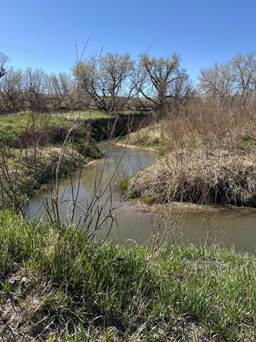
While I was at the section of the White River, I couldn’t help but think and marvel about how God created a means for distributing life-giving water throughout a continent (I knew the term “hydrology,” but I had to look up “limnology” as I was writing this paragraph), especially since, at the end of this month, my brother and I will be at the other end of the White River in South Dakota where it flows through the Badlands (and earns the name “White” from its sediment) and into the Missouri River south of Chamberlain for another fishing trip. God’s creation is an amazing and wonderful thing. That was what the Holy Spirit was continuing to show me, but not for the reason you might think.

Part 3: Sowbelly Canyon Road

One of the sights I had heard about from the guys who had gone up the previous year was Sowbelly Canyon, just north of Harrison, Nebraska. I had no idea what to expect from a “canyon” in Nebraska; certainly nothing like Poudre River Canyon in Colorado where my wife’s family has a cabin. Poudre Canyon is about 50 miles long, and the Poudre River is relatively wide in the canyon. Sow Belly is unique in its own way and was surprisingly beautiful and “cool” in more ways than one. I wish my wife would have been able to come along on this trip.

As you’re driving west on US 20 toward Harrison, you see nothing but a bunch of gently rolling hills on either side of the highway. One would never expect a place of such beauty was just beyond those rolling hills. Even as you crest the top of the canyon, you see an amazing sight below: a single lane dirt road running under a canopy of trees, with unusual rock formations atop the buttes, some of which have formed at right angles. The descent is moderately steep, and at times you have a wall of the canyon on your right (descending) and your left (ascending). At the bottom of the canyon is a small, babbling brook that must have taken a few centuries to form the canyon.

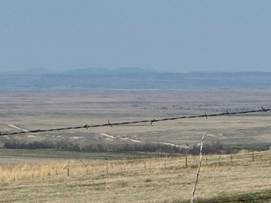
Just before you get to the end of Sowbelly Road on the east end (where it joins Pants Butte Road; no, I’m not making that name up), there’s a spot where you can see at least 80 miles to the north to the Black Hills in South Dakota (the dark mound in the far horizon). Something special happened between God and me via the Holy Spirit on that road, and especially with this particular view. I gained a whole new appreciation for the beauty, majesty, and grandeur of God’s creation. I’d expect something like that in Colorado; I never expected that in seemingly plain old northwestern Nebraska. Boy, was I wrong. What God had started teaching me in the Sandhills came to full fruition at the top of Sowbelly Road.

Part 4: Worldview, Wonder, and Wisdom

So let me bring this all together now. You might remember I started out talking about exegetical methods, methods that were heavily focused on the textual features like grammar, syntax, verb mood and tense, etc. Then it hit me: nothing in my exegetical method intentionally accounts for the majesty and glory of God and his creation. I knew I had to work that in somehow. But God still had one more piece to show me, and it hit me last night at our last small group of the season. Our senior pastor had been with us on this trip, but Sunday morning, one of the teaching pastors was preaching on the trauma Job experienced. I had tried to listen to it Sunday morning while driving through the remotest part of western Nebraska, but just couldn’t get a steady signal.

Fortunately, our Tuesday night group covered it in the study last night, and it was when we were talking about the ending of the book of Job that everything God had been teaching me finally made sense. Job had been arguing with God and his friends about how righteous he was and how he had always given God glory and so on, but God put him in his place. God recounts for Job all that He did by questioning Job: Did you lay the foundations of the earth? Did you create Leviathan and Behemoth? Who are you to tell me how I should act toward you?

That’s when I realized that I’m like Job in that moment. I think I have such a great exegetical method that will keep my doctrine sound and shred every stronghold that tries to set itself against God Almighty, but God’s word is more than the text and the grammar and verb moods and tenses and the participles and the conditional clauses. Those things are static, unchanging. But what does Hebrews 4:12 say? “For the word of God is alive and active. Sharper than any double-edged sword, it penetrates even to dividing soul and spirit, joints and marrow; it judges the thoughts and attitudes of the heart.”[1] Can grammar and syntax do that? I think not.

The other thing that occurred to me is the backstory of how the Jews would understand God’s word versus us gentile Christians. I’ll use just one example here: Communion, or as some call it, the Lord’s Supper or the Eucharist. When we look at the elements (“substantiational” leanings aside), we are meant to experience Christ in some way by “remembering” him. We see one man crucified and risen. But what do Jews remember at Passover? Not one man dying, but ALL the firstborn dying who weren’t protected by the blood of the lamb that they themselves applied to their doorways. They remember God parting the Red Sea so the Israelites could escape the oncoming Egyptians. The disciples didn’t understand immediately that Christ’s death had won them forgiveness and freedom. The Jews DID understand that immediately, with hearts pounding witnessing the very miracles of God at work to rescue them, even as they would tell the stories year after year to their descendants.

Conclusion

In other words, when I exegete and interpret Scripture, I need to look beyond the text and the grammar and all the other “in-the-weeds” details to comprehend a grand vision of a great God and all that he has done and made. That’s where the “draw closer” takes place, as it did for me this past weekend, when I understood who I am in God’s kingdom and that, in spite of his greatness and grandeur, he looks with love at the least of us, at the humblest of us, at our faithfulness. He looks with compassion at those who are lost and searching and even at those who may be angry with him or agnostic toward him, prompting us to share God’s “living and active” word with those who have not yet comprehended that greater vision.

From this point forward, then, I’m adding a couple permanent elements of my “principlizing bridge” (to use Grasping God’s Word’s language) will be to ask first, “How does this passage reveal the glory and majesty and mystery of God to the world?” and second, “How is this passage ‘alive and active’ not only to me but to those I encounter as well?” I feel like I drew a little closer to God this weekend. I pray that my testimony here will do the same for you.

Pastor Scott Stocking, M.Div.

All contents herein are the creative and intellectual property of this author unless otherwise attributed.


[1] The New International Version. 2011. Grand Rapids, MI: Zondervan.
Website Powered by WordPress.com.